




The First Gotthard Tunnel Ruined Its Builder (1872–1882)

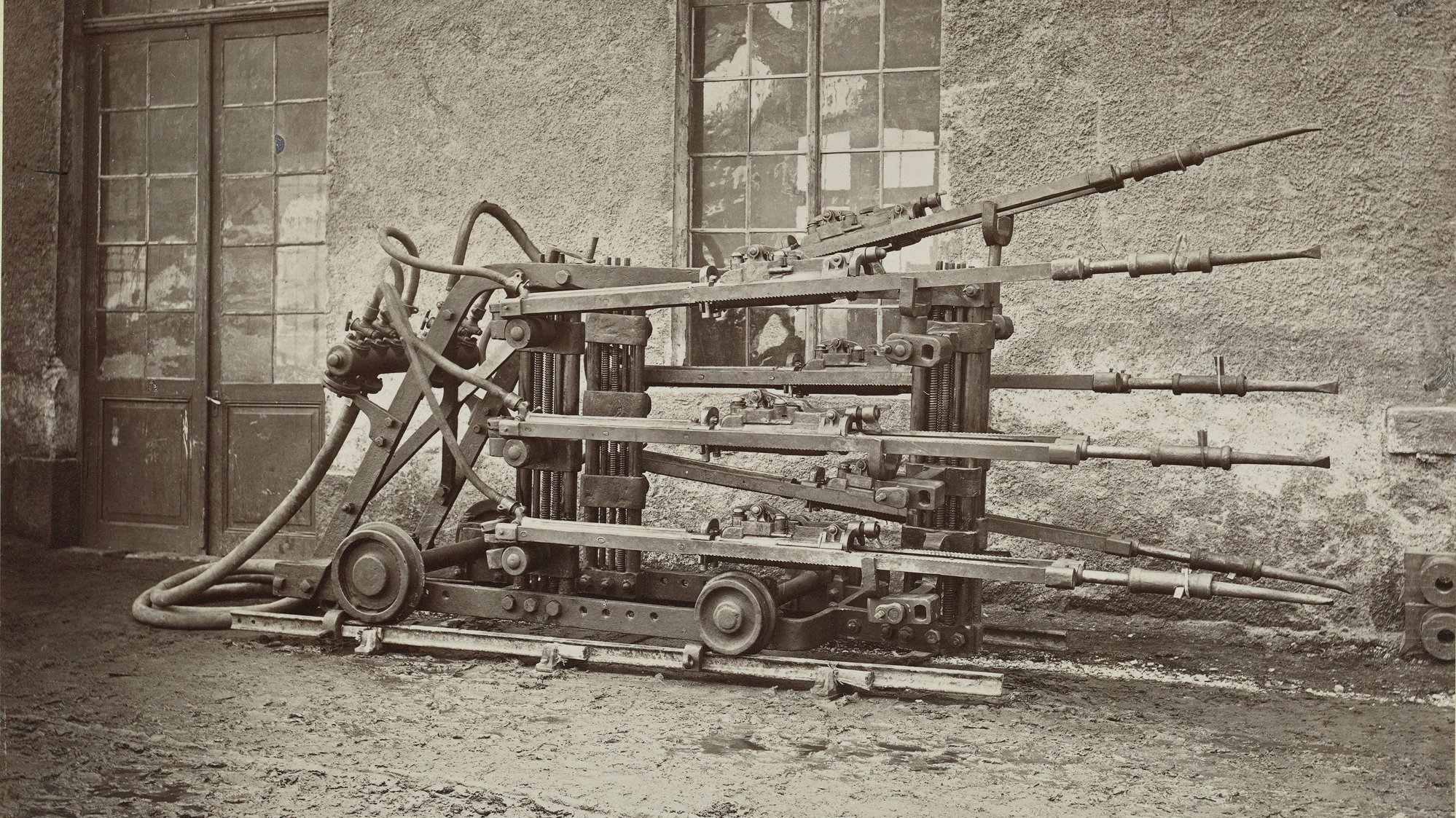
It must have been a Herculean task to carve these structures into the mountain massif. The geology of the Gotthard is complex, as Louis Favre—the first engineer to dare to drill into the Gotthard—already discovered. Fatalistically, the builder of the Gotthard Tunnel agreed to a construction contract with Alfred Escher, director of the Gotthard Railway Company, that included a strict bonus-penalty system. In September 1872, the race—or rather, the race against time—began. Favre had eight years to complete the project. Every day he saves will earn him a bonus of CHF 5,000; every day of delay will incur a penalty of the same amount. Starting from the seventh month of delay, the penalties will rise to CHF 10,000 per day. And so it came to pass: the heterogeneous rock layers—comprising granite, gneiss, slate, and amphibolites—fault zones with water ingress, and the unbearable heat inside what was then the world’s longest tunnel left Favre and his construction crew no chance. The 15-month delay ruined his construction company and his family—he himself succumbed to an aortic aneurysm on July 19, 1879, before the completion of his landmark structure.
Swiss Engineering Excellence: Locher Builds the Wassen Loop Tunnels (1882)
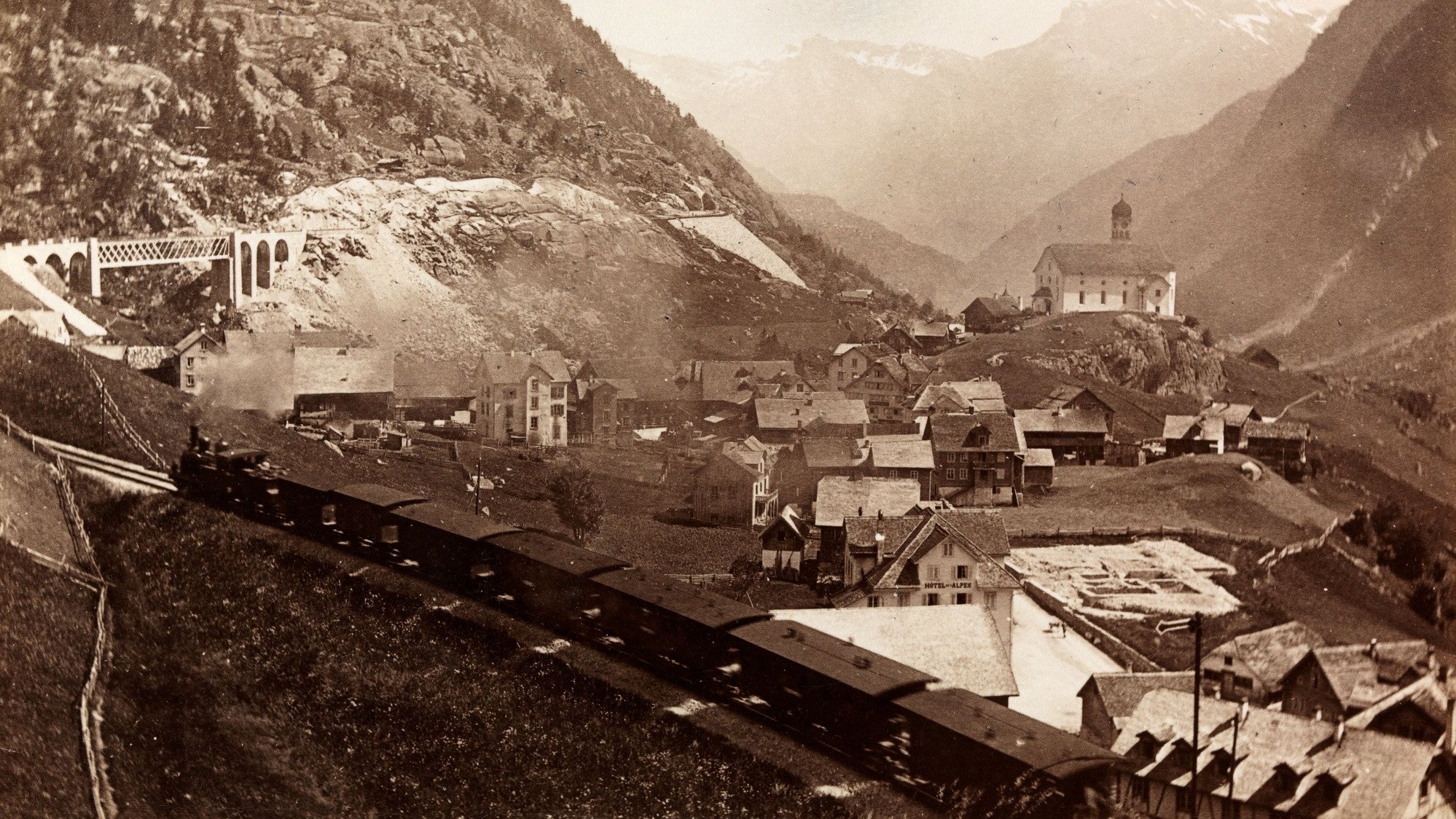
No predecessor company of Implenia was involved in the construction of the first Gotthard Tunnel. But Locher & Cie. of Zurich is, after all, closely connected to it. That’s because the tunnel itself isn’t the only major challenge in the construction of the Gotthard Railway from Immensee to Chiasso: Between Gurtnellen and Wassen, the railway must overcome a massive difference in elevation just to reach the tunnel’s northern portal in the first place. And Locher & Cie. created this marvel of engineering, which still inspires admiration among train travelers on the “old” Gotthard Line today. Three spiral tunnels create a fascinating interplay of perspectives, in which the famous church in Wassen can be seen sometimes on one side of the train and sometimes on the other.
The Gotthard Road Tunnel (1970–1980)

After World War II, interest in the Gotthard began to wane. Even when the Swiss Parliament approved the construction of a nationwide highway network in 1960, there was still no mention of a winter-safe connection to the south that a highway tunnel would make possible. It was only following a motion and the recommendation of a study group that a tunnel connection was included in the national highway network in 1963.
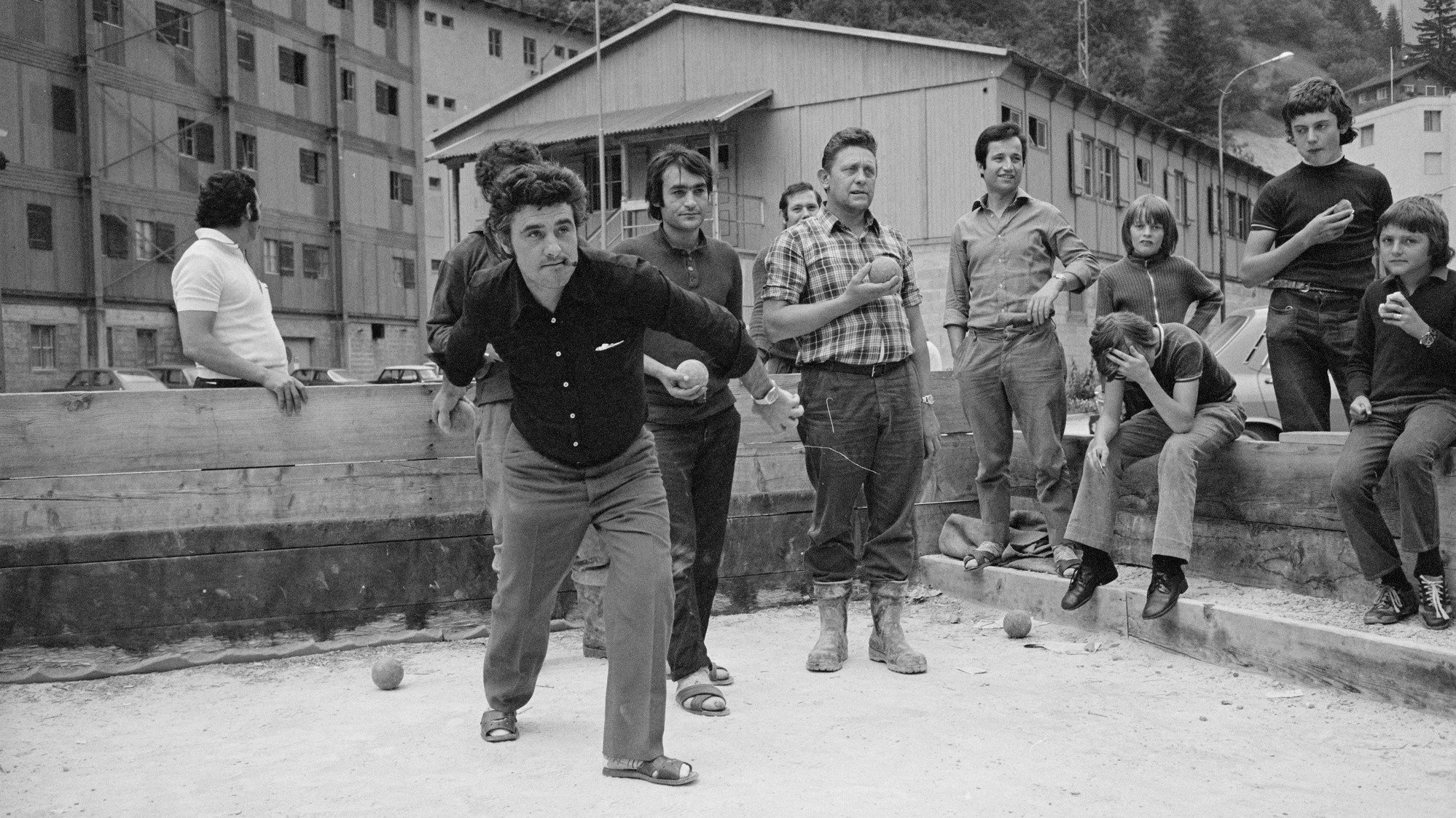
In 1970, construction began on what was then the largest construction project in the Alps. Tunneling proceeded from the north and south, and the contracting consortia were divided accordingly. Three predecessor companies of Implenia were involved: Zschokke and Heinr. Hatt-Haller on the northern section, and Schmalz from Bern on the southern section. The difficulties that the geology still posed for the construction crews—even a hundred years after Favre’s pioneering work—are described in fragments in the final report published in *Schweizer Ingenieur und Architekt* in 1980 : “Starting at approximately kilometer 2.0, it became necessary to switch definitively to partial excavation for safety reasons. Crossing the 250-meter-long section of Mesozoic rock even required an excavation method with even finer subdivisions, following the German construction method… In the central part of the paragneiss zone, strong lateral pressure became apparent. The walls, which had begun to shift, had to be stabilized with rock anchors… Brittle rock reduced productivity, while heavy water inflows—often under pressure—as well as high temperatures (up to 33 °C) and high humidity made the work more difficult…”1 Despite all this, Federal Councilor Hans Hürlimann was able to open the world’s longest road tunnel on September 5, 1980.
The World's Longest Tunnel: Implenia Builds Two-Thirds of the Gotthard Base Tunnel (2002–2016)

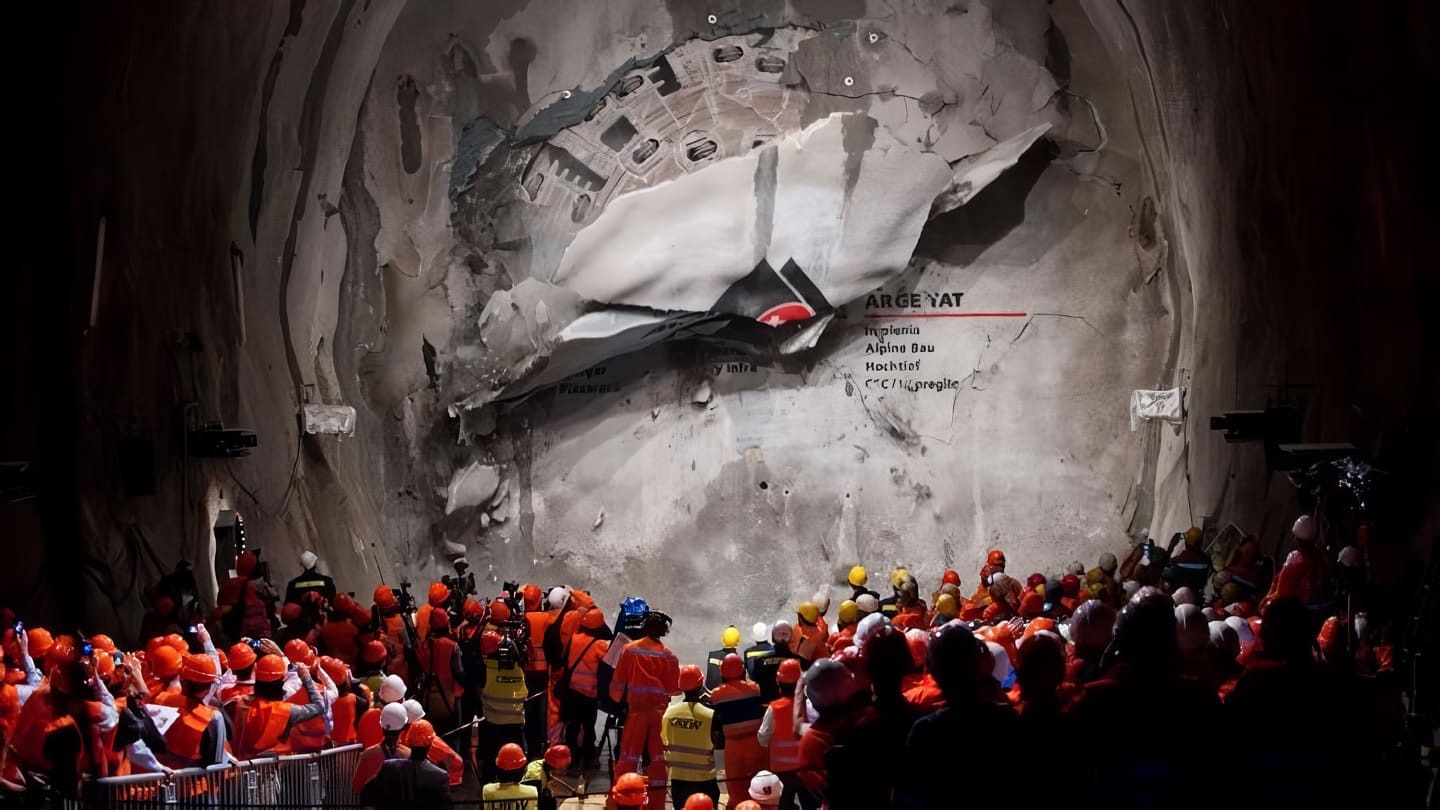
Implenia took on an even greater responsibility at the start of the new millennium with the construction of the 57-km-long Gotthard Base Tunnel from Erstfeld in the north to Bodio in the south—another superlative engineering feat: the world’s longest railway tunnel. When construction began in 2002, Zschokke Locher and Batigroup were prominent among the contractors. When Zschokke and Batigroup merged to form Implenia four years later, Switzerland’s now-largest construction company was responsible for about two-thirds of the total construction work on the Gotthard Base Tunnel; up to 400 Implenia employees were working on the three contract sections in Sedrun, Faido, and Bodio—all of them tunnel builders through and through—such as Hanspeter Stadelmann, head of tunnel construction at Zschokke Locher and, starting in 2006, at Implenia, or TBM operator Carmine Gencarelli. He recalls: “When I see the result of our daily efforts today, I think: Wow! The Gotthard Base Tunnel is a once-in-a-century project that many future generations will still use. It’s a wonderful feeling to have contributed to it.”
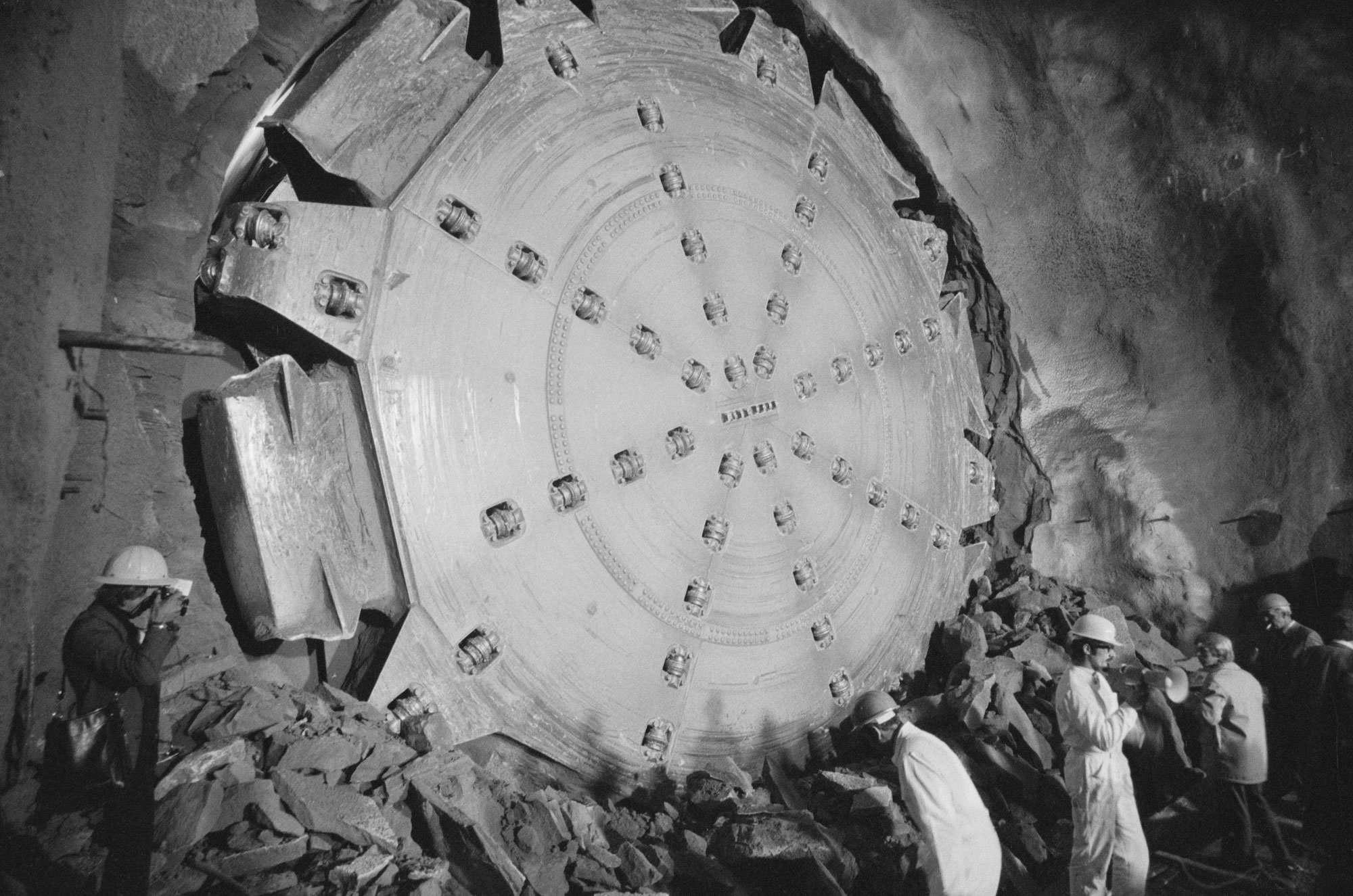
A brief side note: Implenia and the machine manufacturer Herrenknecht are donating the cutting head of the tunnel boring machine “Sissi”—which broke through the eastern tunnel on October 15, 2010—to the Swiss Museum of Transport in Lucerne. It has adorned the entrance to Switzerland’s most popular museum since 2012.
Implenia’s significant involvement in the construction of this once-in-a-century project will open doors for the company in the bidding processes for the construction of the three other major Alpine crossings at the Brenner Pass, in Semmering, and through the Mont Cenis between Lyon and Turin.
The Historic Mountain Pass Road: Schöllenen Renovation (2015–2019)
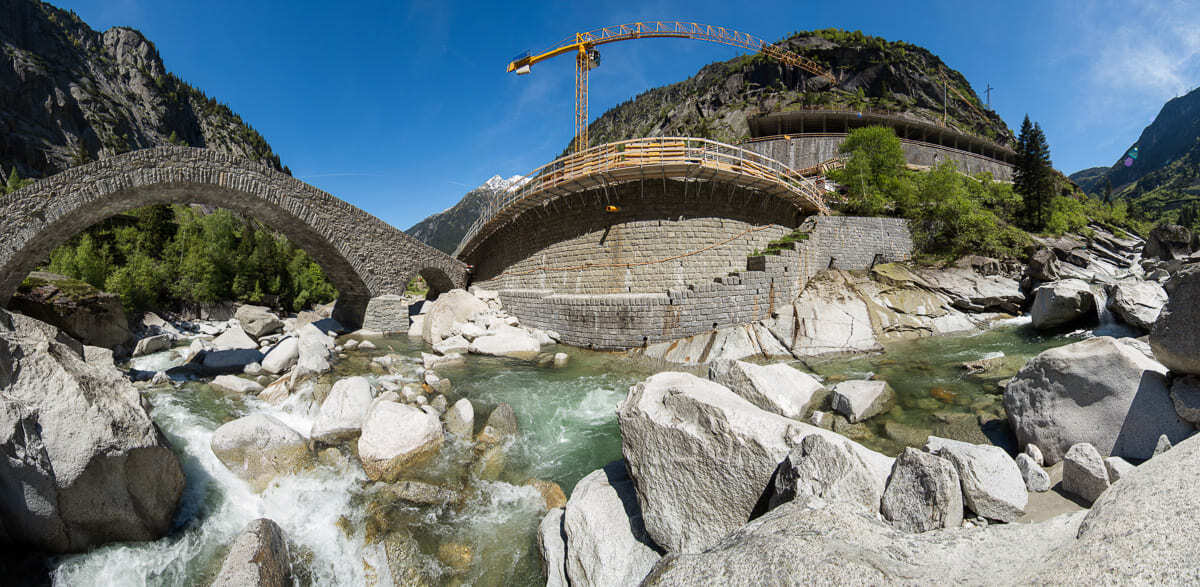
With so many tunnel projects underway in the Gotthard region, it’s easy to forget that there’s also a mountain pass road there. This road is not only of historical and tourist significance, but also connects the Urseren Valley between the Furka Pass to the west, the Gotthard Pass to the south, and the Oberalp Pass to the east. In 2015, when tunnel construction in the Gotthard region is completed, Implenia will take over the renovation work on the northern section of the historic mountain pass road, in the Schöllenen Gorge with its legendary Devil’s Bridge. The biggest challenge is the exposed location of the construction site in the midst of this steep rocky landscape. Already in the first year of construction, a rockslide occurs—2,500 metric tons of granite crash down into the Schöllenen Gorge. No one was injured, and the construction site was spared. Despite all the adversities, Implenia was able to complete the work on schedule in 2019.
A Second Tube for the Road Tunnel (2022–2029)
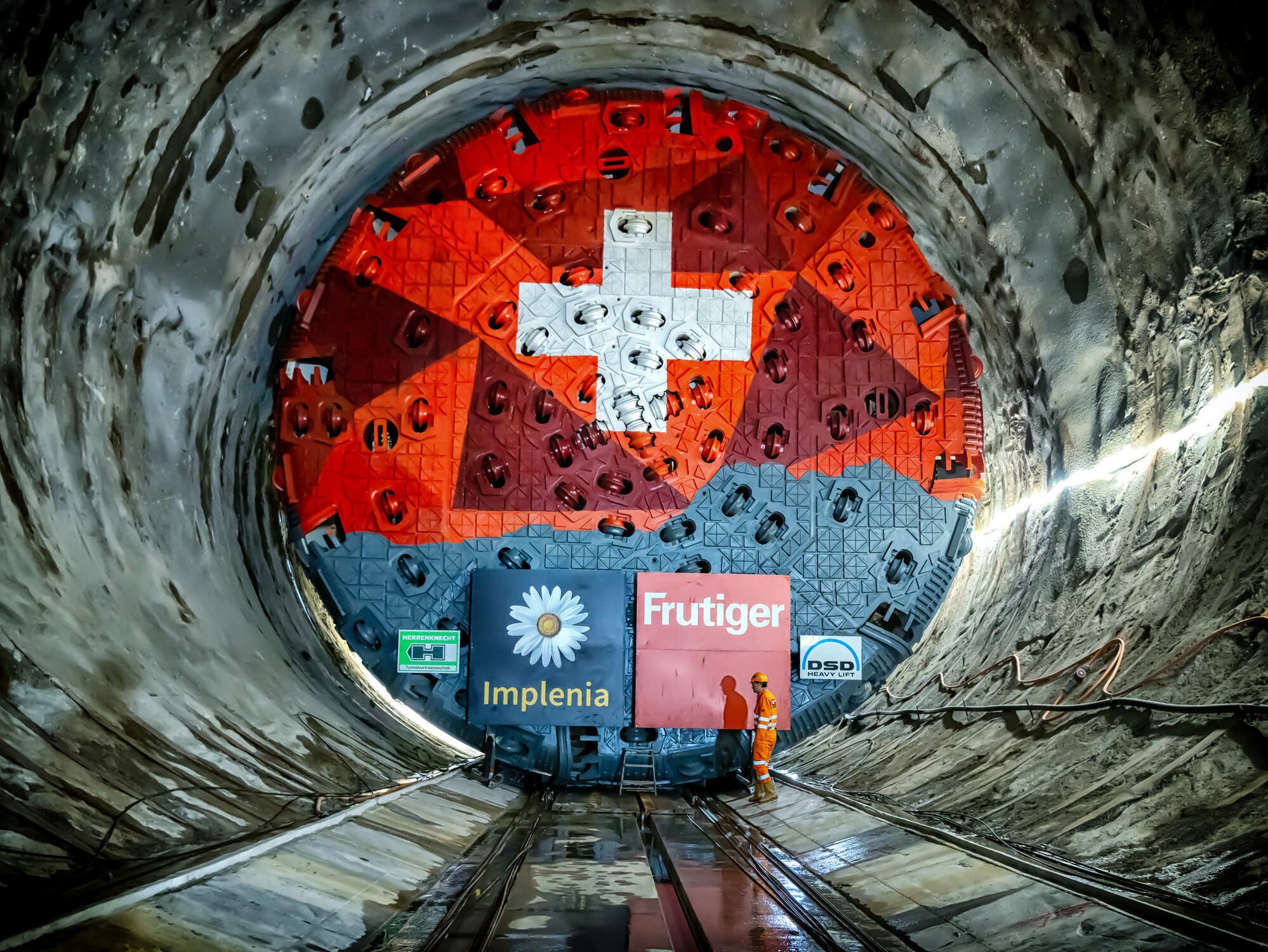
While construction work on the Gotthard Base Tunnel is in full swing, calls are growing louder in Bern for a new tunnel to accommodate road traffic as well. There are two reasons for the demand for a “second tube”: First, the existing road tunnel will soon require renovation. But how is such a multi-year project feasible in a narrow, two-lane tunnel with a daily traffic volume of 19,000 vehicles? Divert traffic over the pass? And in winter? A second tube is therefore needed simply to allow for the renovation of the first tube. The second reason: safety. On October 24, 2001, two trucks collided head-on while traveling in opposite directions in the Gotthard Tunnel. The resulting inferno claimed the lives of eleven people. Two tubes with one-way traffic are intended to prevent such a tragedy in the future.
But the political wheels turn slowly in Switzerland. It wasn’t until 2012 that the Swiss Federal Council finally proposed the construction of a second tunnel; Parliament approved the project in 2014, and the Swiss people approved it in 2016. In 2021, the groundbreaking ceremony took place for what will likely be the last tunnel through the Gotthard Massif for a long time.
Once again, Implenia, as the lead contractor of the “secondo tubo” consortium, is playing a key role in the tunnel’s construction on behalf of the Federal Roads Office (ASTRA). The main northern section encompasses the 7.9-km-long tunnel segment from Göschenen to the tunnel’s midpoint. And once again, the geological peculiarities of the massif are playing tricks on the tunnel builders. For instance, the Aare massif is harder at the start of this construction section than described in the bid specifications. This increases the cutting forces, meaning that the tunnelers from Implenia and Frutiger have to replace the tunnel boring machine’s cutting discs up to twenty times a day. Nevertheless, the delays remain within acceptable limits.
Another welcome challenge is the stricter environmental guidelines. In line with the principles of circular construction, the approximately 7.4 million metric tons of excavated material will be reused, including for the renaturation of Lake Lucerne or as aggregate for concrete.
With the breakthrough into the Northern Disturbance Zone in the spring of 2026, the consortium will celebrate its first major milestone. The tunnel breakthrough is expected in 2027, and the second tube is scheduled to be operational in the summer of 2030, after which the old road tunnel can be renovated.
Starting in 2033, calm will likely return to the Gotthard for a long time—apart from tourist traffic over the Gotthard and transit traffic through the Gotthard. And what about the underground Gotthard fortresses with all their cannons? These were abandoned as early as the 1990s, following the collapse of the Eastern Bloc, and today serve only as museums.