



Garibaldi Bridge, Rome, 1884–1888 (Zschokke)
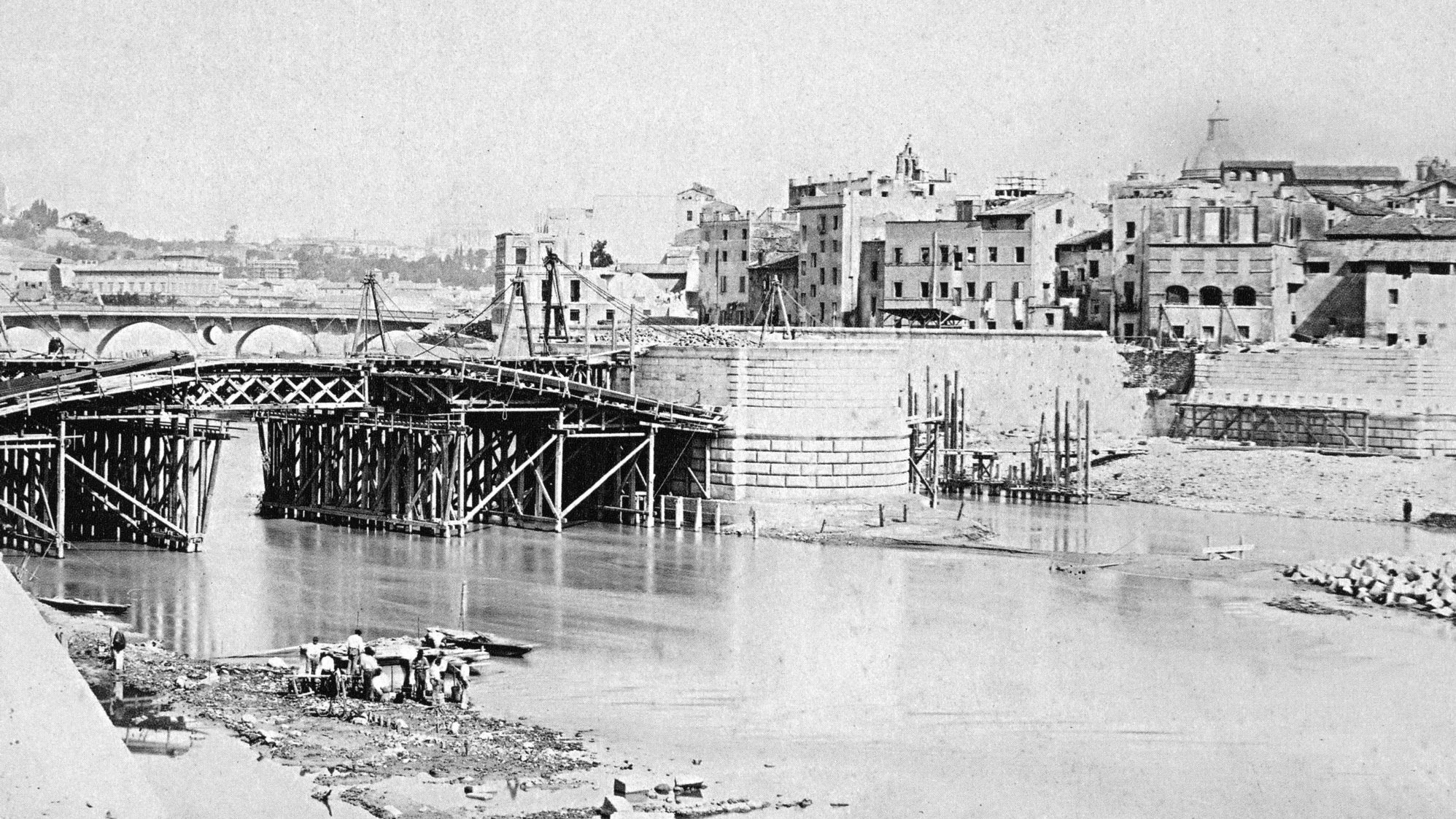
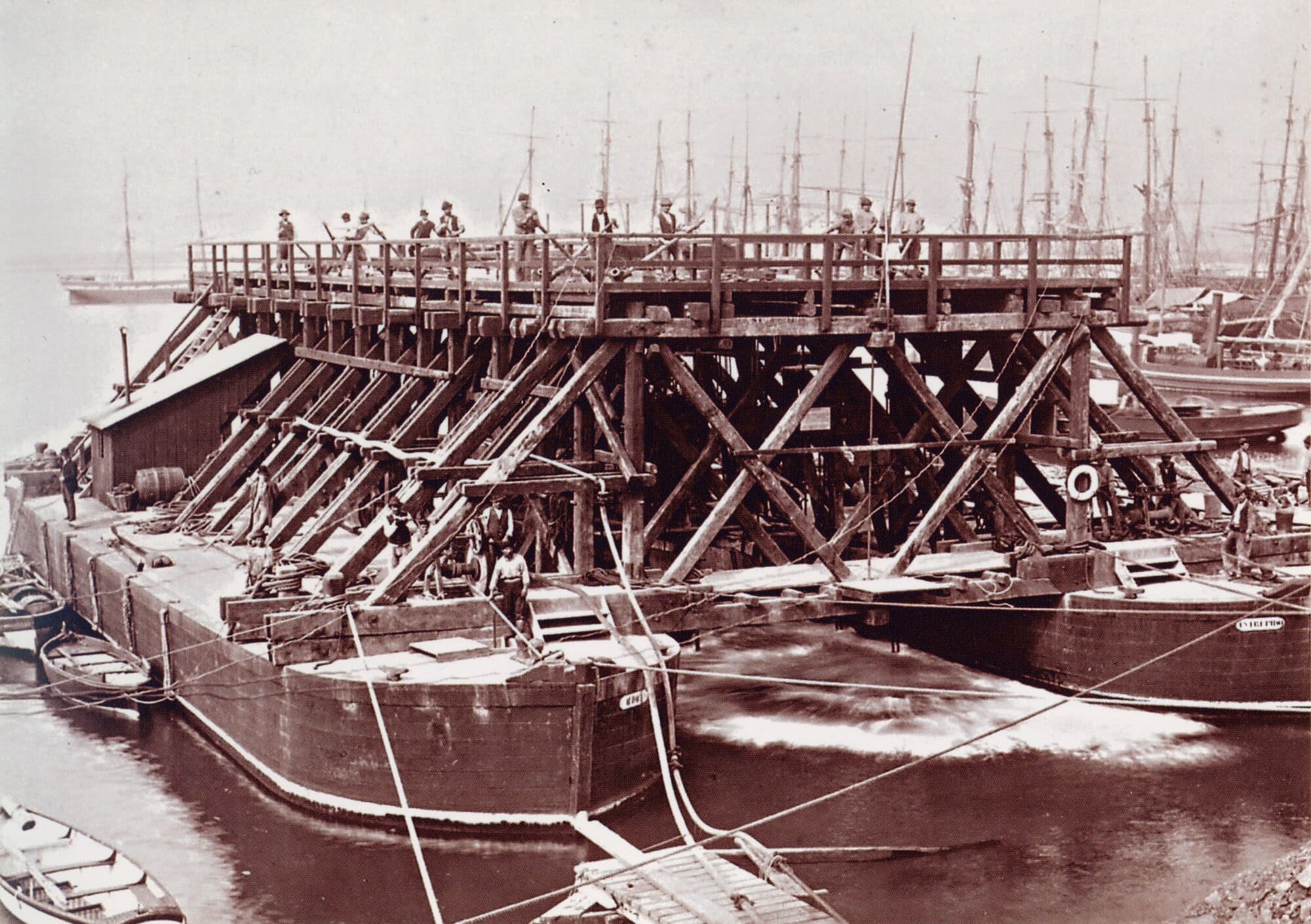
In the 1880s, Conrad Zschokke spent most of his time in Rome—at first alone, but later his wife and younger son also moved to the capital of the fledgling Italian nation-state. Its “founding father,” Giuseppe Garibaldi, was to have a bridge over the Tiber named after him in Rome: the Ponte Garibaldi, connecting the Rioni Regola and Trastevere neighborhoods.
Conrad Zschokke was awarded the construction contract—just as he had previously been awarded contracts for various river regulation projects on the Tiber, the construction of the Palatino Bridge, and the renovation of the Cestio Bridge. In total, Zschokke will carry out construction work worth CHF 22 million for the Italian government—including around 100 pneumatic pile foundations for quays and bridge piers.
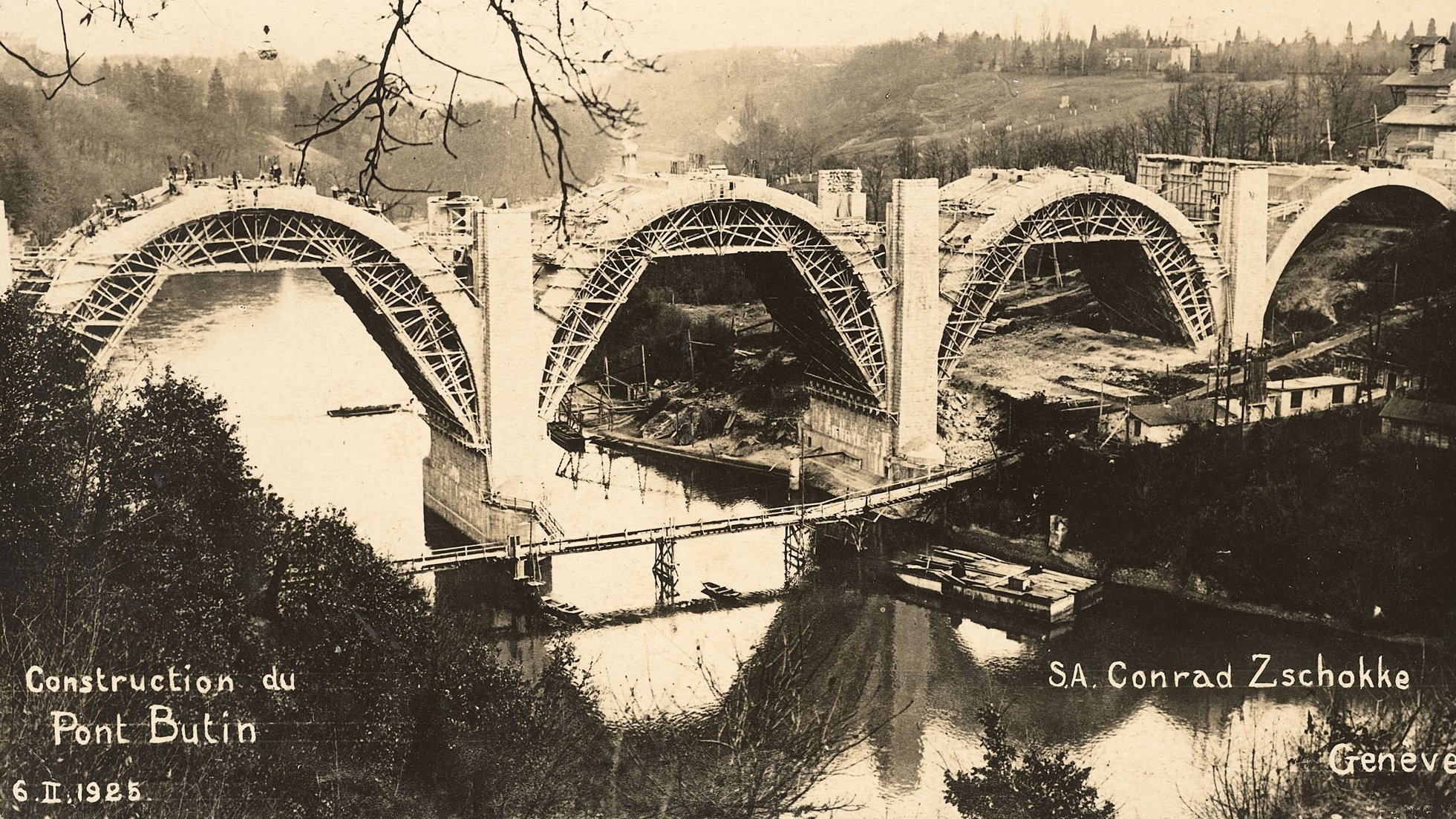
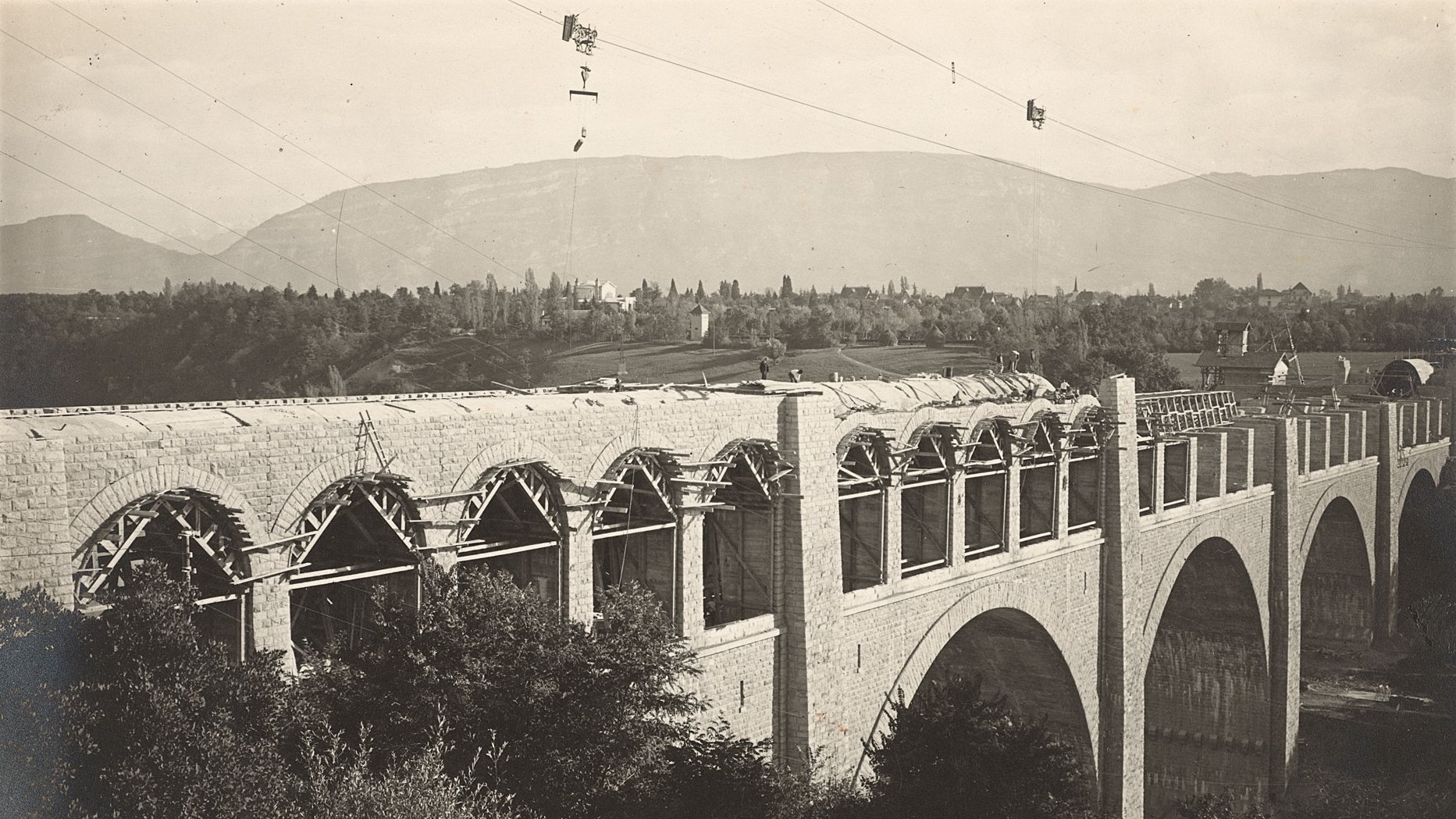
Pont Butin, Geneva, 1923–1927 (Zschokke)
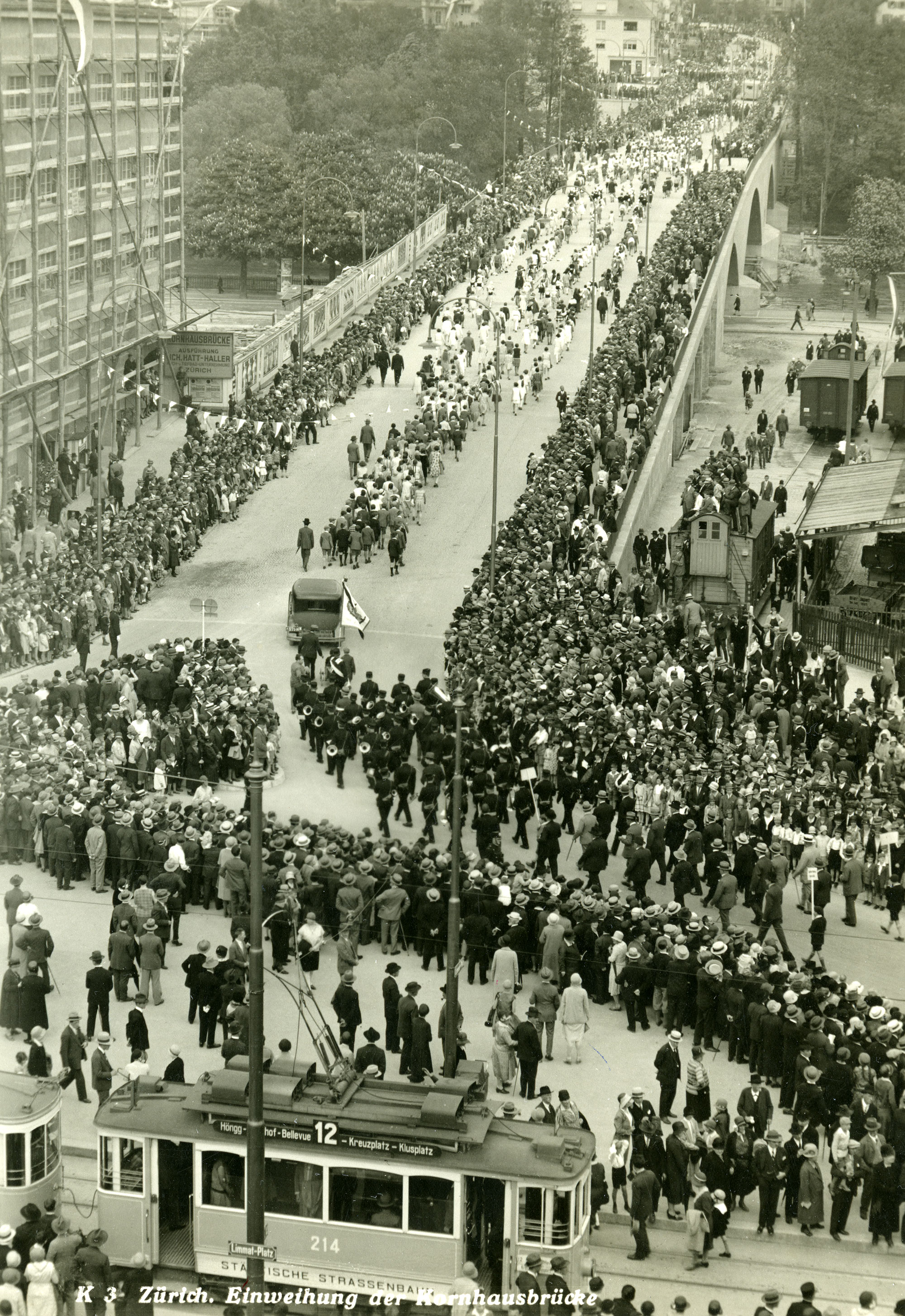
Kornhaus Bridge, Zurich, 1928–1930 (HHH)
The name says it all: In the industrial district in the western part of the city of Zurich, smoke billowed from the chimneys at the end of the 19th century. However, many workers did not live in the industrial district itself, but on the other side of the Limmat, in Wipkingen or Unterstrass. So every morning and evening, thousands of people squeezed their way across the narrow Lettensteg bridge.
It wasn’t until the residents of Wipkingen submitted a petition with 10,000 signatures to the Zurich City Council in the 1920s that the council began planning a concrete bridge. Construction began in 1928, carried out by Zurich City Council member and master builder Heinrich Hatt-Haller. For months, the 111-meter-long wooden scaffolding was Zurich’sattraction , and its opening on May 18, 1930, was a major event. There is a good reason why the bridge is long and slopes gently: The city council wanted to run a tram line across the bridge at a later date. A pipe dream—even to this day.
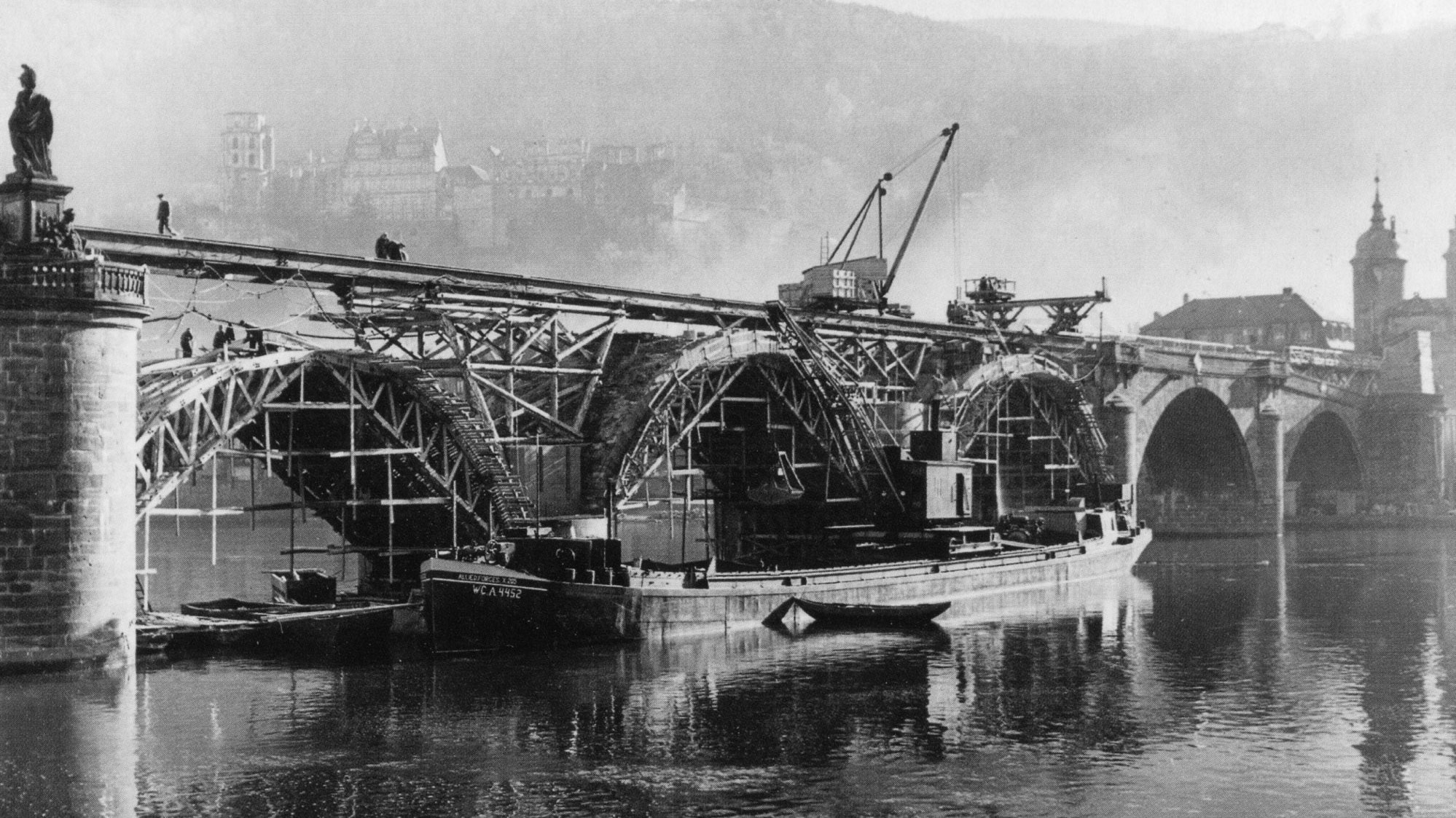
Karl-Theodor Bridge (Reconstruction), Heidelberg, 1946 (Bilfinger Berger)
The years of National Socialism also left their mark on the German companies that merged to form Bilfinger Berger in 1975. The most horrific tragedy: Julius Berger, one of the founding fathers of Bilfinger Berger, was forced out of his company in 1933 because he was Jewish and was murdered in 1943 at the Theresienstadt concentration camp.
When the Nazi era ended with Germany’s surrender in 1945, the “Thousand-Year Reich” lay in ruins. For the denazified German construction companies, years of reconstruction began. Between 1945 and 1949, Grün & Bilfinger AG was primarily occupied with repairing over a dozen bridges that had been blown up by the German Wehrmacht—including the Karl-Theodor Bridge in Heidelberg, built in 1788, the Hohenzollern Bridge in Cologne, and the Kurpfalz Bridge in Mannheim.
Maracaibo Bridge, Venezuela, 1959–1962 (Bilfinger Berger)
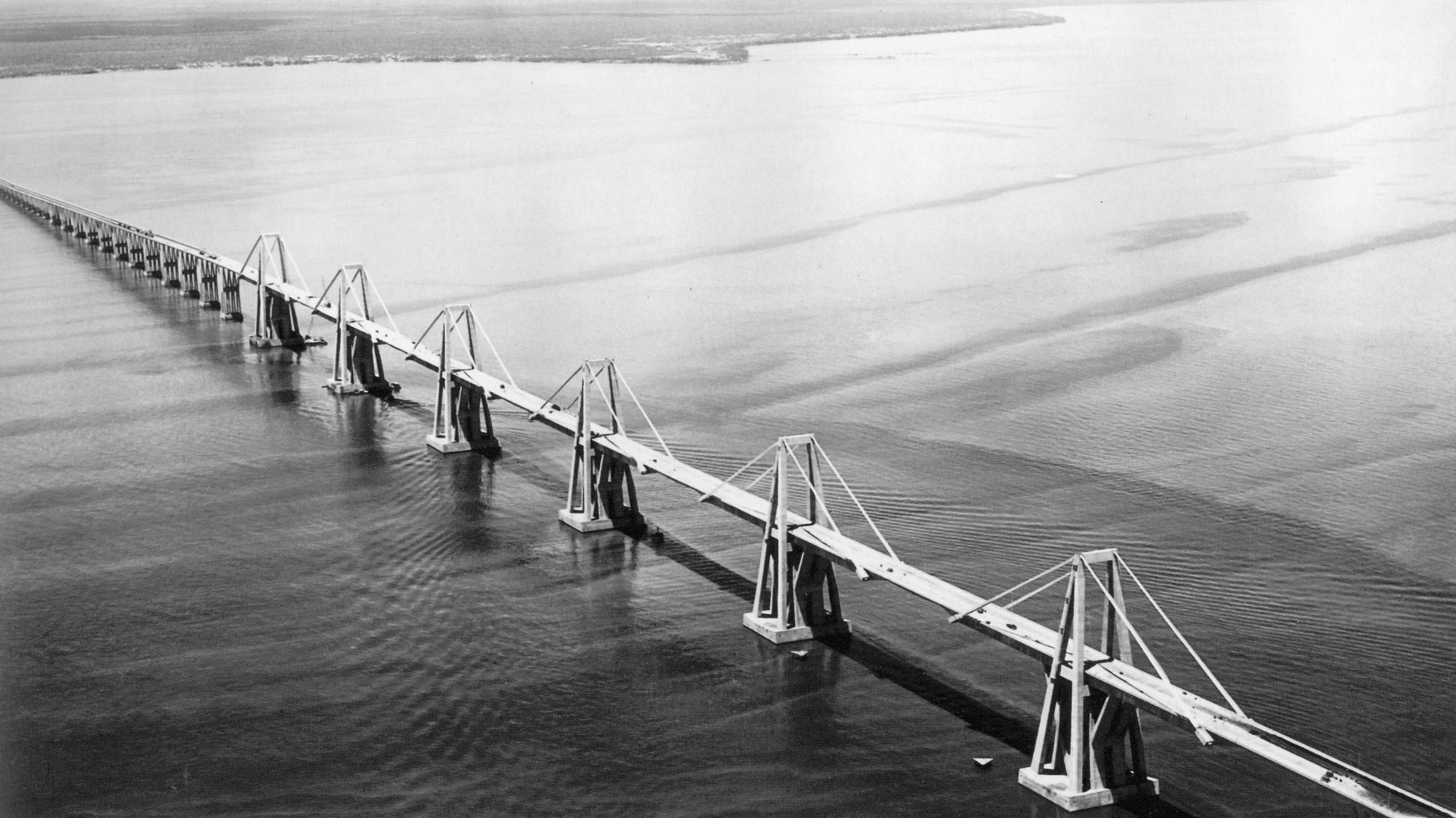
“The magic word ‘Maracaibo’ kept Julius Berger’s management and supervisory board in a constant state of tension—oscillating between anxiety and hope—for years,” according to a corporate history of Bilfinger Berger AG. The reason for this rollercoaster of emotions is the sheer scale—perhaps even the excess—of this project, coupled with political turmoil and Venezuela’s depleted state coffers.
About the project: The Maracaibo Bridge is set to become the world’s longest cable-stayed bridge—built of concrete, which is also a first. It was designed by Italian chief engineer Riccardo Morandi, a master of the prestressed concrete method. The road bridge is intended to connect Venezuela’s second-largest city, Maracaibo, with the rest of the country, particularly the capital, Caracas. In 1957, Julius Berger Tiefbau AG was awarded the major contract, which required, among other things, massive floating assembly platforms. Then a coup took place in Venezuela. After a delay, construction work was finally able to begin in 1959. Forty months later, the 8.7-km-long masterpiece of engineering and architecture was handed over to the Venezuelan government.
Second Mainland Bridge (Eko Bridge), Nigeria, 1968–1972 (Bilfinger Berger)
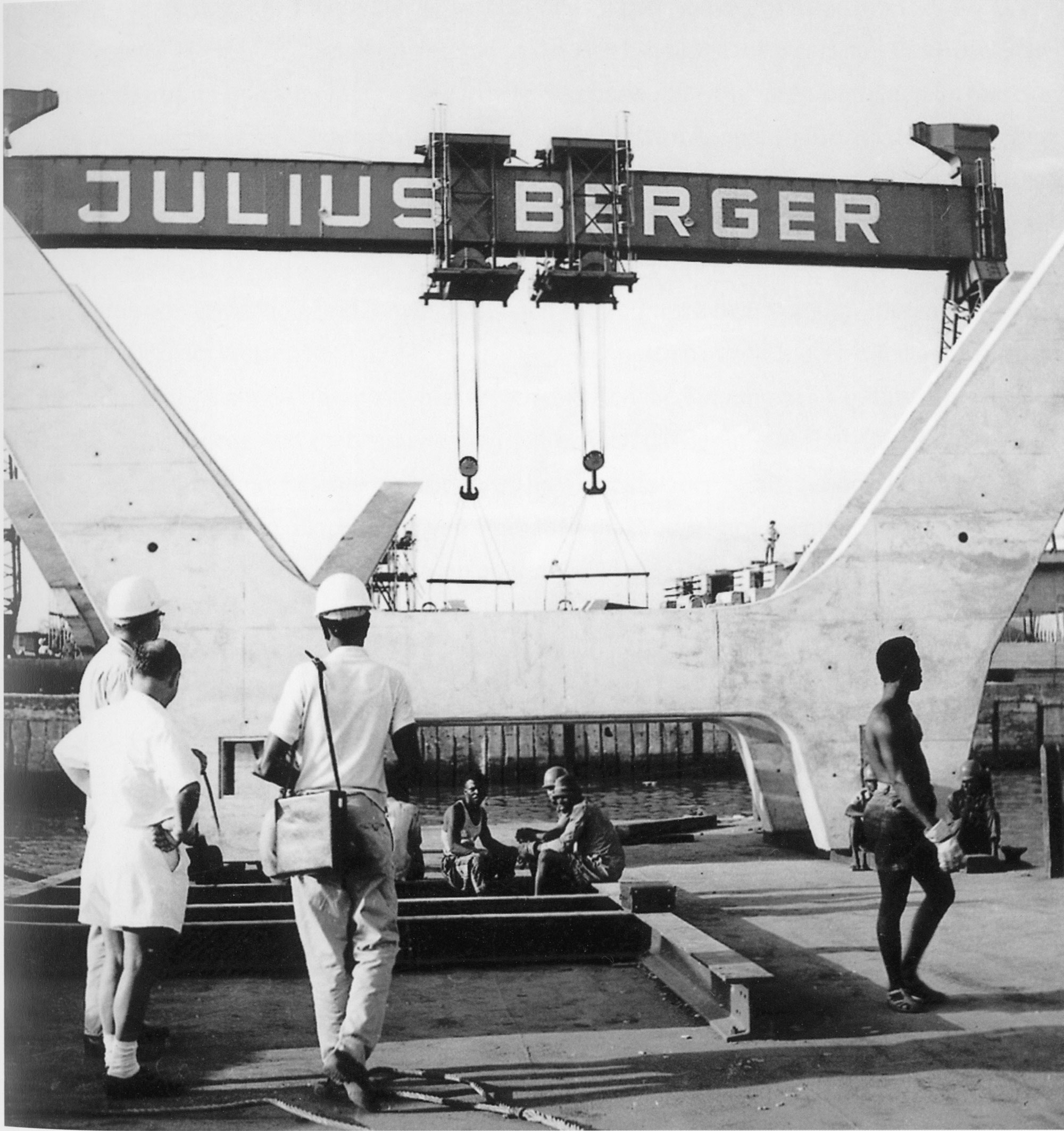
Bridges speed up traffic and, in turn, economic development. This is also true for emerging economies such as Nigeria, which is poised for a growth spurt in the 1960s thanks to its oil wealth. One of the architects of this growth is the internationally renowned Julius Berger Tiefbau AG. The company, which established its own subsidiary in Nigeria in 1970 and has become a major employer and trainer, builds countless roads, ports, and bridges.
Two of the largest and most important structures Julius Berger has built in Nigeria are the two bridges connecting the historic center on Lagos Island to the mainland: the Eko Bridge (1968–1972) and the New Carter Bridge (1985–1987), which was the longest concrete bridge in Africa at the time.
Sunniberg Bridge, Klosters, 1996–1998 (Batigroup)
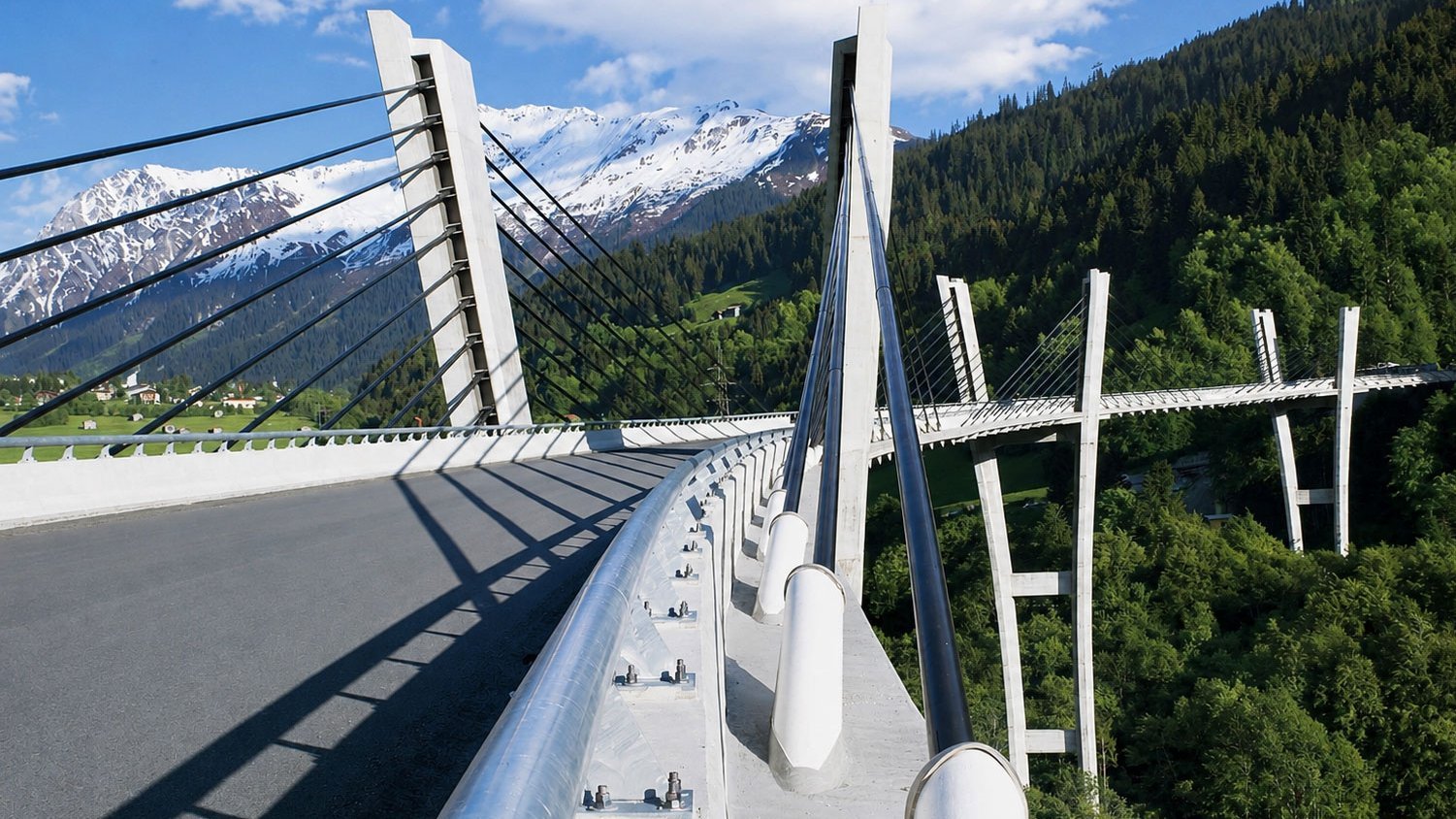
It is a technical masterpiece of modern bridge engineering that has won numerous awards: the Sunniberg Bridge near Klosters in the canton of Graubünden. A prime example of the work of the famous Swiss civil engineer and bridge builder Christian Menn.
The hallmark of the Sunniberg Bridge is its piers, which are divided into two slender columns, giving the structure a light and playful appearance. But behind this lies a complex spatial geometry that placed high demands on structural analysis, design, and construction. In 1998, Batigroup—which had emerged just one year earlier from the merger of Stuag, Schmalz, and Preiswerk—took on this project. In 2001, the Sunniberg Bridge received the prestigious Outstanding Structure Award. In 2006, Implenia was formed through the merger of Batigroup and Zschokke.
Pont de la Poya, Fribourg, 2010–2014 (Implenia)
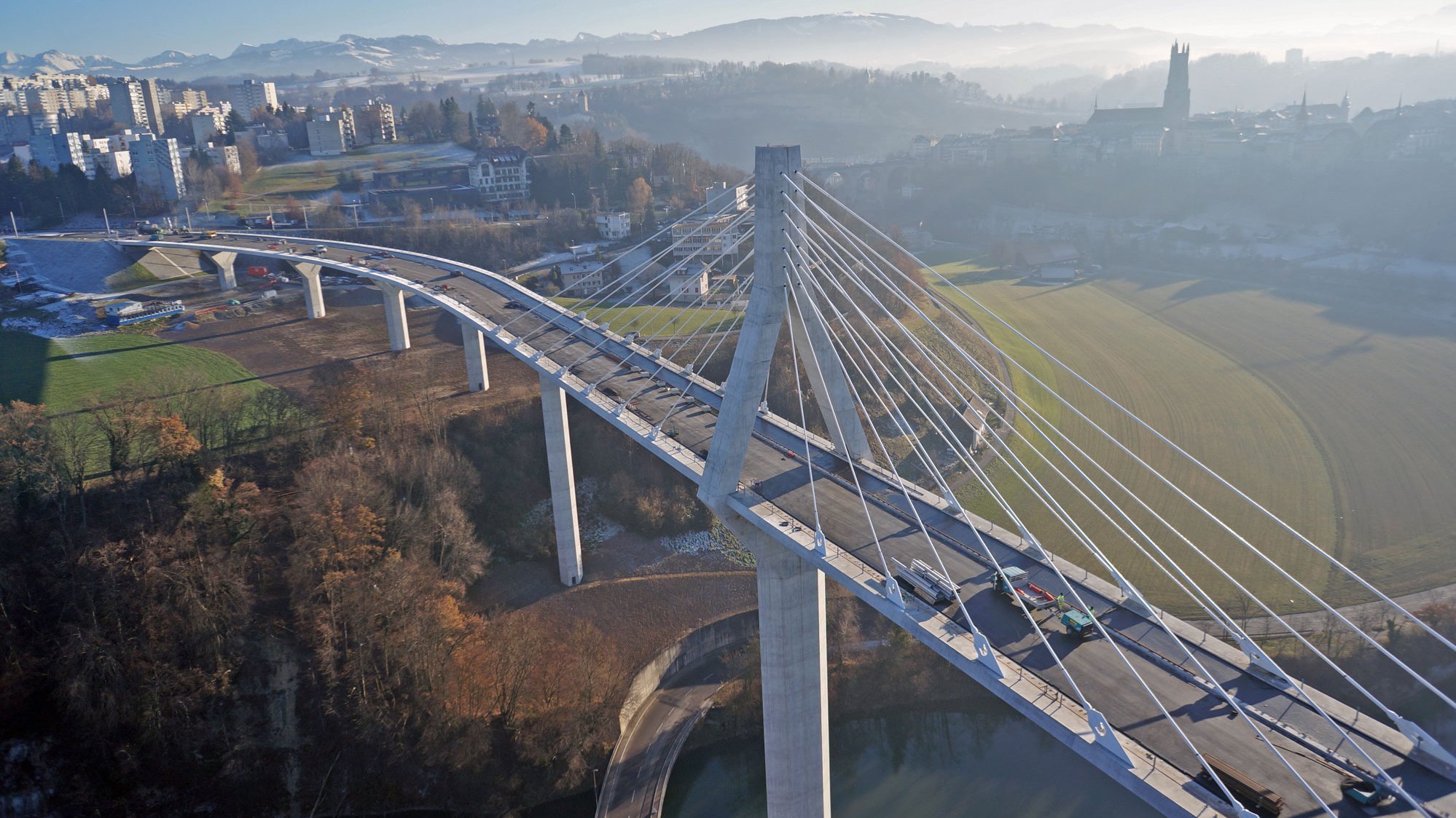
For centuries, the Saane River has marked a historic language boundary in Switzerland: on one side of the river, French is the predominant language, while on the other, Swiss German is spoken. The Pont de la Poya —or Poya Bridge—demonstrates how elegantly different cultures can be brought together.
With a length of 851 m and a main span of 196 m, the Poya Bridge is the largest cable-stayed bridge in Switzerland. It connects the La Cité-Bellevue neighborhood to the German-speaking part of the canton. At the same time, it relieves the city center of Fribourg—home to the medieval St. Nicholas Cathedral—of through traffic. In 2014, Implenia handed over the bridge to the city of Fribourg.
Tangenvika, Norway, 2022–2027 (Implenia)
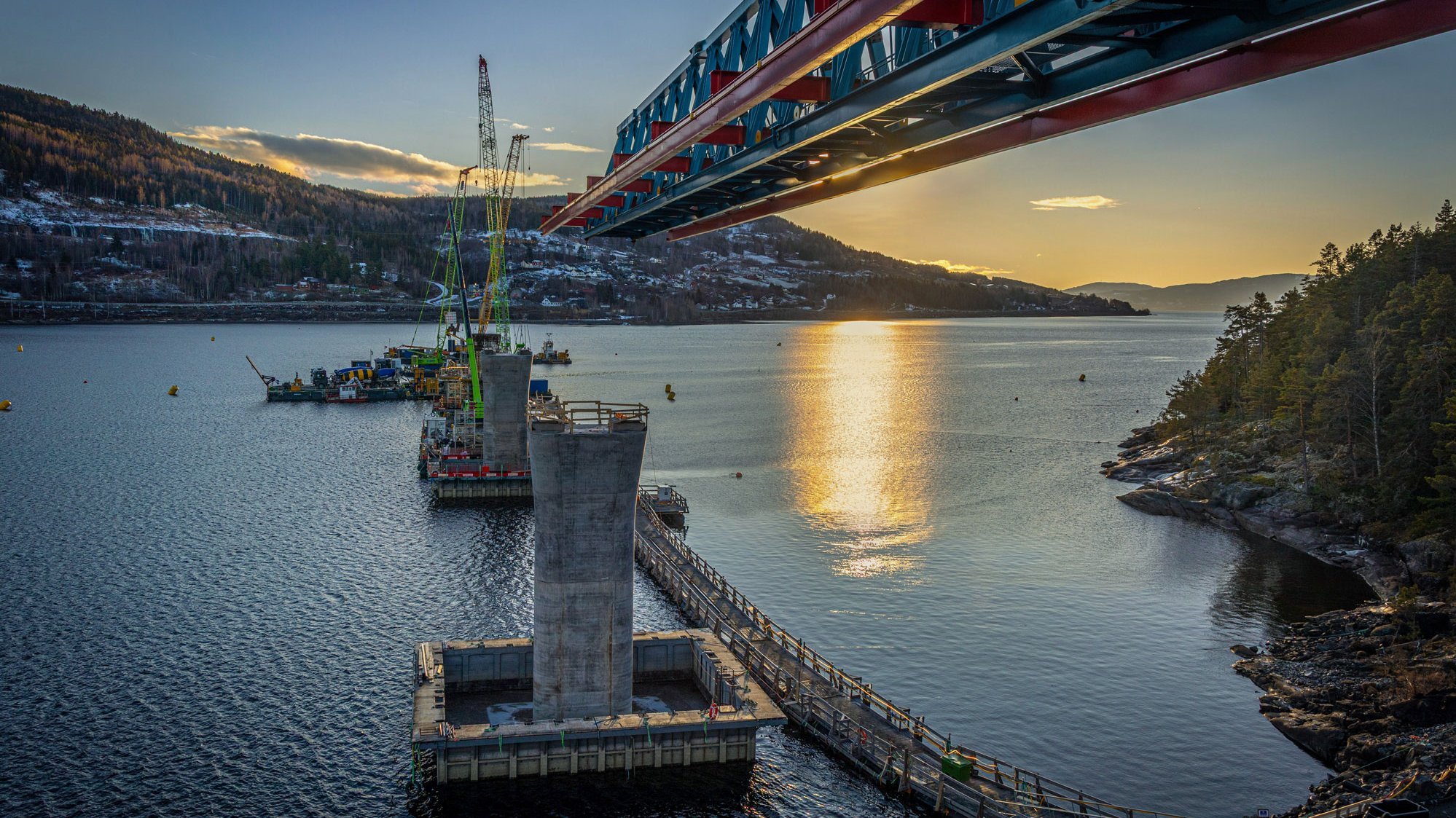
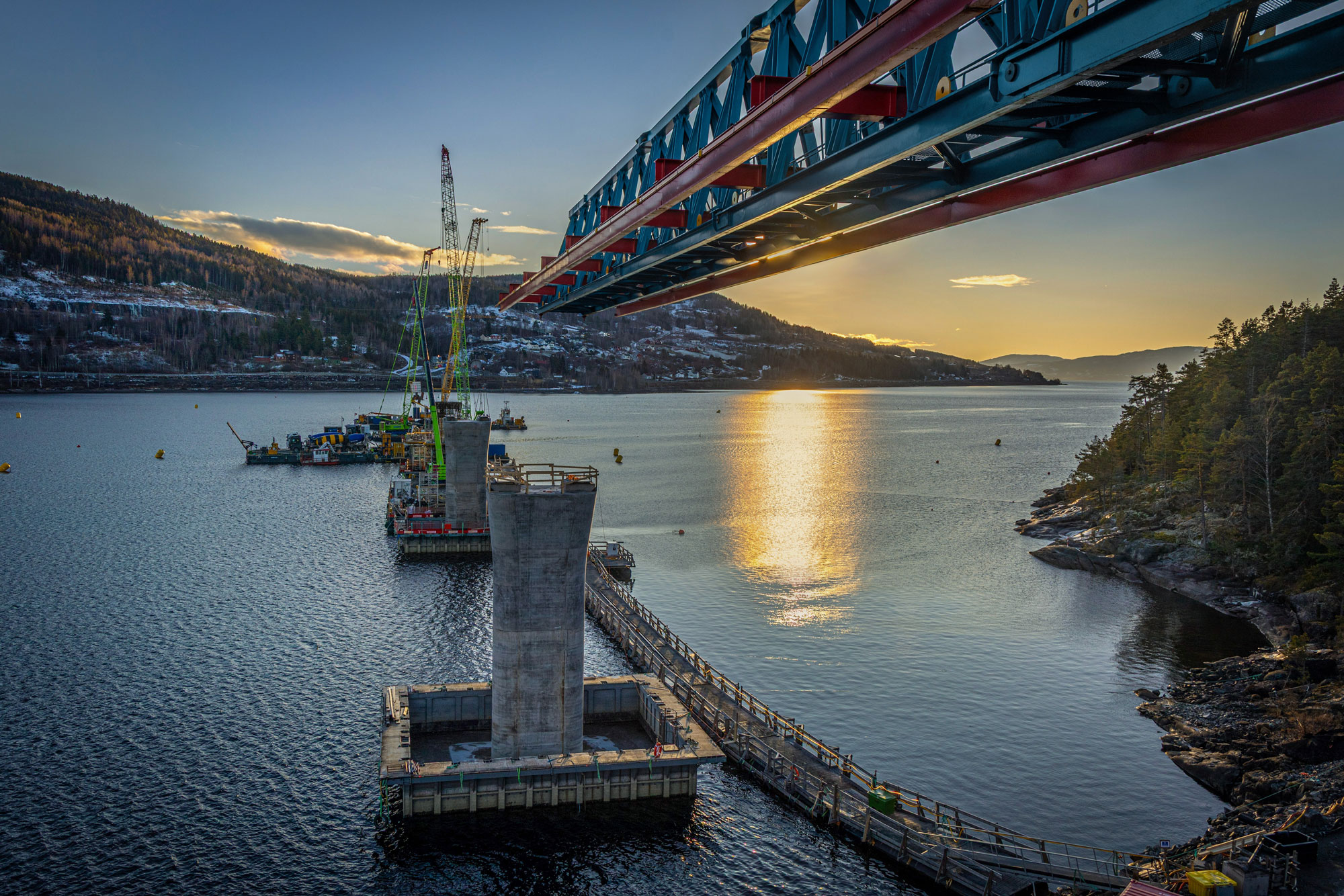
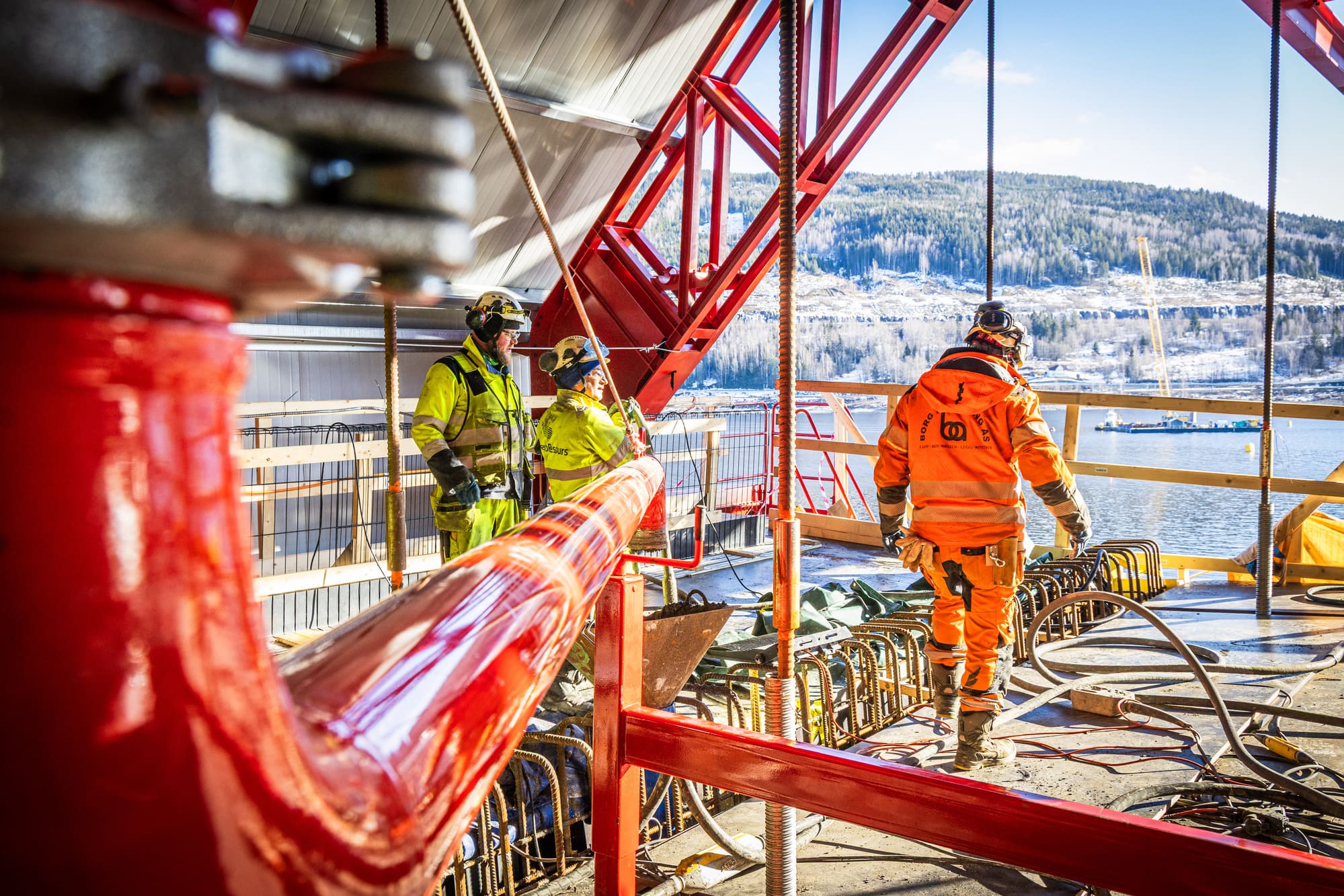
Much like Switzerland, Norway has a well-developed rail network stretching from Oslo to just north of the Arctic Circle. To accommodate growing passenger and freight volumes, this network must be continuously expanded—including the heavily trafficked route from Oslo northward to Hamar. For this line, Implenia has been constructing a double-track railway bridge since 2022; at 1,042 meters long, it spans Lake Mjøsa from Espa to the Tangen Peninsula.
The lake’s depth, which reaches up to 332 m, poses major challenges for Implenia in terms of foundation work. In addition, the lack of industrial ports complicates the delivery of heavy construction equipment. For example, the crane platforms must be assembled from 44 individual components.1 Digital simulations help Implenia optimize the complex construction processes on Lake Mjøsa. In this way, Implenia is lowering costs for this project while simultaneously minimizing the impact on the diverse flora and fauna of Lake Mjøsa. Norway’s longest railway bridge is scheduled to be handed over to the client, Bane NOR, in 2027.
Rader High Bridge, Germany, 2023–2026 (Implenia)
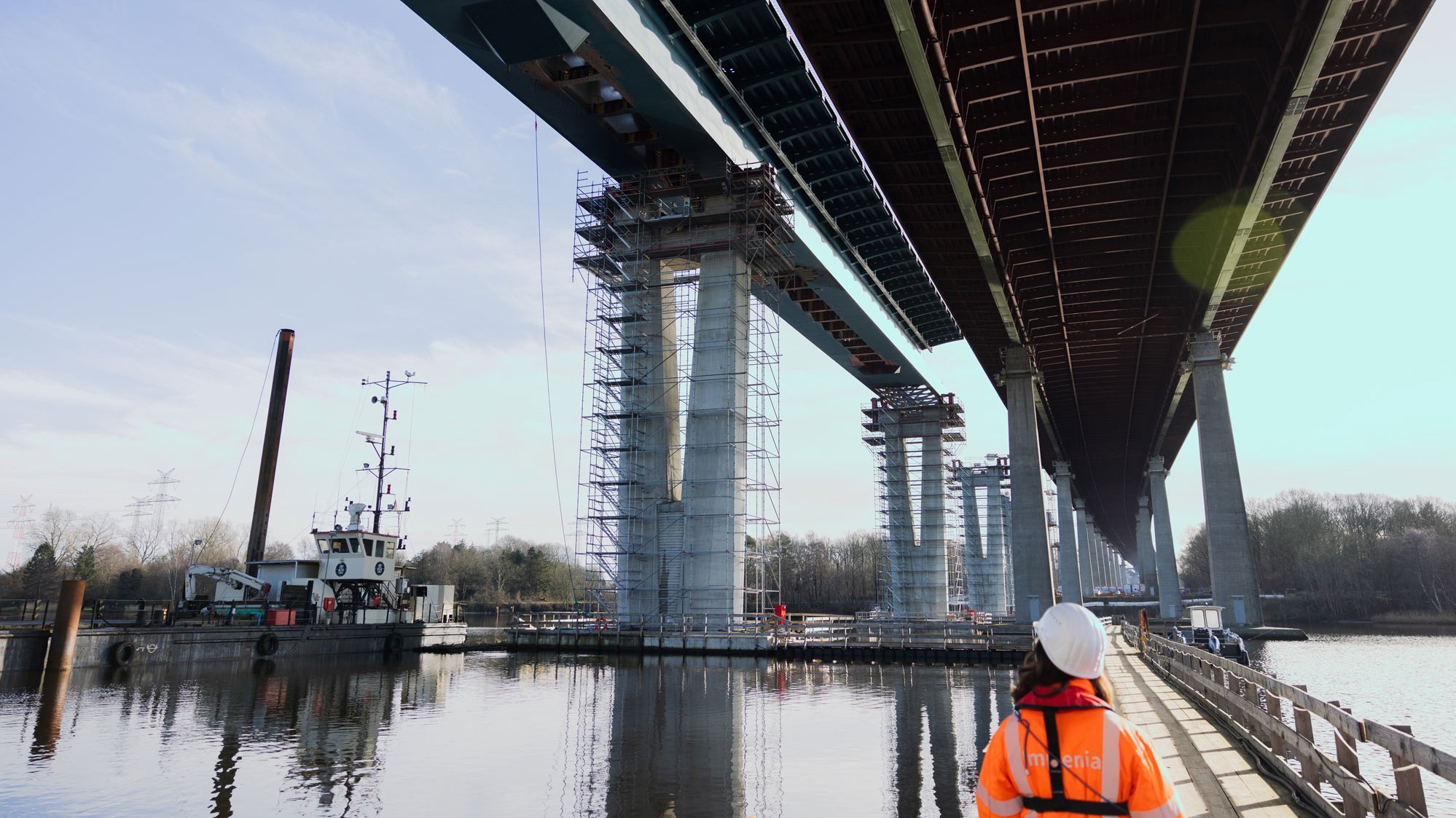
Bridges are high-performance structures. They must withstand the weight of millions of vehicles for decades, while traffic volume is constantly increasing. When the Rader High Bridge opened as part of the A7 in 1972, there were fewer than 20 million vehicles in the Federal Republic of Germany; 40 years later, there were 52 million. By that time, in 2013, signs of wear and tear were becoming apparent on the Rader High Bridge; a decision was made to rebuild the bridge by 2026.
Since April 2023, a consortium led by Implenia has been constructing the eastern half of the new viaduct. Once again, Implenia must pull out all the stops in terms of construction engineering: For example, three piers are being founded in the water in a side channel of the Kiel Canal, which in turn requires the installation of bored piles 40 m deep. The 50-meter-high hybrid piers with 40-meter-long cantilevered concrete beams are also unique in their scale. Their load-bearing function is achieved in conjunction with the steel cross-section above them, which is slid over the piers using the incremental launching method.
Viaduc du Chêne (Bridge Monitoring), Vaud, 2026–present (Implenia)
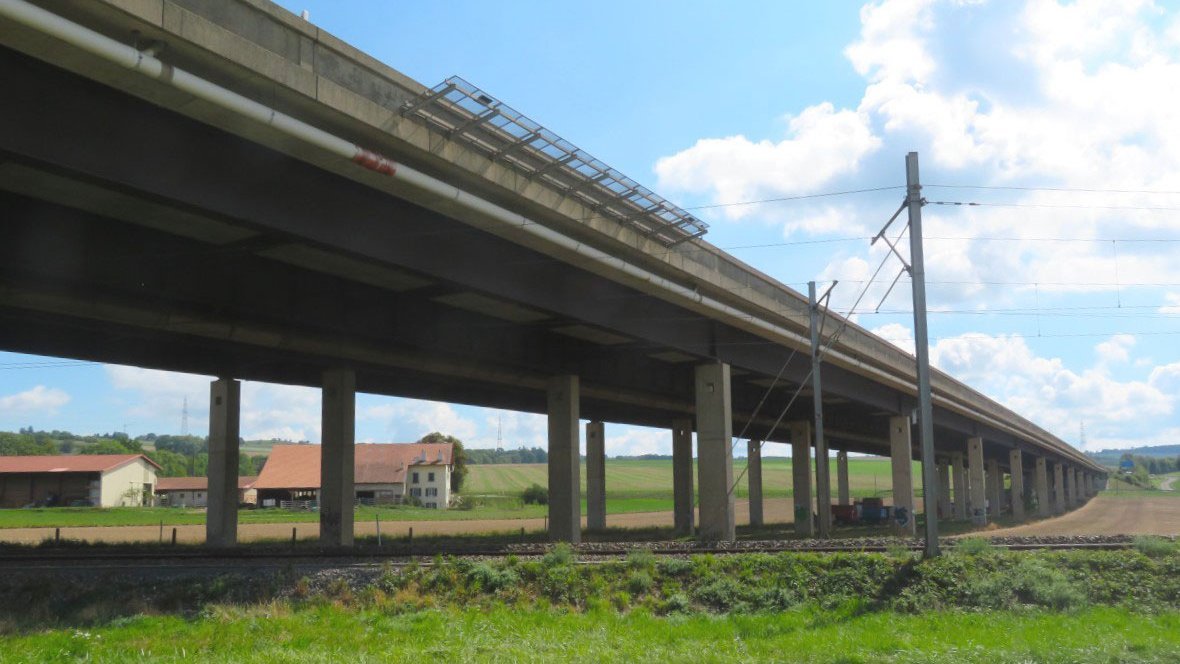
It is the golden age of the automobile. The automobile is becoming commonplace. To cope with the flood of traffic, the Federal Council decides in 1960 to build a 1,811-kilometer-long road network, including 800 kilometers of “autobahns,” which may not be crossed at the same level. Countless engineering structures were built in the 1960s and 1970s and continue to form the backbone of Switzerland’s transportation infrastructure to this day. However, they are nearing the end of their life cycle—not only because of their age but also due to the ever-increasing volume of traffic. For environmental and financial reasons, it is impossible to rebuild all of these bridges.
This makes an innovative concept—which Implenia is currently implementing in collaboration with the technology provider irmos technologies on behalf of the Federal Roads Office (ASTRA)—all the more sensible: the “Structural Bridge Monitoring Viaduc du Chêne”: The 365-meter-long highway viaduct, built in the 1970s, is being equipped with sensors: Accelerometers measure vibrations and movements, while strain gauges detect stress differences and load cycles. The data is analyzed by intelligent algorithms; any deviations enable early corrective action—even before actual damage occurs. In technical jargon, this is called “predictive maintenance.” Bridge monitoring is designed to prevent unnecessary maintenance work, extend the service life of bridges, and minimize risks. That’s what the future “made by Implenia” sounds like!