


Hirslanden Private Clinic, Zurich, 1930–1932 (HHH)

“The precarious conditions in Zurich’s hospitals have been causing a stir at the federal level for years,” read a 1932 article in the *Illustrierte Schweizerische Handwerkerzeitung*. Where the government failed, the liberal, self-made millionaire Heinrich Hatt-Haller often stepped into the breach at that time. This was also the case with the hospital issue.
Together with like-minded individuals—including his wife Marie—he founded Privatklinik Hirslanden AG. The bold idea behind it was not an architectural one, but rather the so-called “affiliated physician system”: treatments were to be provided by practicing physicians from Zurich, not by doctors employed by the clinic. The clinic “only” provided the medical infrastructure, the nursing staff, and the facilities. The construction work, of course, was carried out by Hatt-Haller’s own construction crews.
The grand opening was celebrated on May 1, 1932. 1.5 million bricks were used in the construction, but that was of secondary importance to Heinrich Hatt-Haller, a trained bricklayer. What mattered was that Zurich now had a clinic with 130 hospital beds. And the story continues: From 2005 to 2009, Implenia—the successor company to HHH—built the so-called “Garden Wing,” a nursing and clinical wing of the Hirslanden Clinic in Zurich.
Triemli City Hospital, Zurich, 1963–1970 (HHH)


With the postwar economic boom, Switzerland’s population also grew rapidly. The Swiss hospital system could not keep pace with this growth. As a result, there was once again a shortage of hospital beds, particularly in metropolitan areas. The city of Zurich responded by building two new municipal hospitals: the Waidspital in Höngg (1953) and the Triemli Municipal Hospital, which opened in 1972.
AG Heinr. Hatt-Haller (HHH) played a key role in both projects. During the construction of the Triemli City Hospital, the company impressively demonstrated its leadership in construction technology. For the foundation of the high-rise ward block, innovative BENOTO bored-pile machines were used to drive the 33-meter-long bored piles into the ground. For the structural work, HHH drew on its expertise in the so-called “all-concrete method,” which had already proven itself during the construction of the “Lochergut.”
Basel-Stadt Cantonal Hospital, Clinic 1 West, Basel, 1993–2002 (Zschokke)
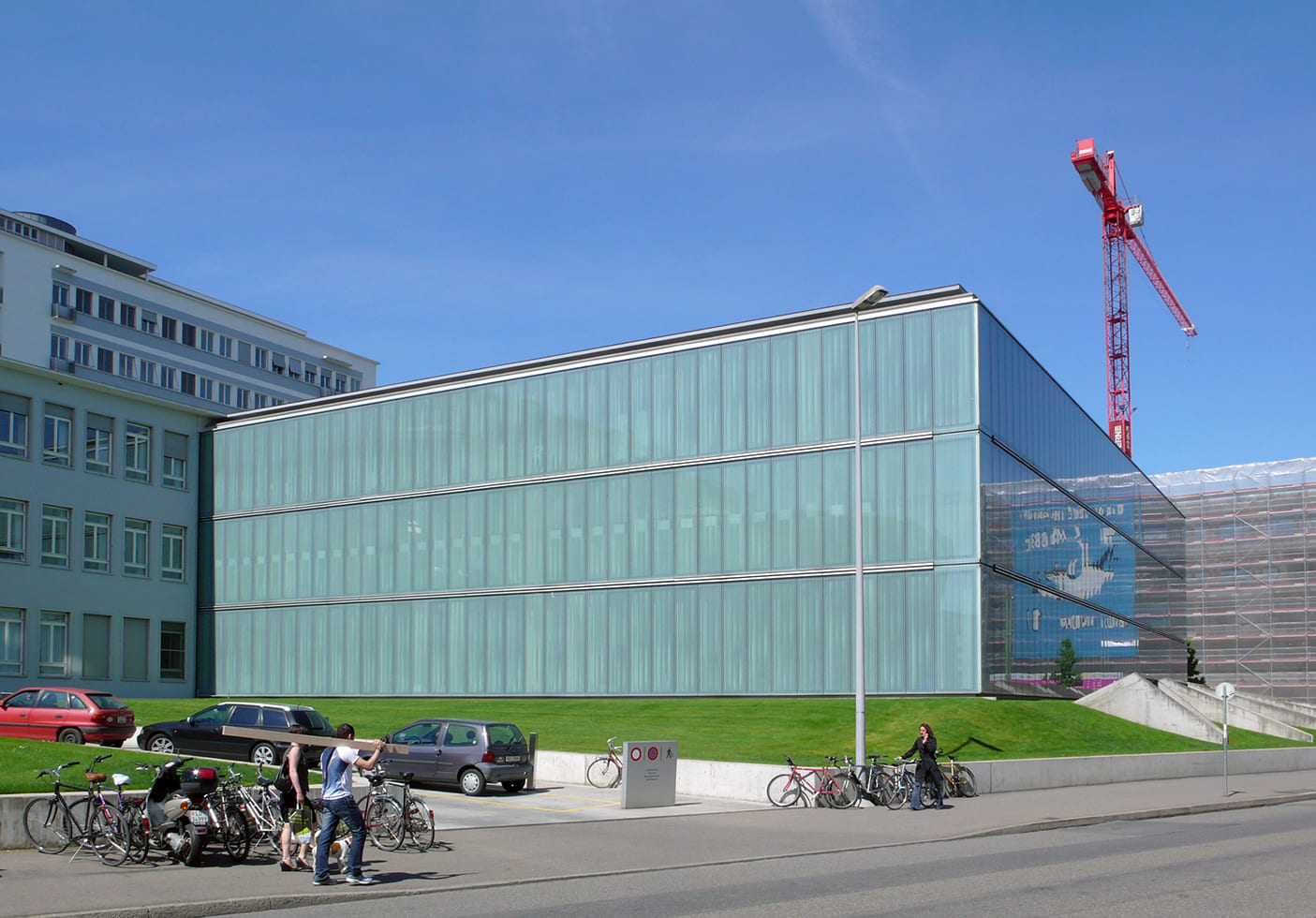
While World War II was raging, the city of Basel set out to build a new “Bürgerspital.” Built between 1939 and 1945, the building is of architectural and historical significance, but by the 1980s it had reached its spatial limits. In the early 1990s, the cantonal hospital underwent a complete structural renovation—while preserving the existing layout, which included the eight-story inpatient wing and the three-story examination and treatment wing. Six-bed rooms were converted into two-bed rooms with private showers and toilets, and historically protected details, such as the floral stained-glass windows, were lovingly restored.
Because additional space was needed in addition to the renovation, a new building was constructed in the western section to house the central sterilization unit, women’s clinic, outpatient clinic, operating rooms, maternity ward, and neonatology department. The general contractor Zschokke has been awarded the construction contract for this groundbreaking renovation and new construction project in the west wing.
Felix Platter Hospital, Basel, 2015–2019 (Implenia)
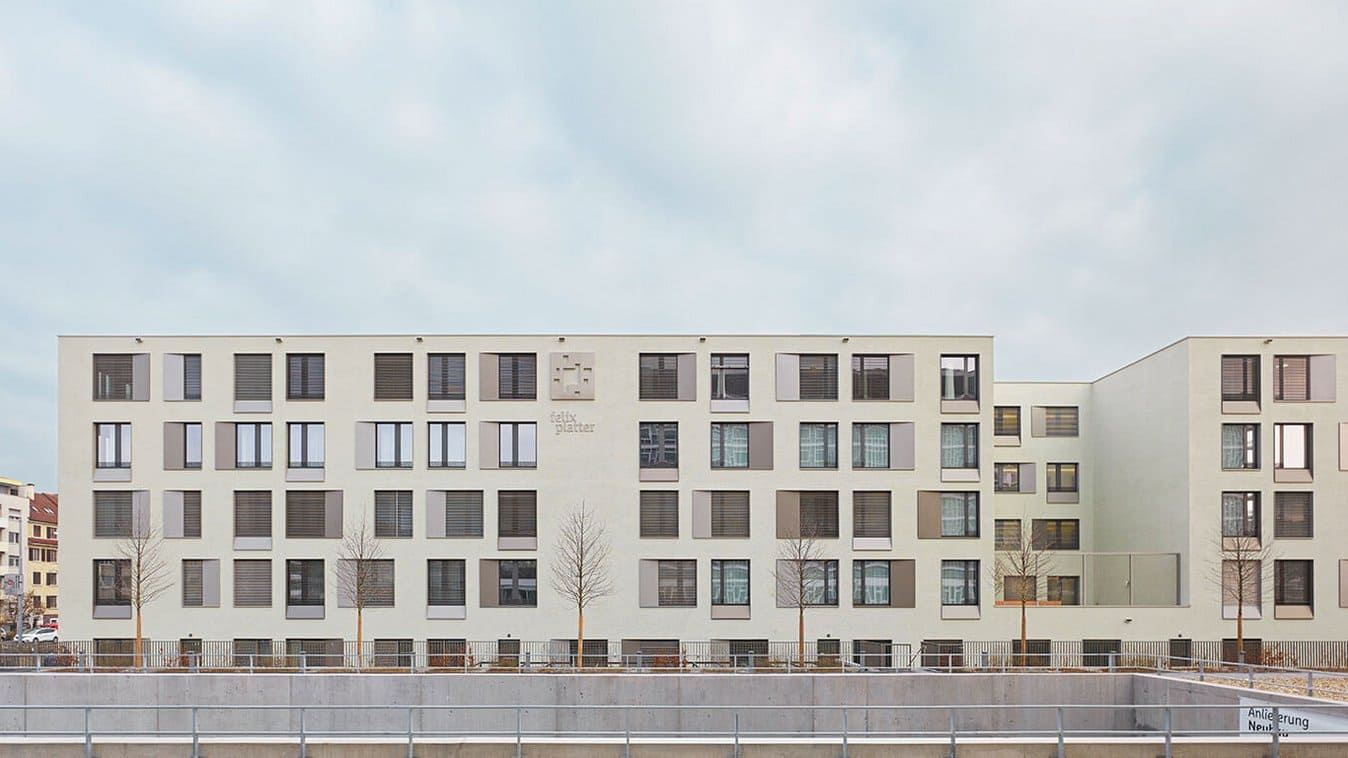
“Everything Under One Roof”—under this motto, the Felix Platter Hospital in Basel , which specializes in geriatric medicine, will open its new building in 2019 . What makes this project unique is that the client insisted from the very beginning that the new building be designed and constructed using the new “Building Information Modeling” ( BIM) approach. After all, the financial constraints in the healthcare sector are well known: That is why there is a need for clarity regarding building costs—not only during construction but also during subsequent operation, that is, throughout the property’s entire life cycle. As part of a joint venture, Implenia uses BIM to create “as-built models” that allow for the simulation of building structures, future processes, uses, and costs. The new building for the Felix Platter Hospital in Basel is one of the first major construction projects in Europe to be consistently developed using BIM.
Laboratory of the Department of Biosystems Science and Engineering (D-BSSE) at ETH Zurich, Basel, 2018–2023 (Implenia)
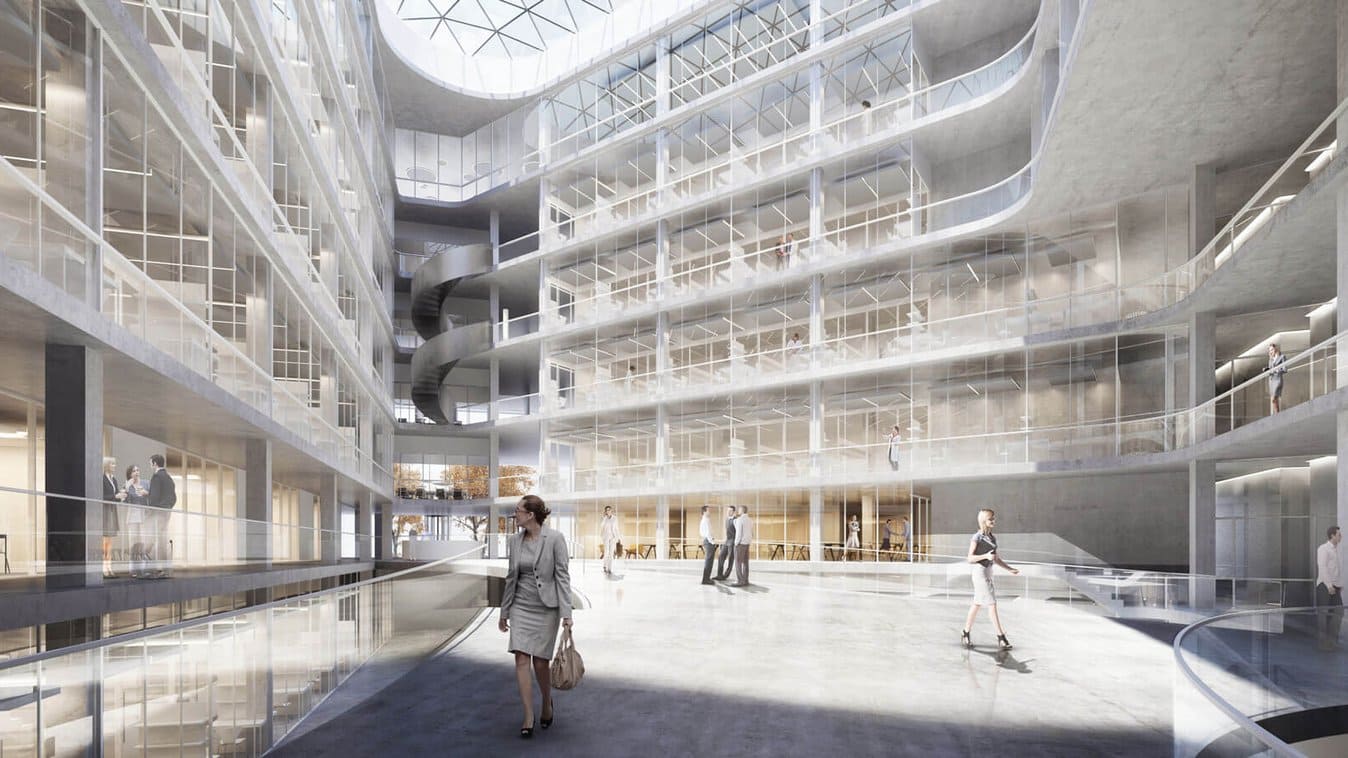
This is where the future is taking shape: Atthe “Department of Biosystems Science and Engineering (D-BSSE),” experimental biologists are researching the functional mechanisms of our cells, genes, and other biological systems. The foundation for this “rocket science” is one of Europe’s most modern research laboratories, which Implenia is building between 2018 and 2023 on the Schällemätteli site in Basel. From the very beginning, researchers at ETH Zurich have also kept sustainability in mind. In 2021, they even founded “Sustainability Initiatives @D-BSSE (SIB).” As a result, the new laboratory building will be the first in Switzerland to receive the Gold Certificate from the “German Sustainable Building Council” (DGNB) in 2025.
Temporary Laboratory Facility for the Functional Genomics Center Zurich, 2021–2022 (Implenia)
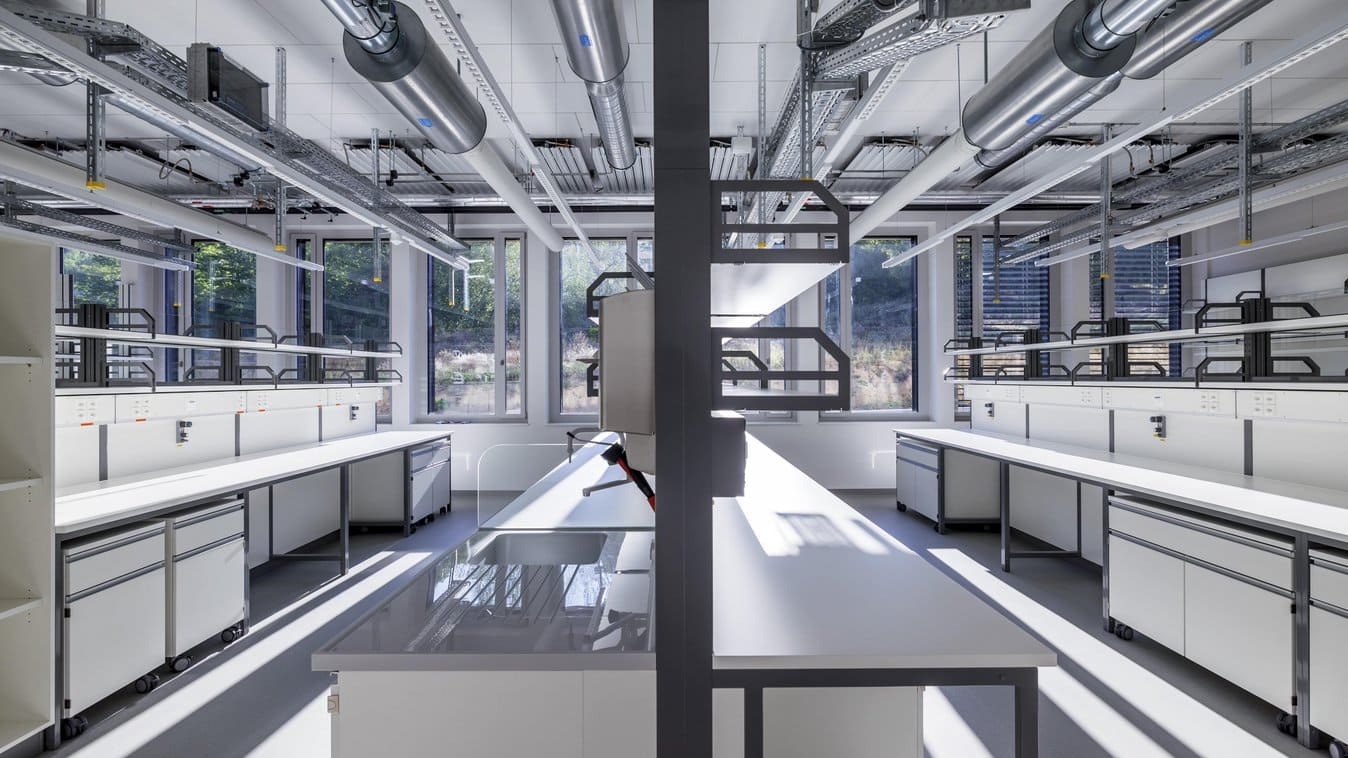
The project is ambitious to begin with. In just twelve months, a temporary 3,000 m² laboratory—designed to last 15 years—is to be built on the University of Zurich’s Irchel campus—naturally, in accordance with the highest sustainability standards: Minergie P Eco + SGNI Gold. On top of that, the COVID-19 pandemic and the outbreak of the war in Ukraine have caused supply bottlenecks in material procurement. Nevertheless, the new Functional Genomics Center Zurich (FGCZ) will be ready for occupancy in September 2022—just a few weeks later than planned.
Empa Eawag “co-operate” Research Campus, Phase 1, 2021–2023 (Implenia)
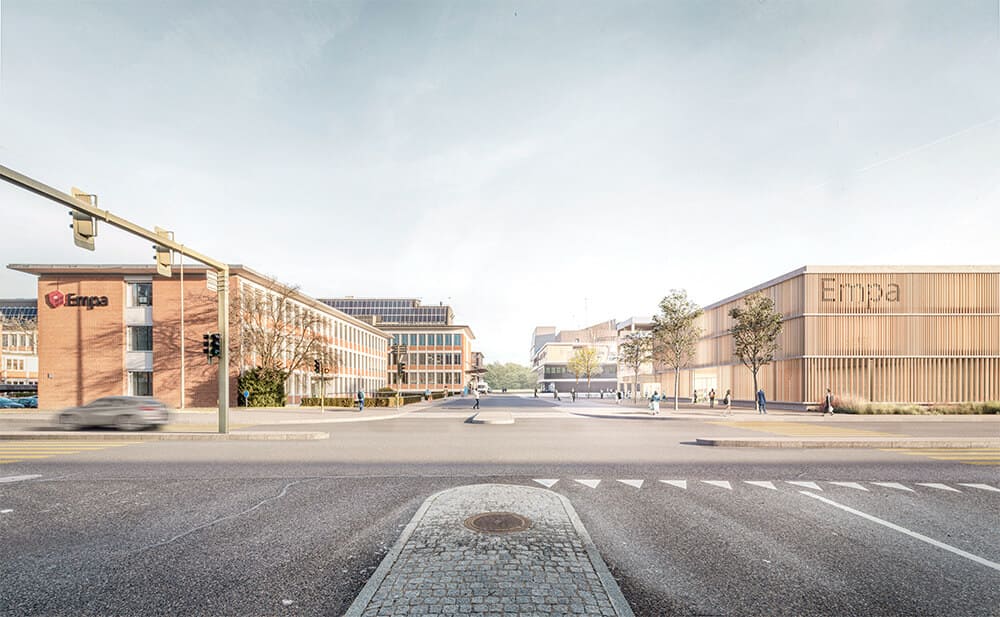
“From Research to Innovation” is the slogan of the Swiss Federal Laboratories for Materials Testing and Research, or Empa for short. As an interface between academic research and industrial practice, it is one of Switzerland’s most important drivers of innovation. Its largest campus is located north of Zurich in Dübendorf. Between 2021 and 2023, the new“co-operate”campus will be built there, consisting of a laboratory building covering nearly 9,000 m², a multifunctional building, and a parking garage. Implenia has been awarded the contract for the overall planning of the campus using Building Information Modeling (BIM) and for the new construction projects.
Aarau Cantonal Hospital, 2021–2025 (Implenia)
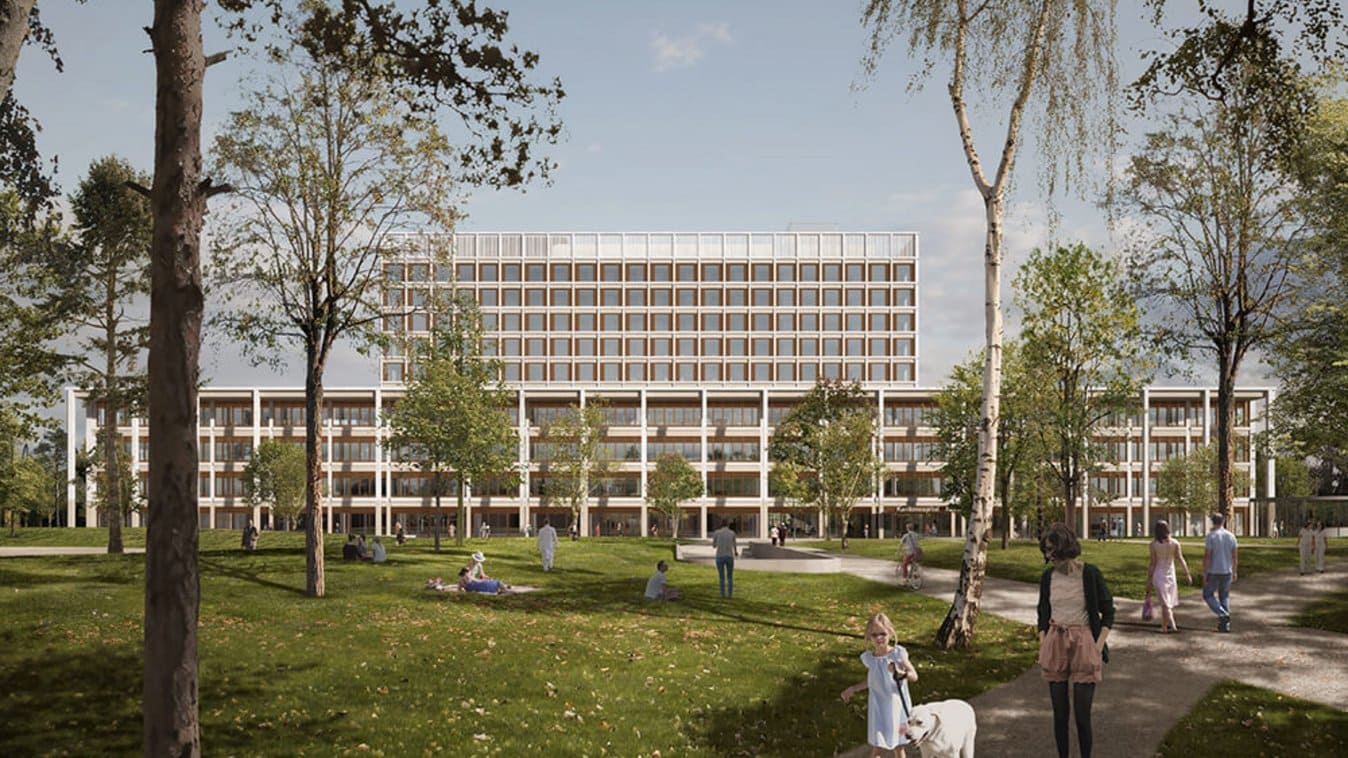
With the new“Dreiklang”building, a new era is beginning for the Aarau Cantonal Hospital (KSA), the largest hospital in the canton of Aargau: more space, more light, and more wood (“healing architecture”), shorter distances, and more efficient processes. The name “Dreiklang” evokes the harmonious interplay between the outpatient clinic, the inpatient ward, and specialized areas such as physical therapy and the restaurant. In 2021, ground was broken for what was then Switzerland’s largest new hospital construction project. Shortly before that, Implenia had acquired BAM Swiss AG, its partner in the joint venture for the construction of “Dreiklang.” As a result, Implenia is now the sole general contractor for this major project.
New Construction of the Children's Hospital and Women's Clinic, Lucerne Cantonal Hospital (LUKS), 2022–2024 (Implenia)
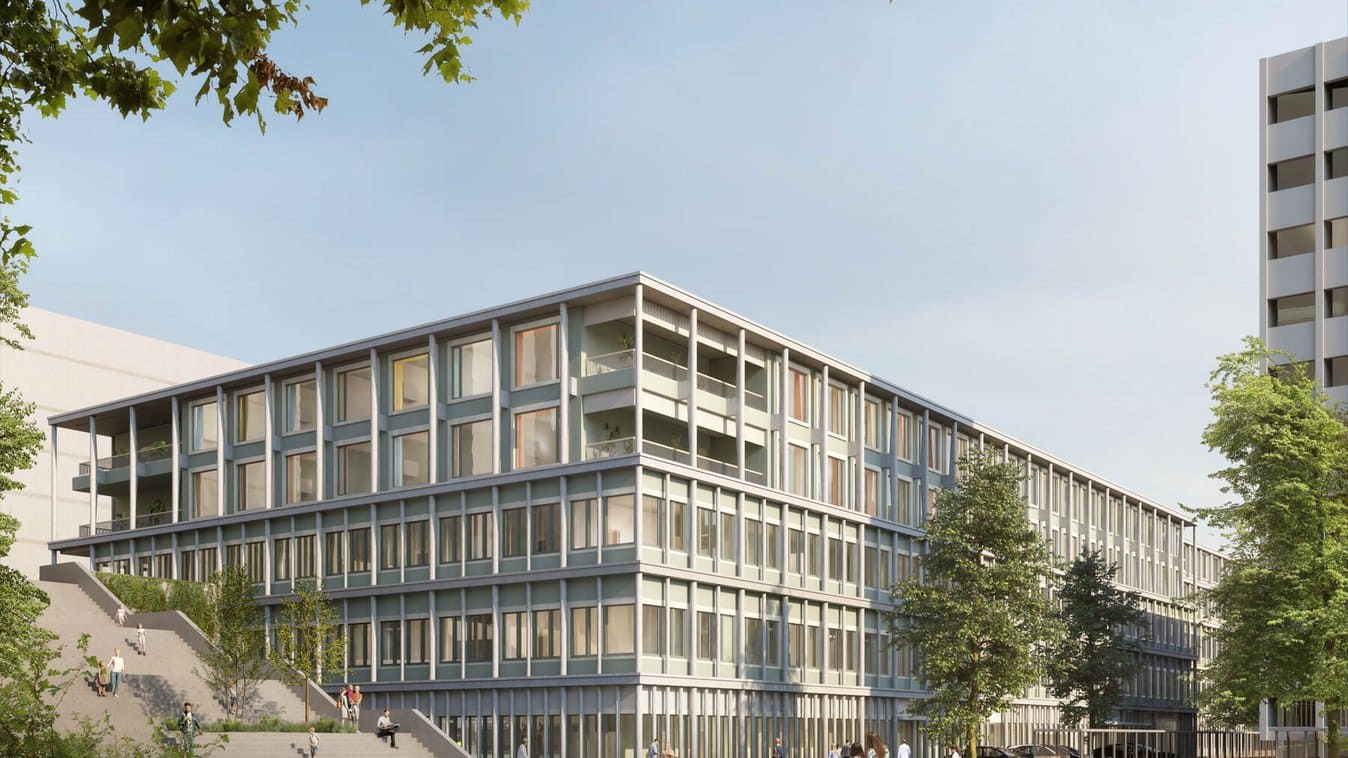
Implenia is now a leader in the design and construction of buildings using Building Information Modeling (BIM). This is particularly indispensable for calculating the total costs of hospitals, as their operation—if planning is suboptimal—can have a significant financial impact in the future. BIM also plays a key role in the planning of the construction work for the new Children’s Hospital and Women’s Clinic at Lucerne Cantonal Hospital (LUKS), which Implenia is carrying out. The new building will strengthen pediatric and women’s healthcare in Central Switzerland—around 2,000 children are born here each year. To ensure that these children will one day inherit as green a planet as possible, the building meets the Minergie-P-ECO standard; 270 geothermal probes and a large-scale photovoltaic system are being installed.
New Laboratory Building for the Department of Biomedicine (DBM), University of Basel, 2023–2030 (Implenia)
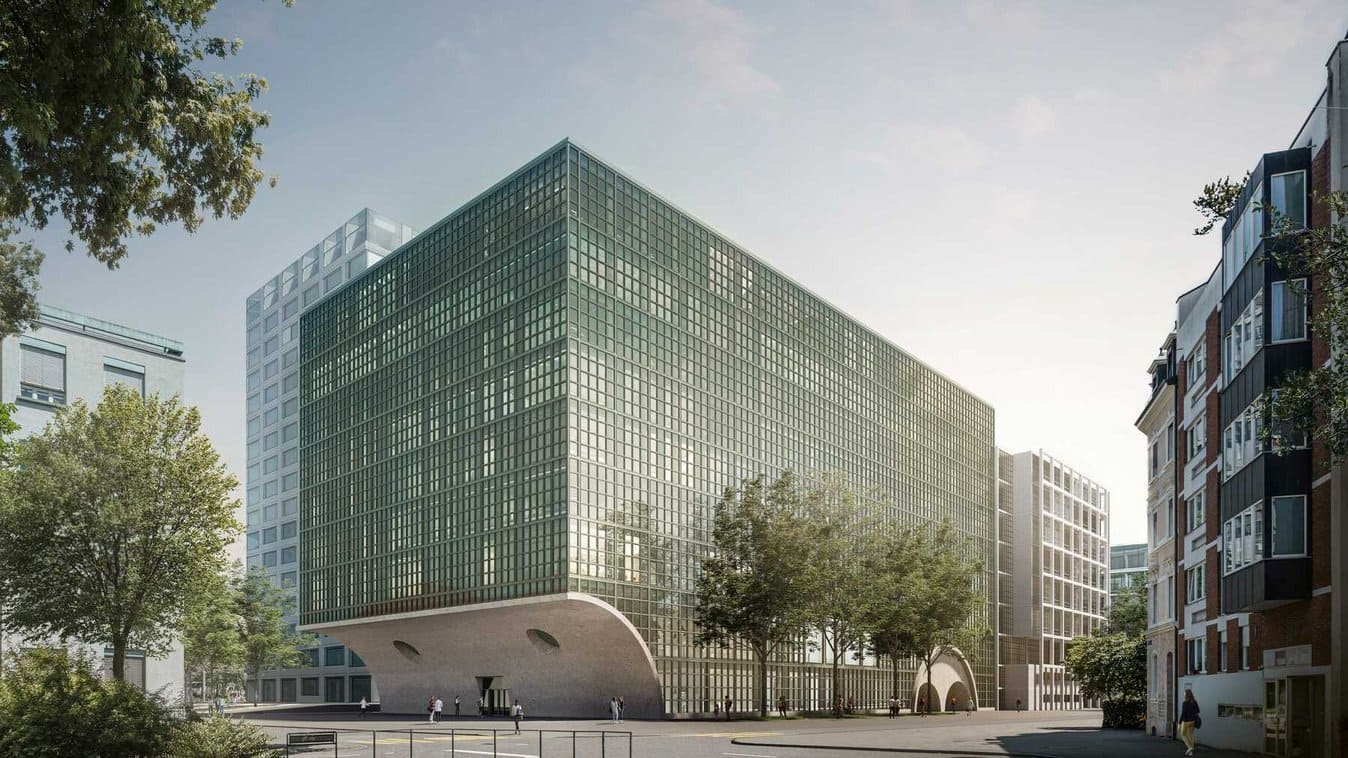
Yet another state-of-the-art laboratory—and once again, it’s being built by Implenia. No fewer than 70 research groups from the Department of Biomedicine at the University of Basel are set to be brought together in the new, 37,000-square-meter laboratory building—today, the approximately 900 employees and 200 students are still spread across six locations. But science often means sharing knowledge and exchanging ideas. That will work better on the Schällemätteli campus. Schällemätteli? That rings a bell, doesn’t it? Exactly: Implenia already built the laboratory for ETH Zurich’s Department of Biosystems Science and Engineering (D-BSSE) on this site between 2018 and 2023. Now, the Swiss industry leader has also won the bid for the University of Basel’s large-scale laboratory. The new laboratory building is scheduled to be ready for occupancy in 2030.
Heidekreis Hospital in Bad Fallingbostel (Germany), 2024–2028 (Implenia)
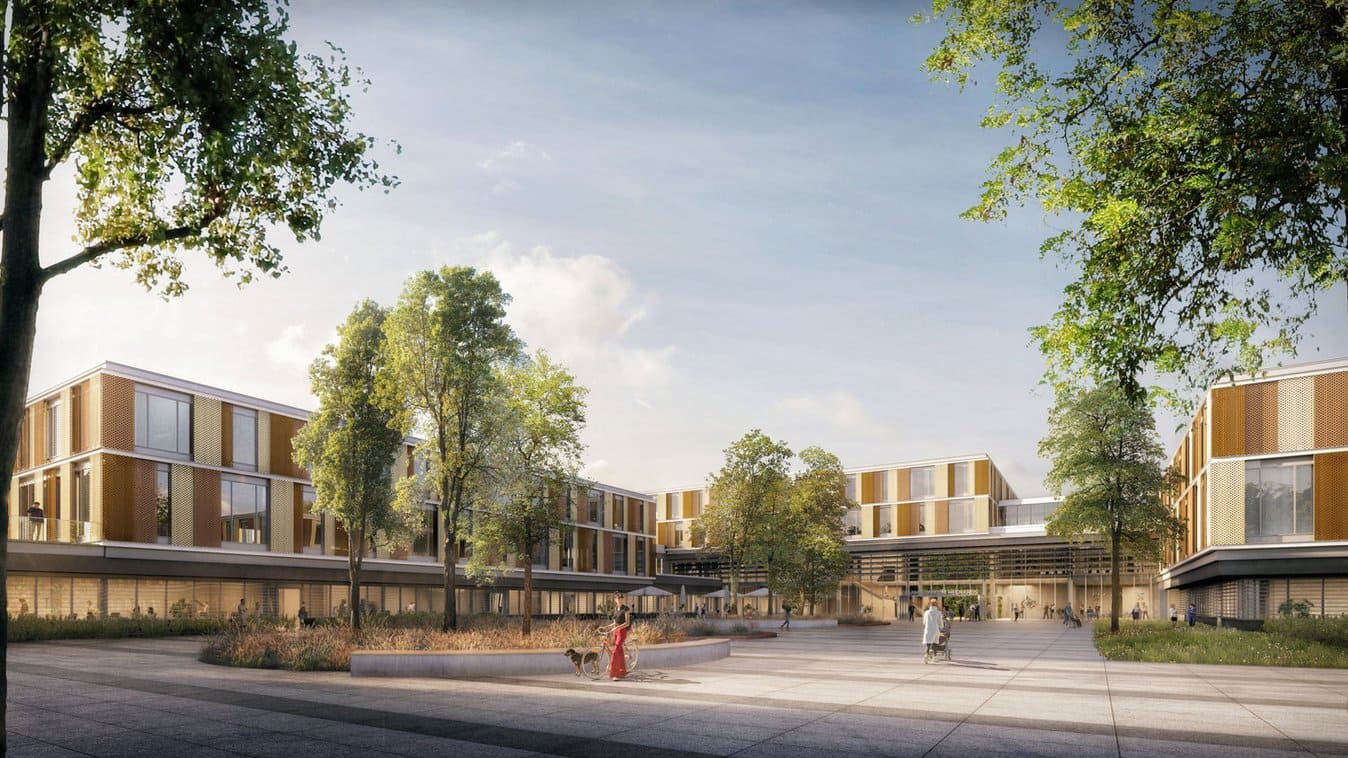
Rising healthcare costs are a political issue not only in Switzerland but throughout Europe. One consequence: the review and consolidation of various locations. As a result, Heidekreis-Klinikum gGmbH has decided to replace its two locations in Walsrode and Soltau with a singleHeidekreis-Klinikum facilityin Bad Fallingbostel. When the Lower Saxony Hospital Planning Committee gave the green light in 2018 and approved a grant of nearly 200 million euros, planning could begin. Construction is set to start in 2024. Implenia was awarded the contract to construct the complex engineered facades featuring flexible sliding shutters that meet the highest standards of sustainability and aesthetics. This once again underscores the company’s leadership in innovation in facade technology, which it has also demonstrated, for example, in the construction of the Humboldt Forum at the Berlin Palace.
New Medical Research and Training Center, University of Bern, 2024–2030 (Implenia)
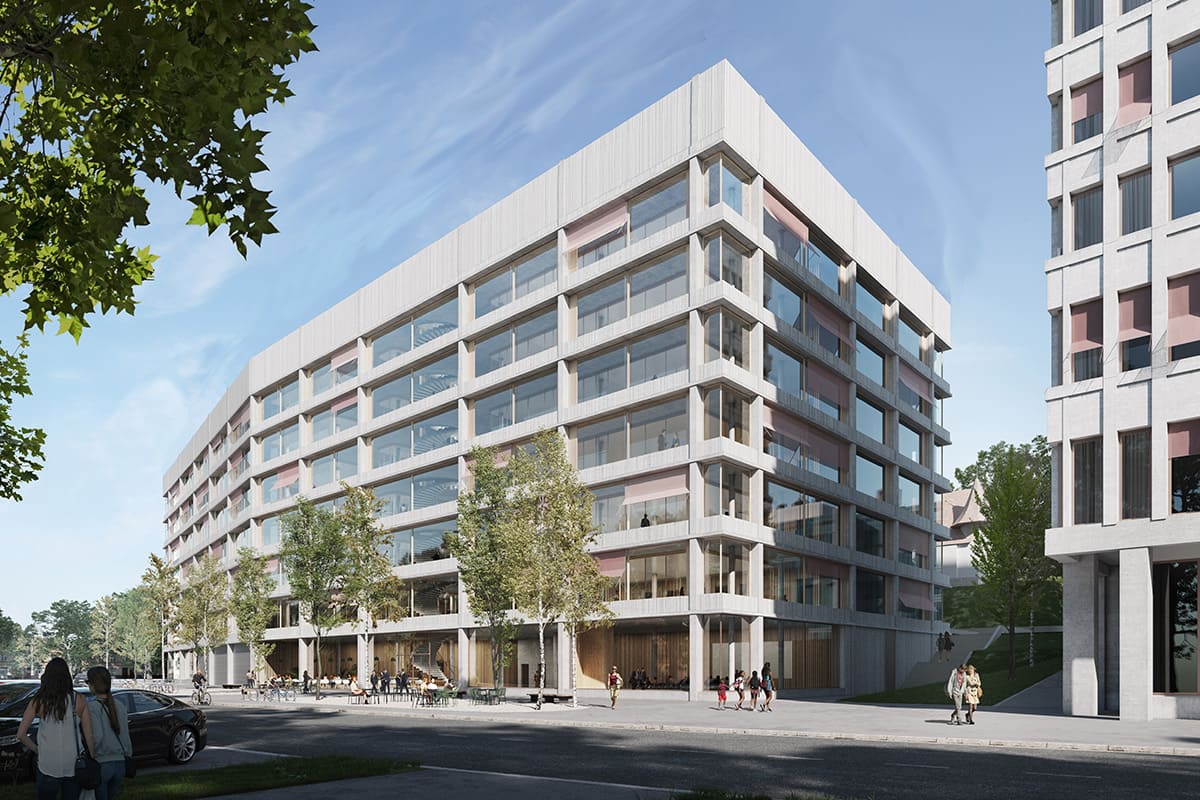
The University of Bern’s Faculty of Medicine also aims to strengthen its position as a center for cutting-edge medicine by better concentrating medical expertise locally and facilitating a more organic exchange of knowledge. To date, most of the Faculty of Medicine’s institutes have been scattered throughout the Muesmatt district and, in part, on the Insel campus, which is also home to Bern’s flagship medical institution: the Inselspital. Now, the five institutes are to be brought together under one roof: the University of Bern’s new Medical Research and Training Center. The 13-story building—comprising a basement level, seven above-ground floors, and five underground levels—will house research laboratories and training facilities. It is scheduled to open in 2030.
TRON Research Center, Mainz (Germany), 2025–2027 (Implenia)
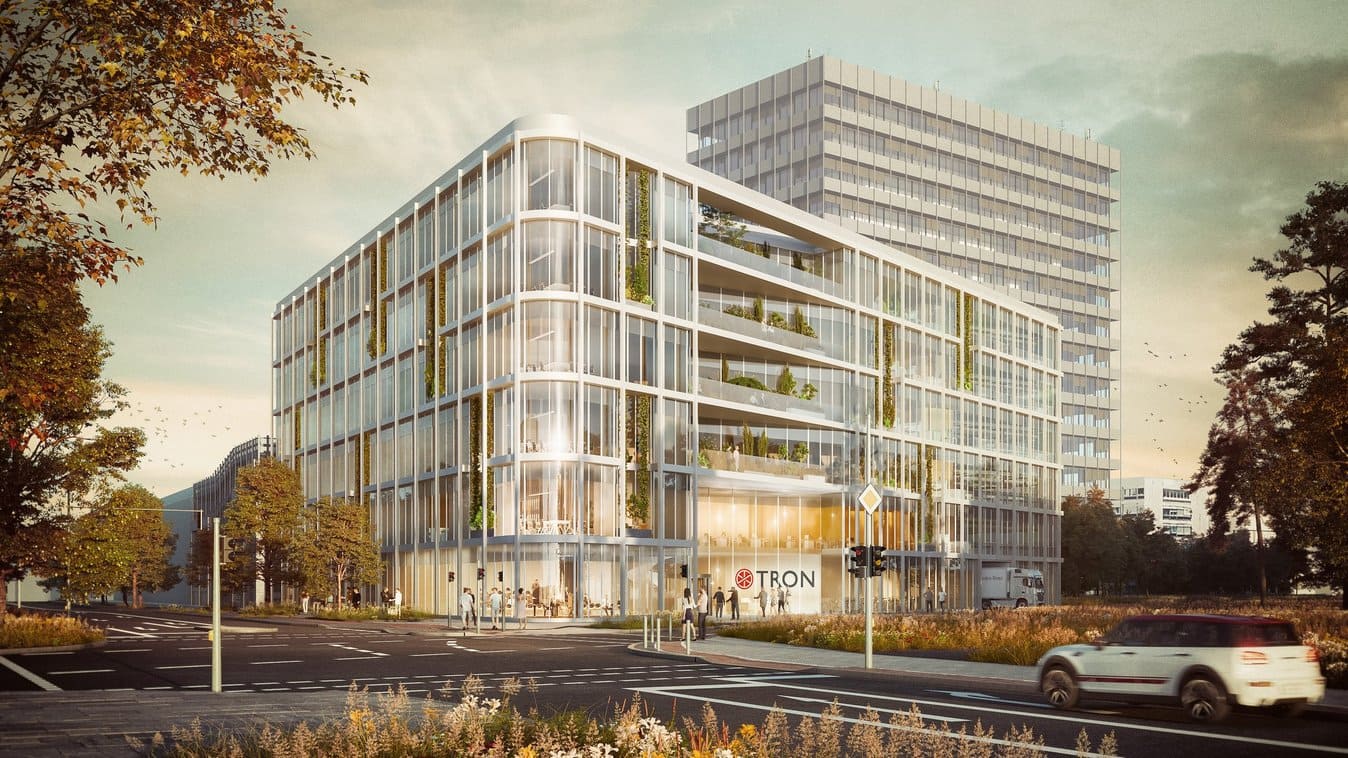
Mainz is one of Europe’s leading biotech and life sciences clusters. The most prominent example is BioNTech, the company that developed the COVID-19 vaccine. Now, a new research center for biopharmaceutical research is being built at a cost of 110 million euros, and Implenia is taking the lead on the technical aspects within the responsible joint venture. The TRON research building on the grounds of Mainz University Medical Center is expected to cover 10,000 m². In the future, new diagnostics and active ingredients for the immunotherapeutic treatment of serious diseases will be developed here. An investment in the future—of Mainz as a life sciences hub and of humanity.
Basel University Hospital, Clinic 2, 2026–2030 (Implenia)
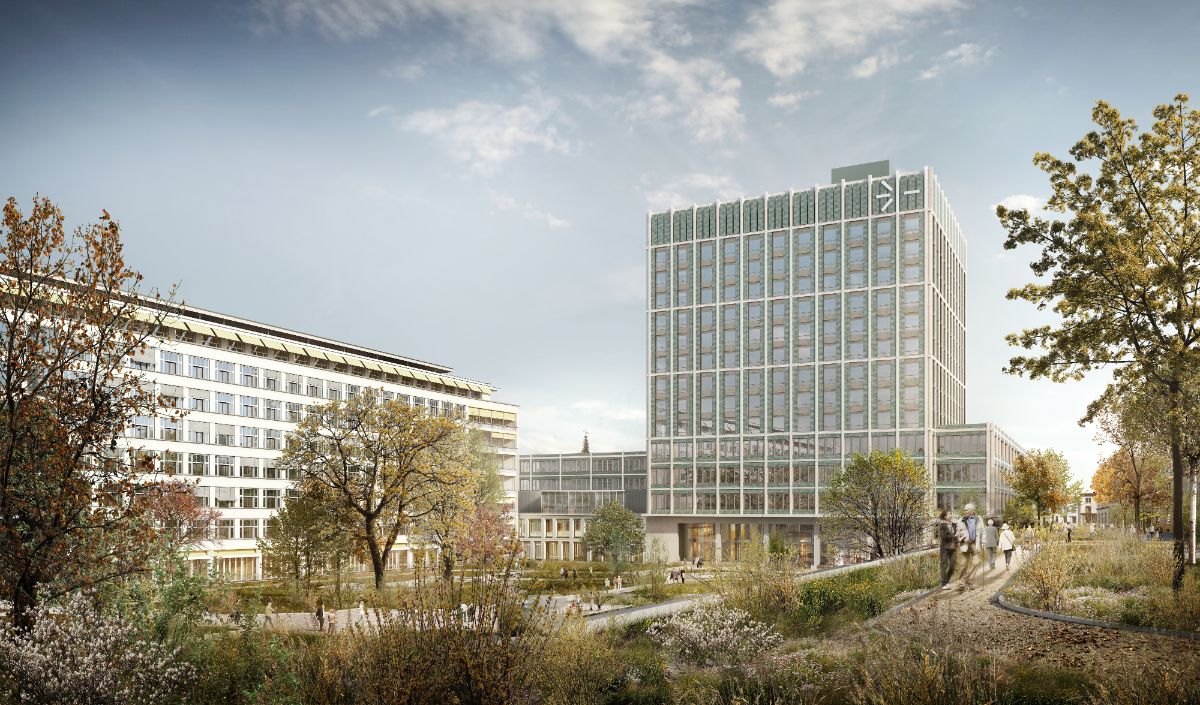
Basel, Part Four: After Zschokke helped build Clinic 1 in Basel-West around the turn of the millennium and Implenia helped build—or is currently building—two laboratories a few meters away, Implenia is now also taking on the construction work for the new Clinic 2 building—at least 50 percent of it as part of a joint venture. The new building, which is scheduled to be ready for occupancy in 2030, will replace the existing structure from the 1970s.
In a sense, this major contract encapsulates the history of Implenia’s hospital and life sciences construction projects. On the one hand, the new building addresses the spatial and energy requirements that have evolved over time, thereby optimizing hospital operations, improving patient comfort, and meeting regulatory requirements regarding seismic safety and fire protection. On the other hand, this new building will also become part of the life sciences cluster in Basel-West—alongside the laboratories and research institutes in the Schällemätteli area. Medical research, teaching, and clinical practice converge here in a way that is unique in Switzerland. And Implenia is playing a major role in this development—not only in providing healthcare for the people of Basel, but also in shaping one of Europe’s most significant life sciences clusters and the future of Basel.