



Laufenburg hydroelectric power station weir, 1912-1914 (Zschokke)
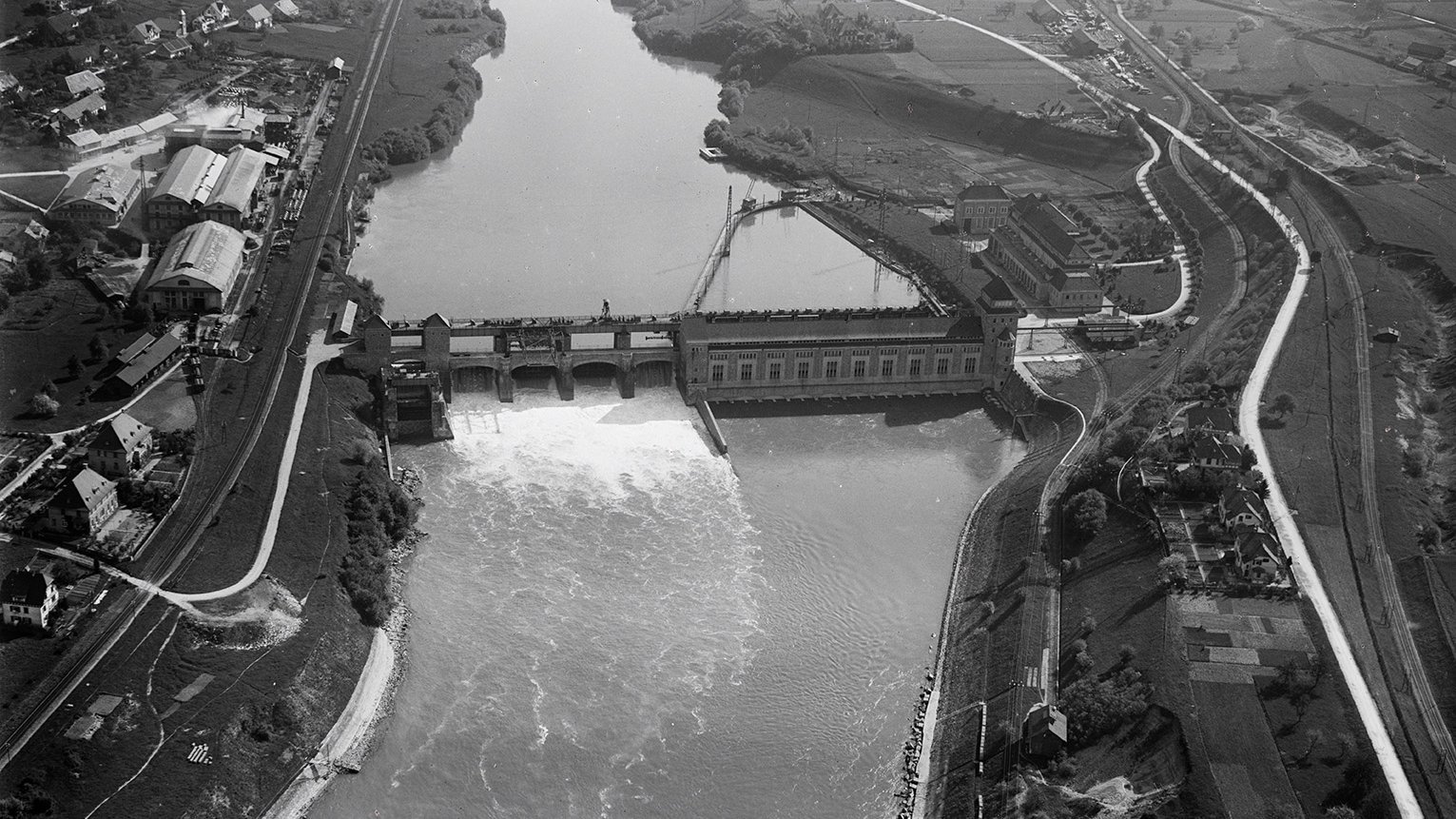
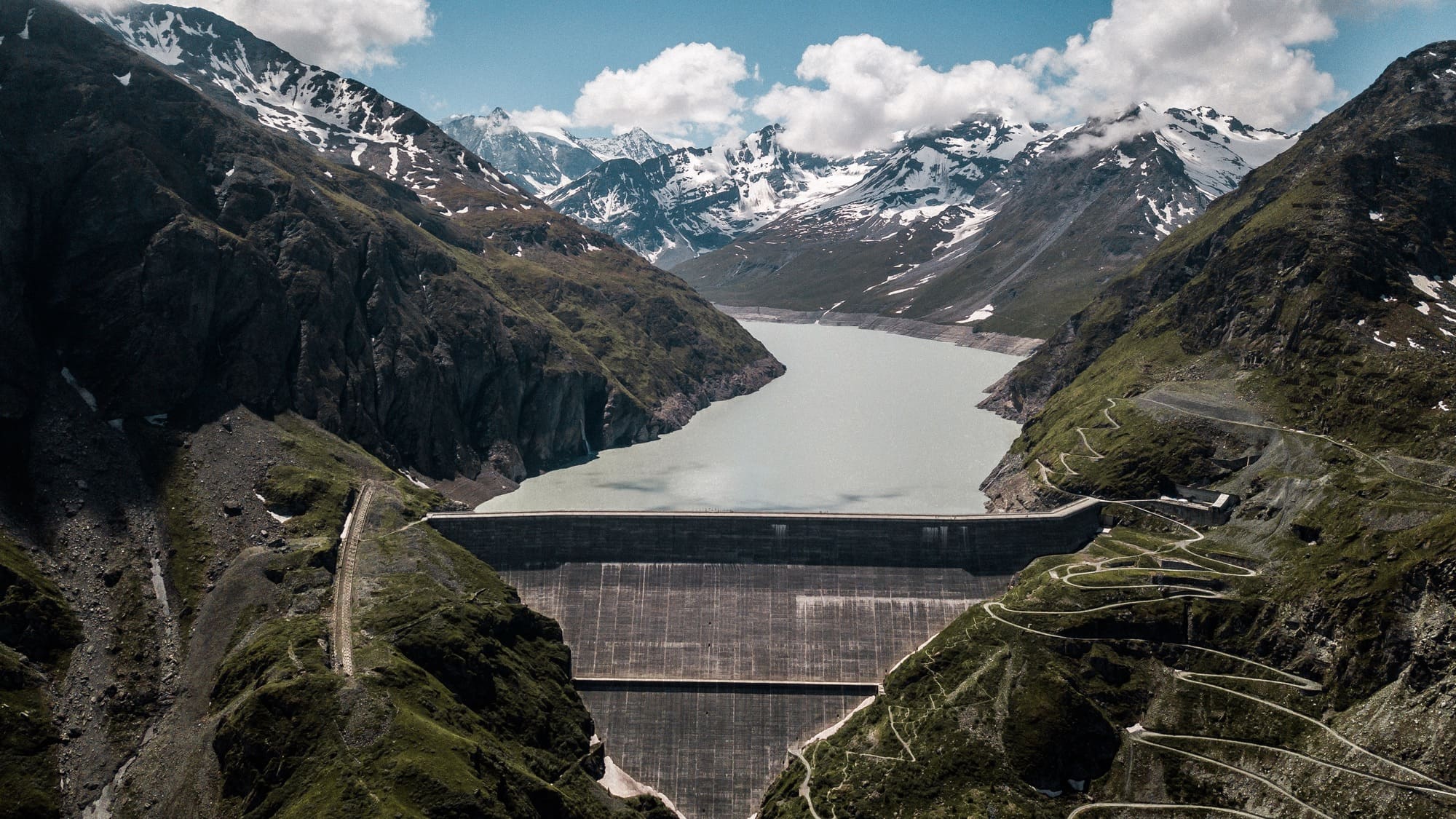
At the beginning of the 20th century, Conradin Zschokke's international experience in port and hydraulic engineering was also in demand at home. Switzerland, which had hardly any raw materials, wanted to become less dependent on foreign countries - such as German coal. But how was it to meet the growing demand for energy in the wake of industrialization?
Domestic hydropower offers one possibility. At the beginning of the 20th century, the construction of run-of-river power plants began across the country. Not everyone could build these huge hydraulic structures, but Zschokke could. A prime example is the Laufenburg hydroelectric power plant on the High Rhine, where Conrad Zschokke AG not only built the foundations - the company's specialty - but also the buildings such as the powerhouse before the First World War.
Palais des Nations, Geneva, 1929-1936 (HHH)
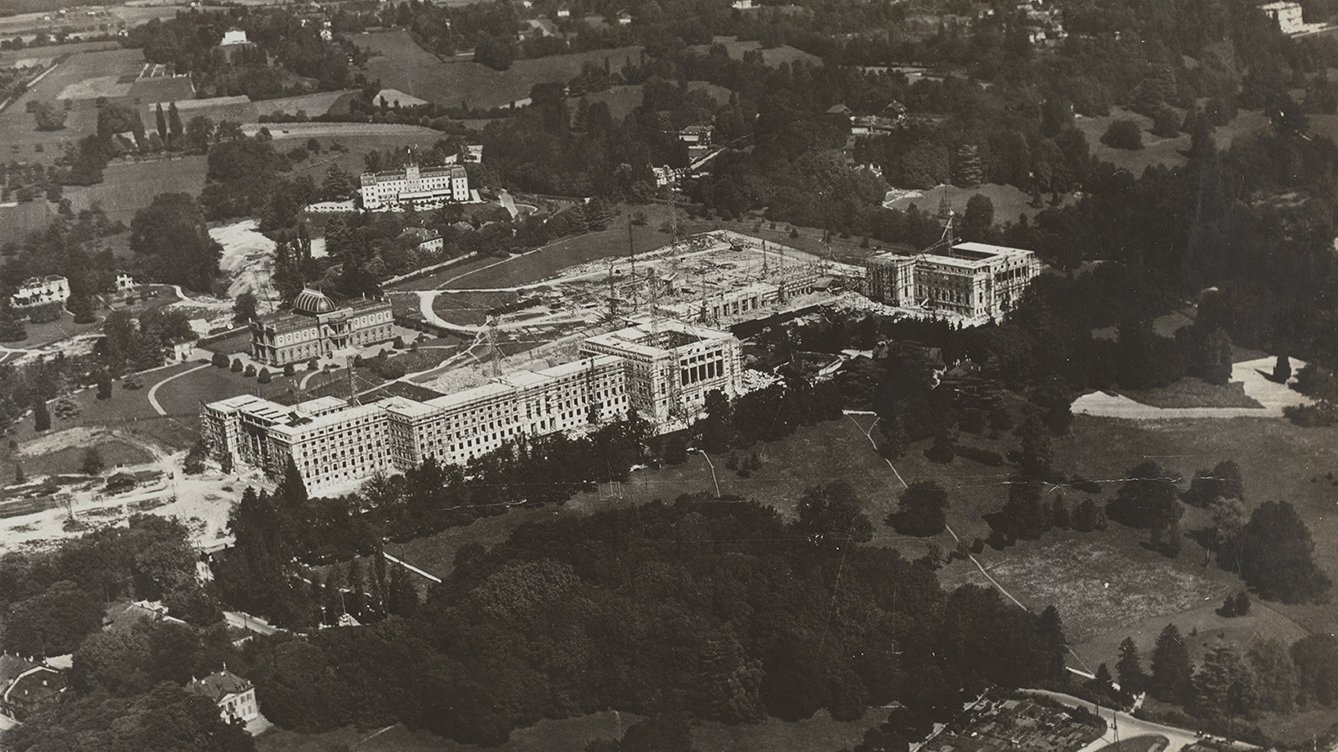
At the Paris Peace Conference in 1919, the victorious powers decide to found the League of Nations with its headquarters in Geneva in neutral Switzerland. The International Red Cross had also been based here for years, but the headquarters of the League of Nations and the construction of the League of Nations Palace was the real starting signal for Geneva's development into an international metropolis.
When construction work on the mighty League of Nations Palace began in 1930, the leading Swiss-German construction company was also involved: Heinr. Hatt-Haller. Meanwhile, the local top dog, SA Conrad Zschokke, had to make do with building the pavilion for the 1931 Disarmament Conference.
Säntis suspension railroad, Appenzell-Ausserrhoden, 1933-1935 (HHH)
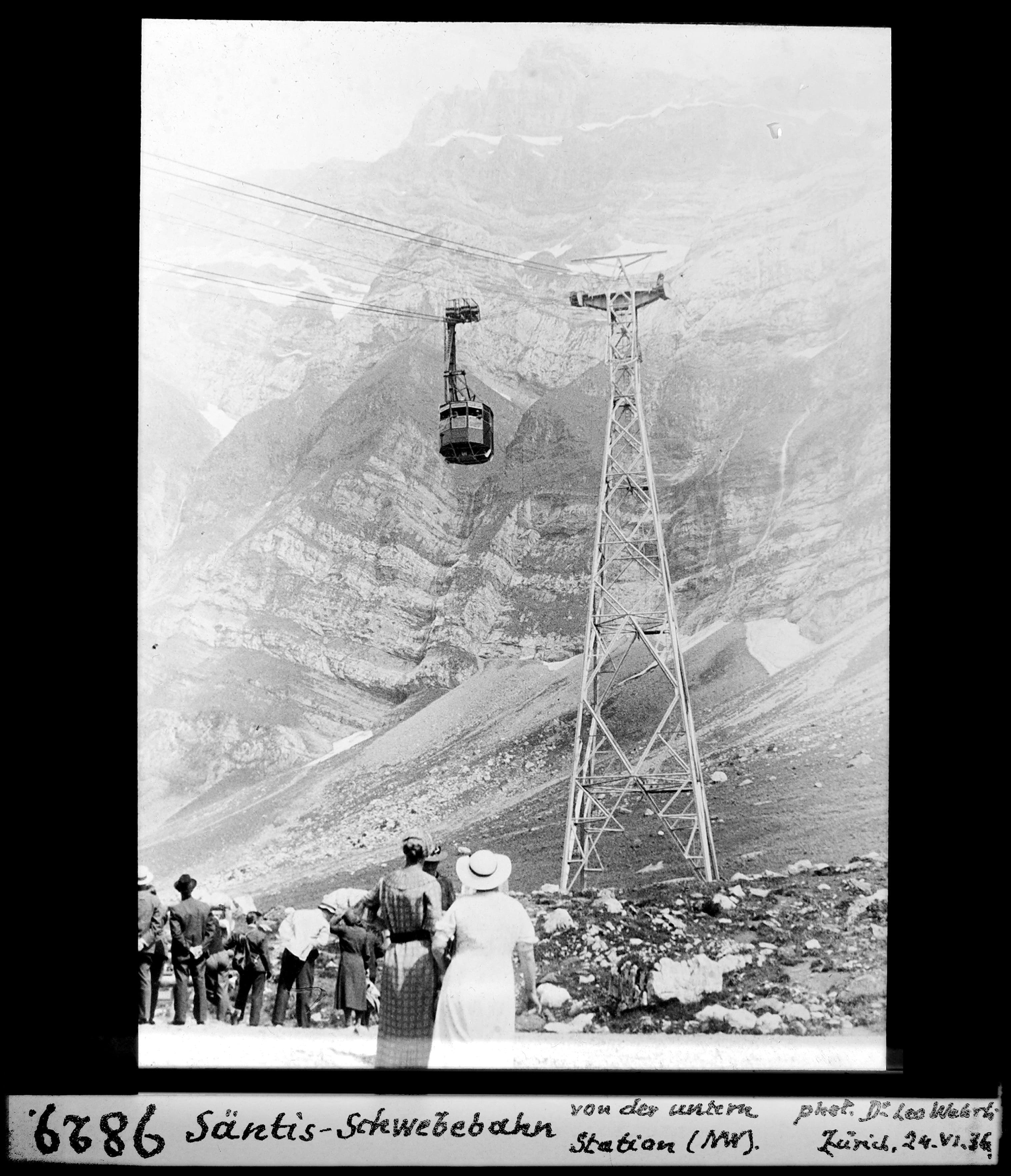
The Alpstein in eastern Switzerland is a kind of miniature Alps. And the Säntis - at 2502 meters above sea level the highest peak of the Alpstein - is the Matterhorn of the Alpstein, so to speak. Since July 31, 1935, a technical marvel has led from Schwägalp to this much-praised peak: the first "suspension railroad" in the Alpstein and one of the most important and spectacular early high-mountain aerial cableways in the country.
The Zurich construction company Heinr. Hatt-Haller (HHH) undertakes the construction of this prestigious project. It took 43 days just to transport the suspension cables from Herisau to Schwägalp - a paved pass road was still missing at the time. Another 40 days passed before the 2300 m long and 35 t heavy suspension cables were on the Säntis. Then as now, people watch in amazement and awe as the cabins of the Säntis Railway float towards the lofty mountain massif.
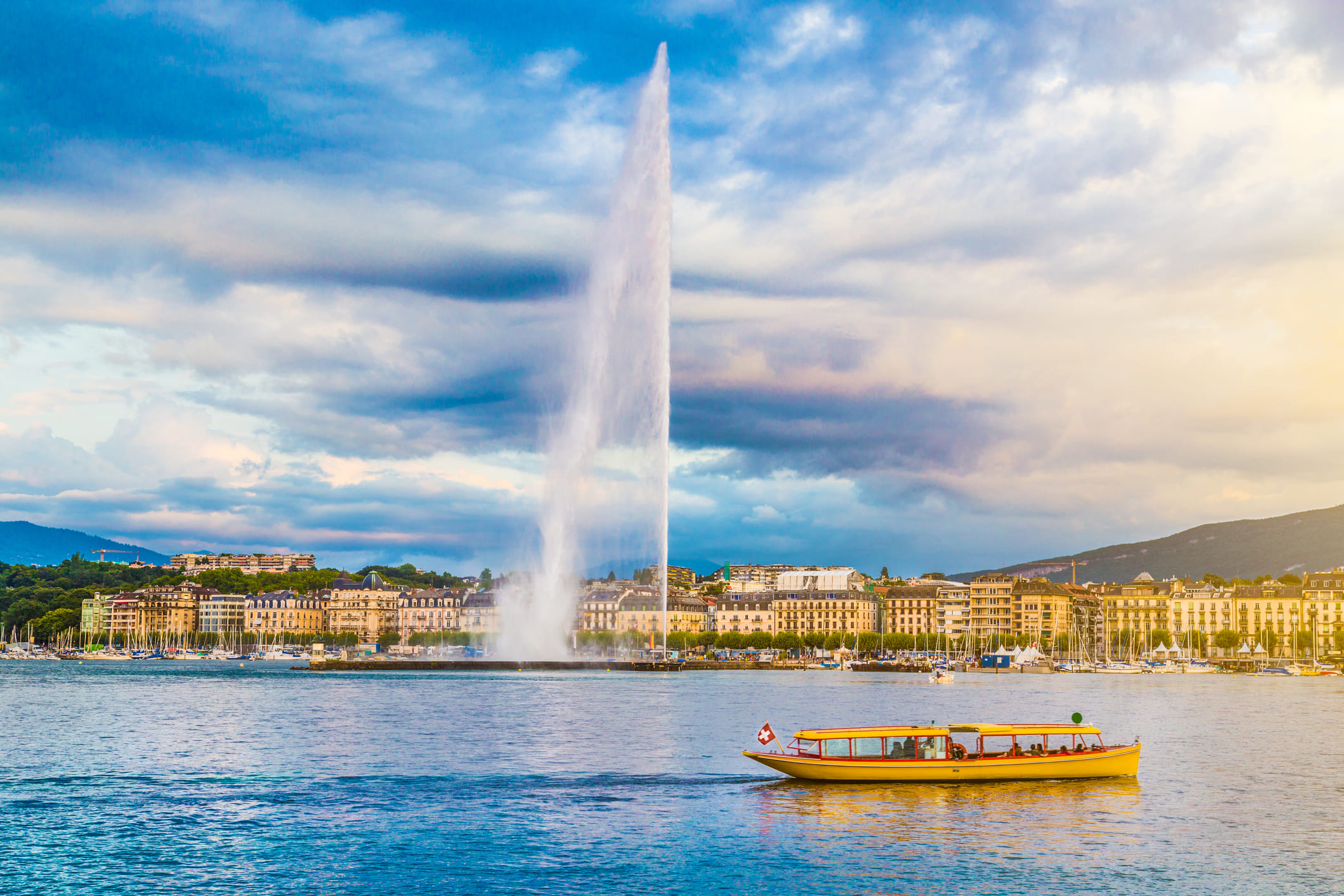
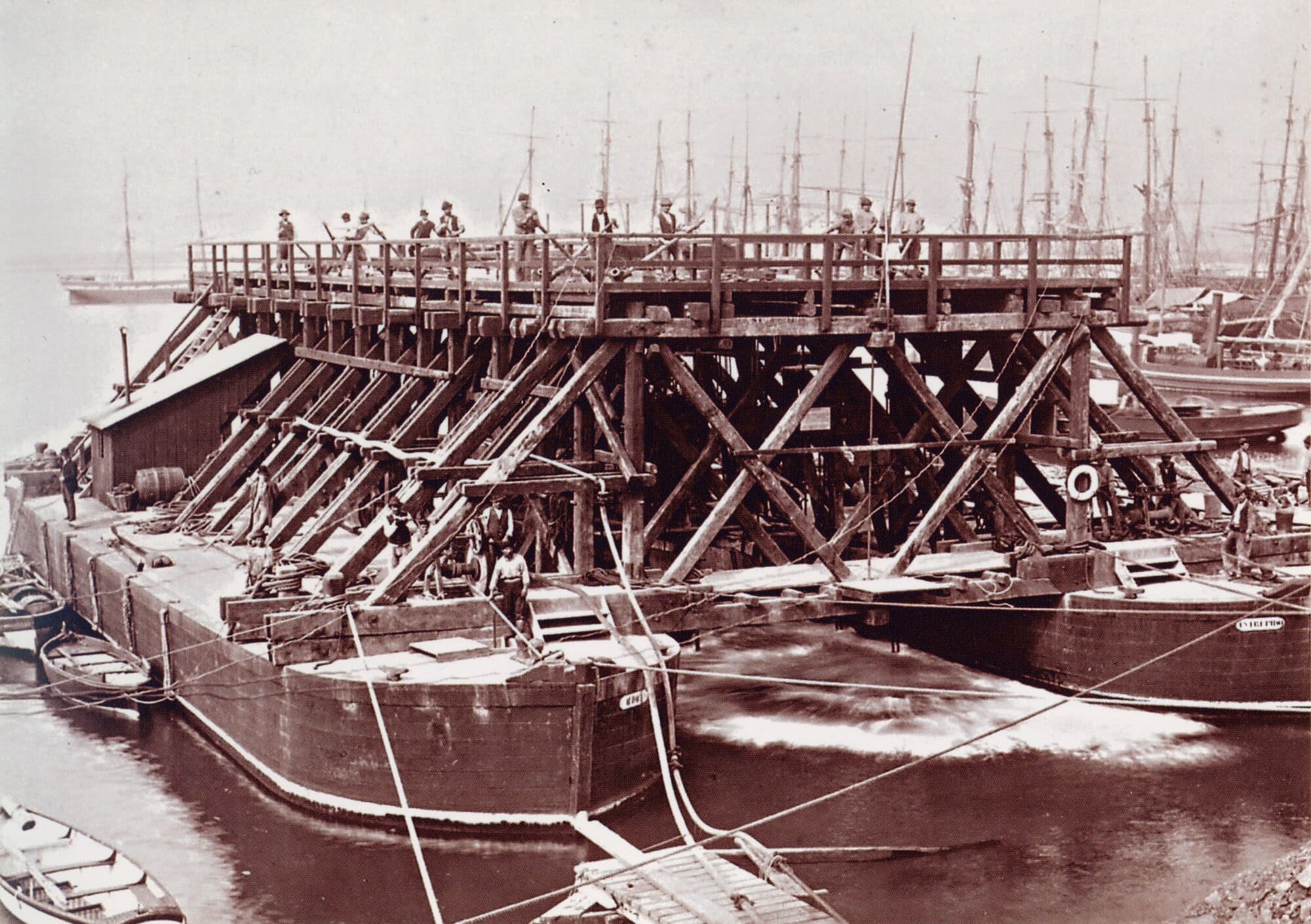
Jet d'eau, Geneva, 1951 (Zschokke)
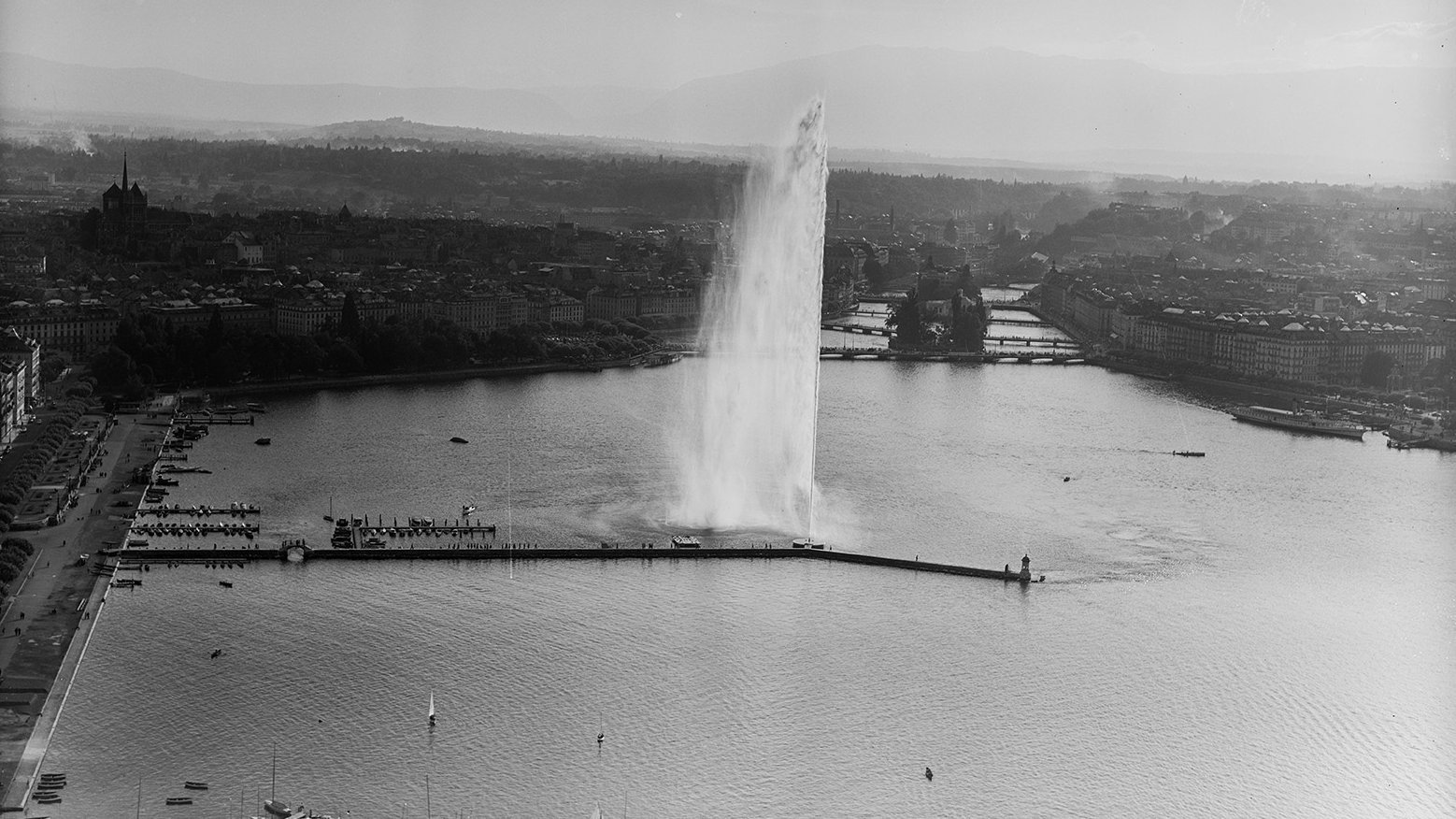
When a water fountain shot out of Lake Geneva for the first time in 1886, it was for purely practical reasons: The fountain originated from the relief valve of a nearby hydroelectric and pumping station. The valve later became technically superfluous, but by this time the people of Geneva no longer wanted to do without the pretty water feature.
So in 1951, SA Conrad Zschokke built a reinforced concrete shell at the bend in the Eaux-Vives pier in the middle of the lake, into which the new pumping station for the "Jet d'eau " was installed. From then on, the "Jet d'eau" no longer shoots up 90 m, but 140 m, and finally becomes Geneva's landmark. 65 years later, Implenia returns to the Eaux-Vives pier. This time with the task of renewing the jetty - a challenging job that is carried out using minimally invasive pipe jacking to protect the old jetty.
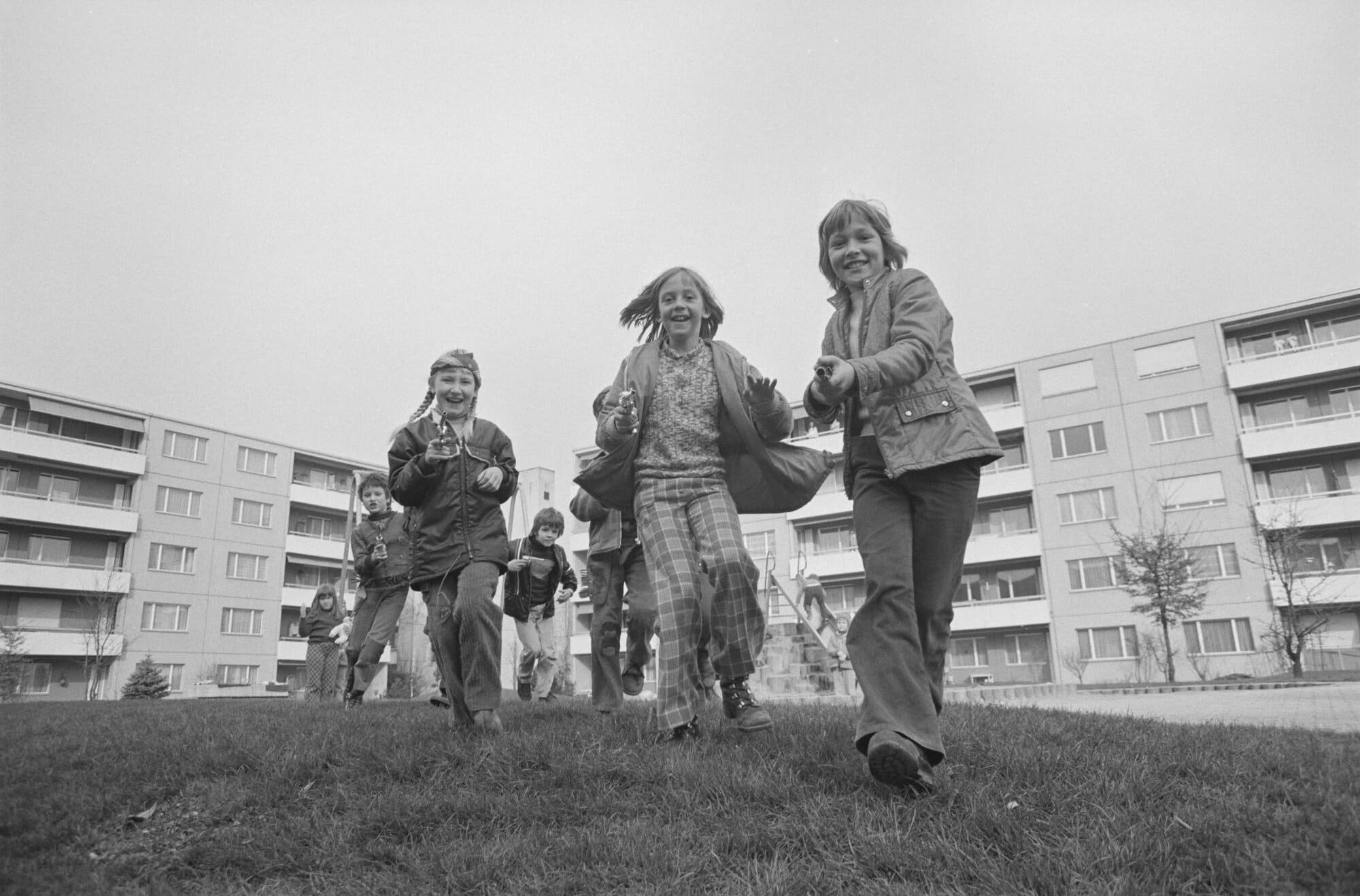
National road construction, N1 near Derendingen, 1966 (Stuag)
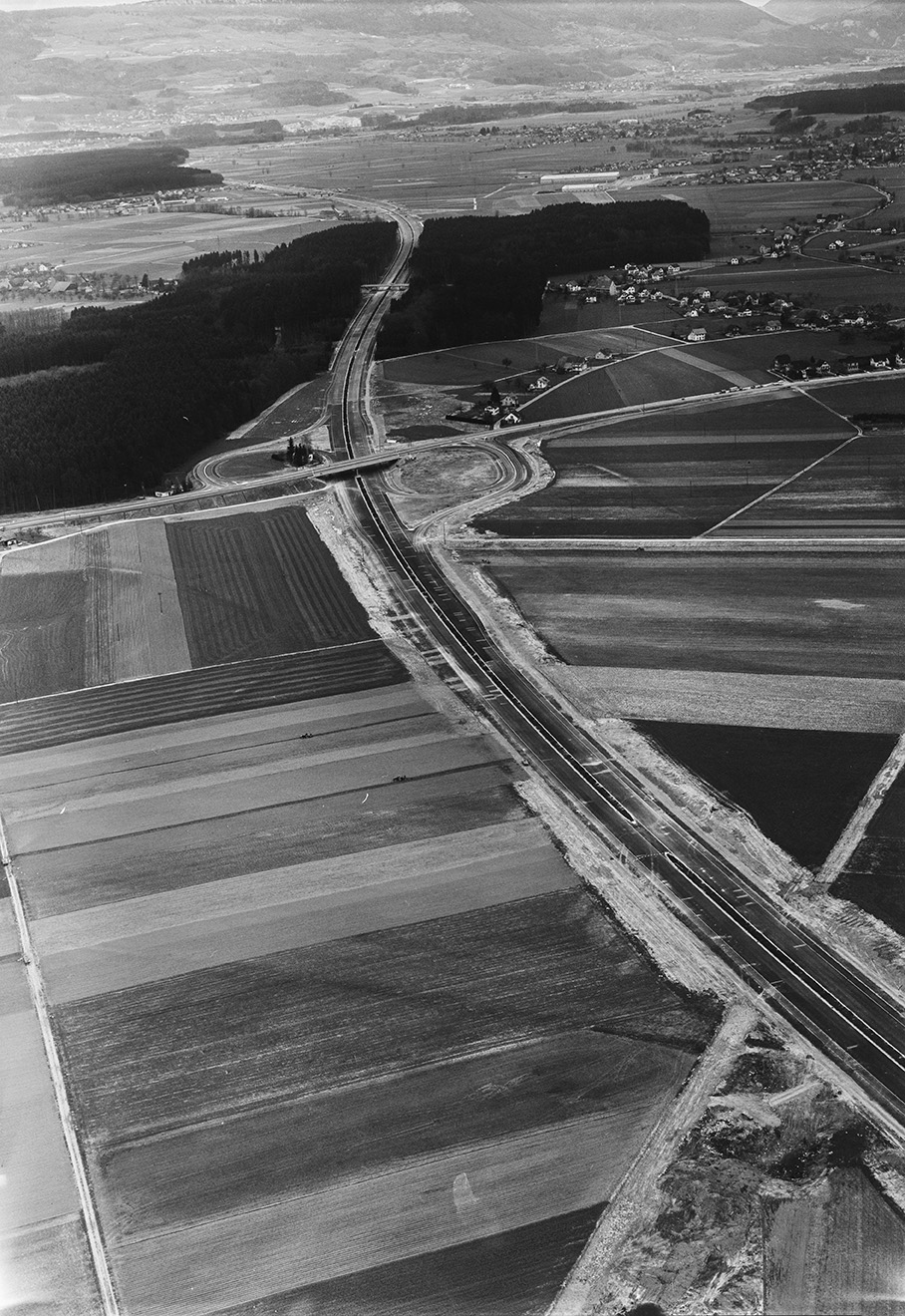
The economic upswing of the post-war period is accompanied by the mass motorization of the population. The car becomes the number one consumer good. In 1945, there was one motor vehicle for every 100 inhabitants; by 1960, there were already ten. This is precisely the year in which the Federal Act on National Roads is passed. A 1,811 km long national road network is to be built in Switzerland - including 800 km of so-called "freeways", which may not be crossed at the same level.
The law sets in motion a gigantic construction program that is tailor-made for the "Schweizerische Strassenbau- und Tiefbau-Unternehmung AG", or Stuag for short, which was founded in 1912. It will build hundreds of kilometers of roads - the picture shows a lot for the construction of the N1 near Derendingen in 1967.
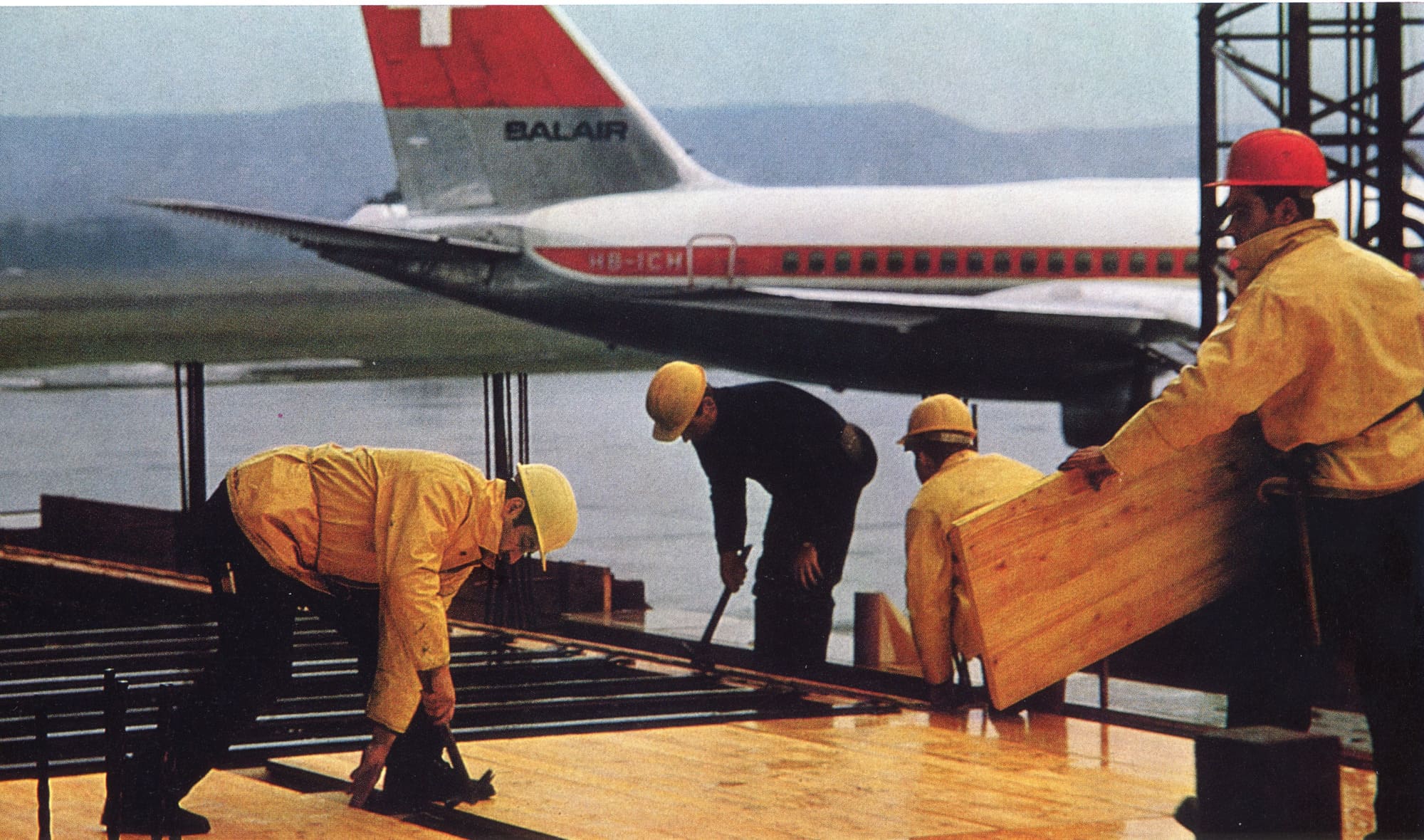
"Fressbalken", Würenlos (N1), 1972 (Zschokke)
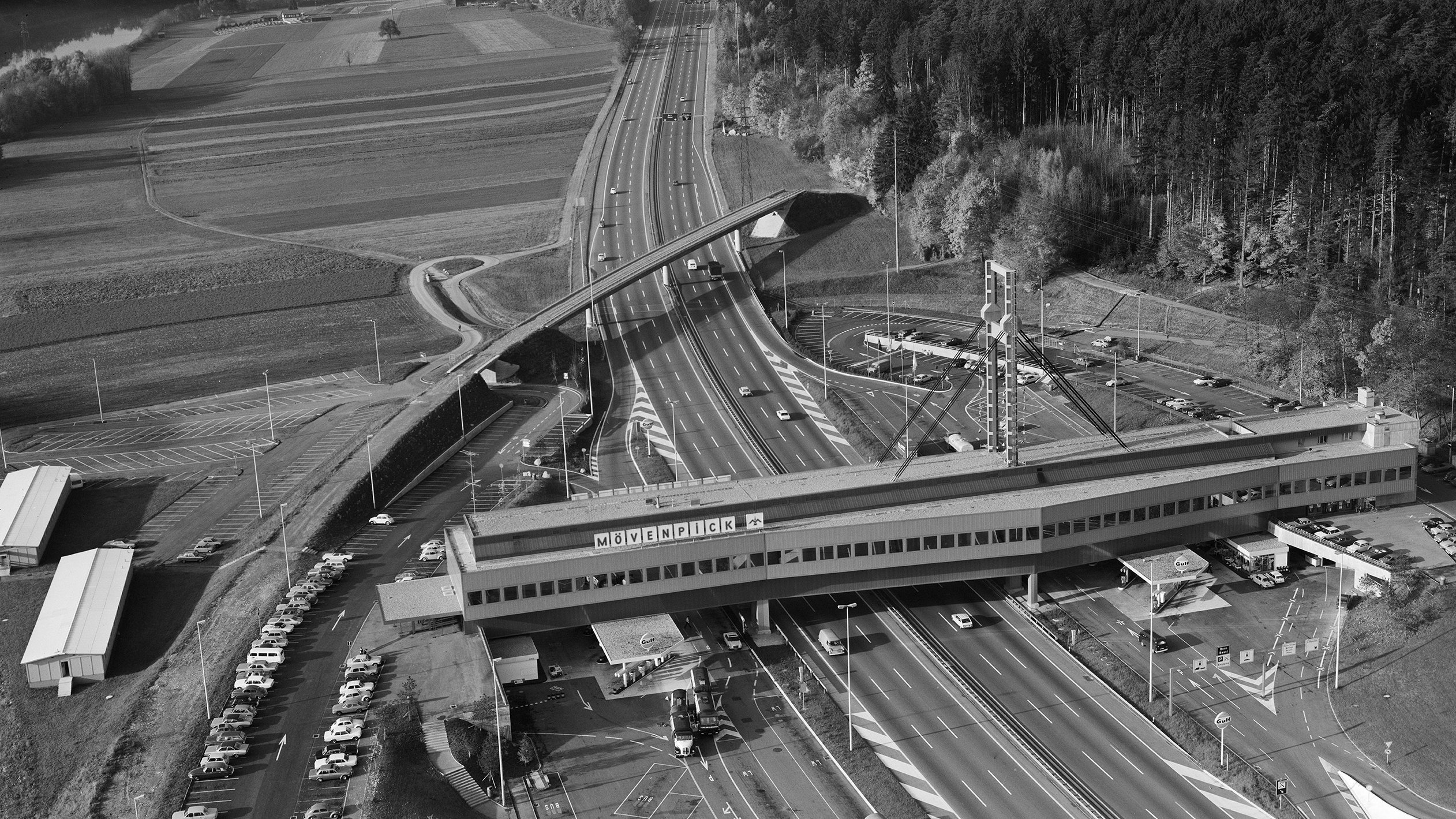
Every child, every long-distance driver and all Swiss motorists know the legendary Würenlos highway service station, popularly known as the "Fressbalken". The reason for the nickname is the spectacular bridge restaurant, which has long been operated by the Mövenpick Group. There you can enjoy a silver beefy, for example, while the cars thunder by at 120 km/h below you.
Another attraction: a mini shopping mall, which is also open at weekends and offers everything from the latest Rolling Stones record to wedding rings. This icon of the automotive age was built by SA Conrad Zschokke.
Sydney Opera House, Sydney, 1959-1973 (Baulderstone Hornibrook)
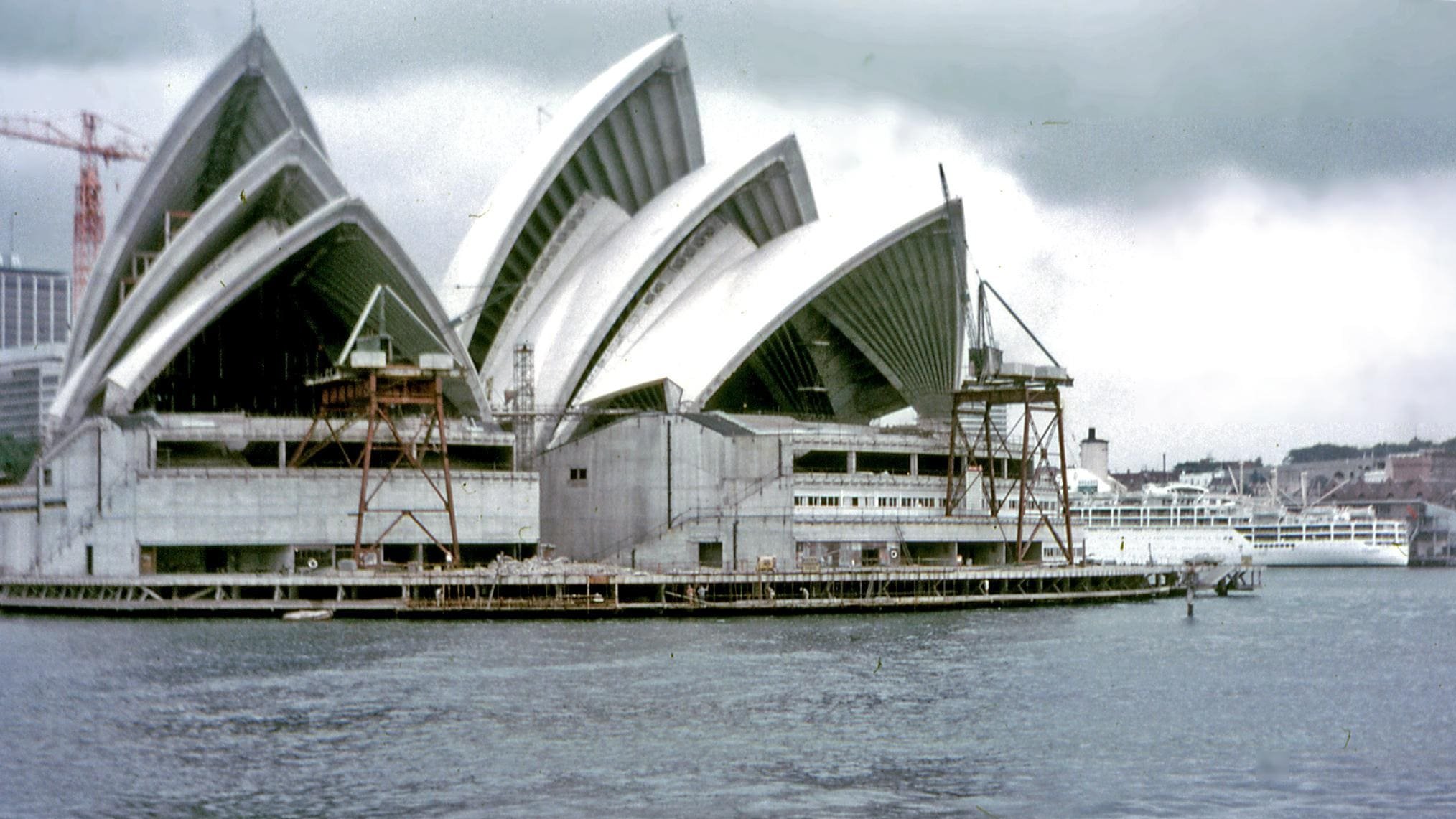
Some people will be rubbing their eyes. Implenia built this icon of modern architecture from the drawing board of Danish architect Jørn Utzon? Well, not quite. To be honest, not even a predecessor company of Implenia was directly involved.
But somehow this famous and, because of its technical sophistication, notorious building is part of Implenia's indirect heritage. In 2000, the German construction company Bilfinger took over the traditional Australian company Baulderstone Hornibrook, which played a key role in the construction of the Sydney Opera House. And in 2015, Implenia in turn acquired the German company Bilfinger Construction GmbH. So a piece of Down Under moves into Implenia's archive. Admittedly far-fetched, but who would have thought it?
Sunniberg Bridge, Klosters, 1998-2005 (Batigroup)
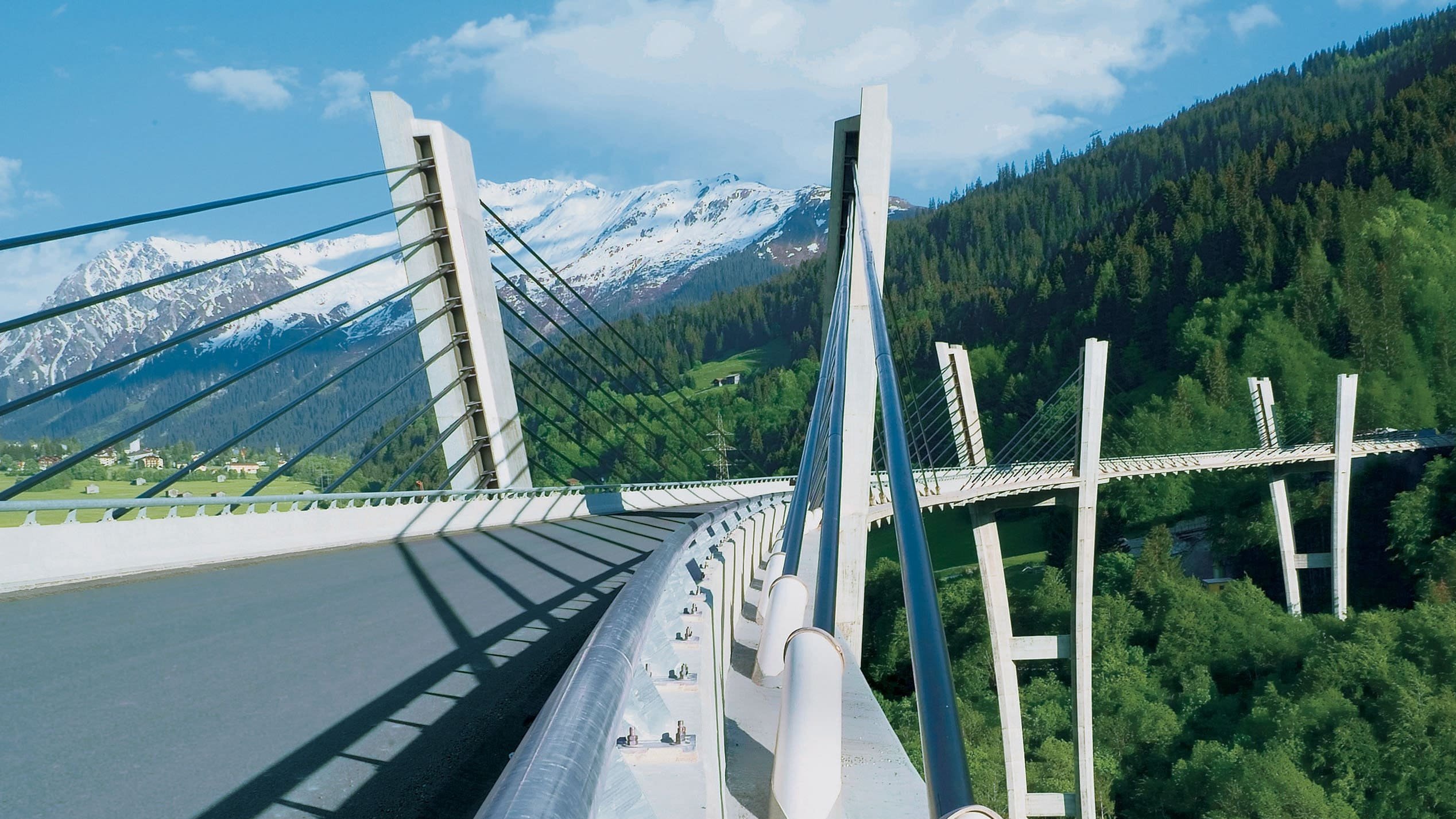
It is a technical and multi-award-winning masterpiece of modern bridge construction: the Sunniberg Bridge near Klosters in the canton of Graubünden. It was designed by the famous Swiss civil engineer and bridge builder Christian Menn. The hallmark of the Sunniberg Bridge are the piers, which are divided into two stems, giving the structure a light and playful appearance.
But behind this lies a complex spatial geometry with high demands on the static calculation, design and construction. In 1998, the Batigroup, which had emerged from the merger of Stuag, Schmalz and Preiswerk just one year earlier, took over these tasks. In 2001, the Sunniberg Bridge received the prestigious Outstanding Structure Award.
Humboldt Forum in the Berlin Palace, Berlin, 2012-2020 (Implenia)

The German Republic was proclaimed on the balcony of the Berlin City Palace - albeit for the second time on this chilly November day in 1918. The Social Democrat Philipp Scheidemann had beaten the Communist Karl Liebknecht to it. This discordant proclamation cast a long shadow over the German Republic, which was to last only 15 years. Then came the Nazis, then the war, then the GDR, which demolished the war-damaged building in 1950.
Implenia rebuilt it under strict monument protection requirements, or to be more precise: Implenia was responsible for the façade construction in the central part of the palace, which has housed the Humboldt Forum since 2020. A total of 370 historic windows, mostly made of oak, 120 portal windows and 550 steel doors were installed and first had to find their way into the heart of the German capital. A logistical masterpiece with the highest security requirements - and all in a historic setting.
Sofia railroad station, Stockholm, 2021-2027, (Implenia)
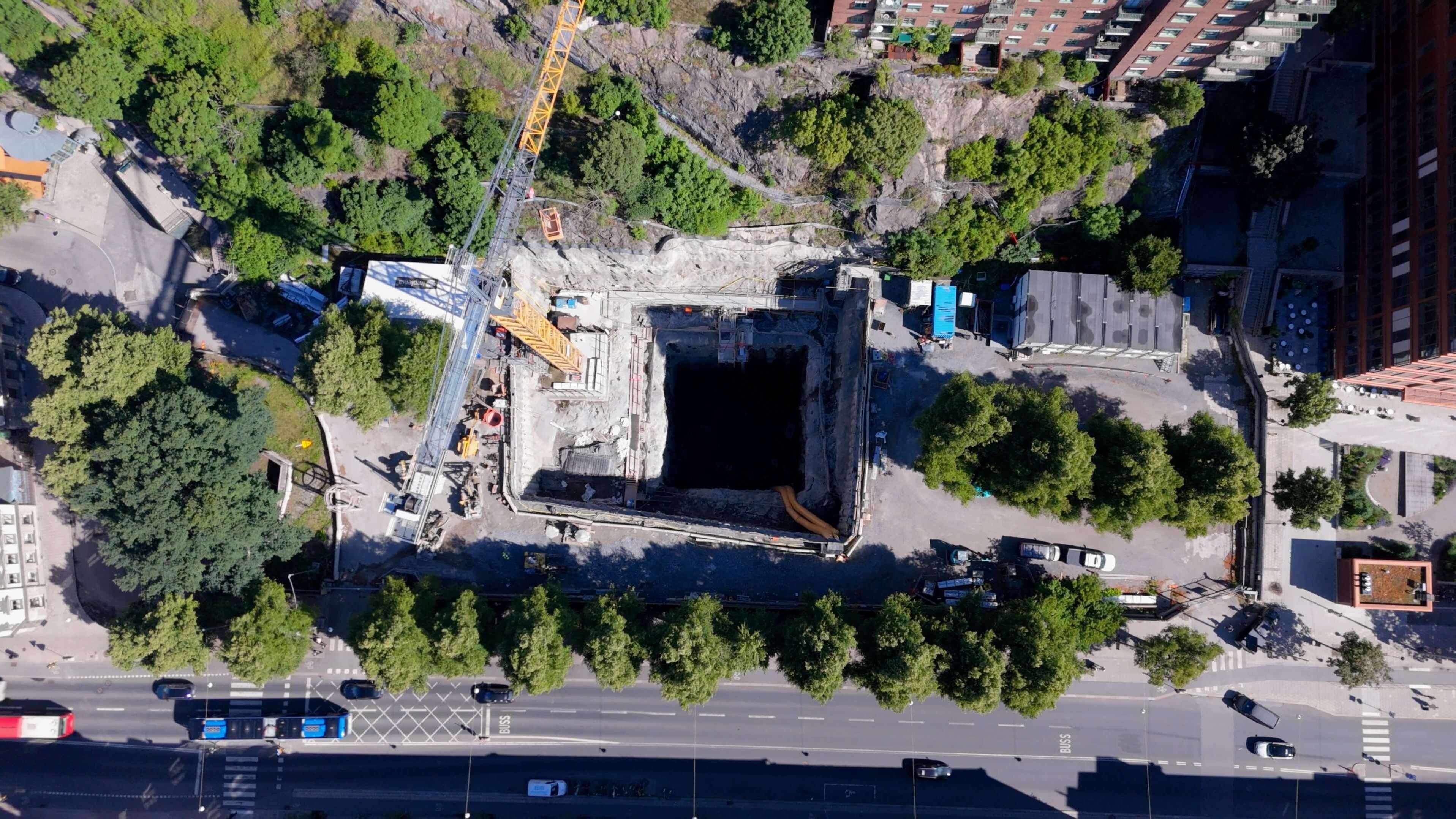
More and more inhabitants, more and more commuters. Stockholm is growing, and public transport needs to keep pace with this growth. The gigantic Nya tunnelbanan ("new tunnel lines") expansion project has been underway since 2018: 30 km of underground lines with 18 new stations are being built.
Implenia has also been present on the construction sites right from the start. In 2018, the Group took over the construction of a 1.5 km long access tunnel, which paved the way for the actual main contract in 2021: work on one of the deepest metro stations in the world. The "Sofia" station, which will later be accessible via high-speed lifts, is taking shape around 100 m underground - Implenia is also building the shafts for these lifts. The CHF 110 million contract also includes the adjacent tunnel work using the drilling and blasting method over a length of 4.6 km.