

Successful installation of centre section of Rader High Bridge
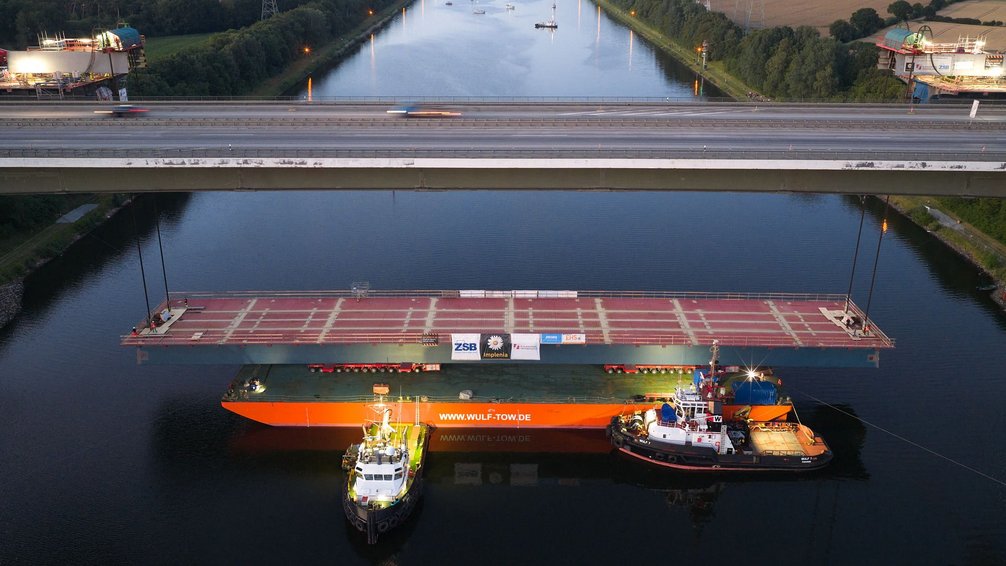
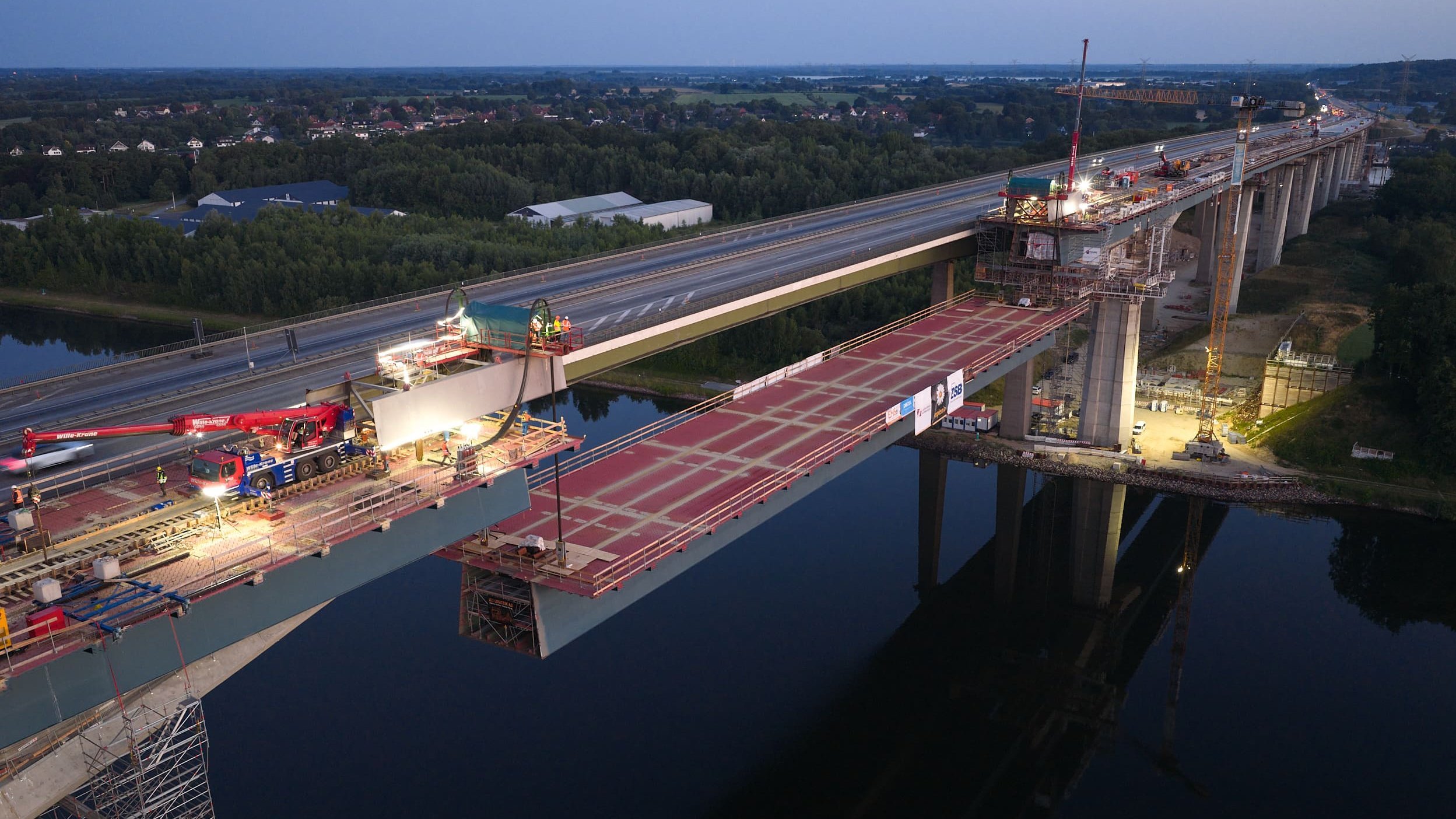
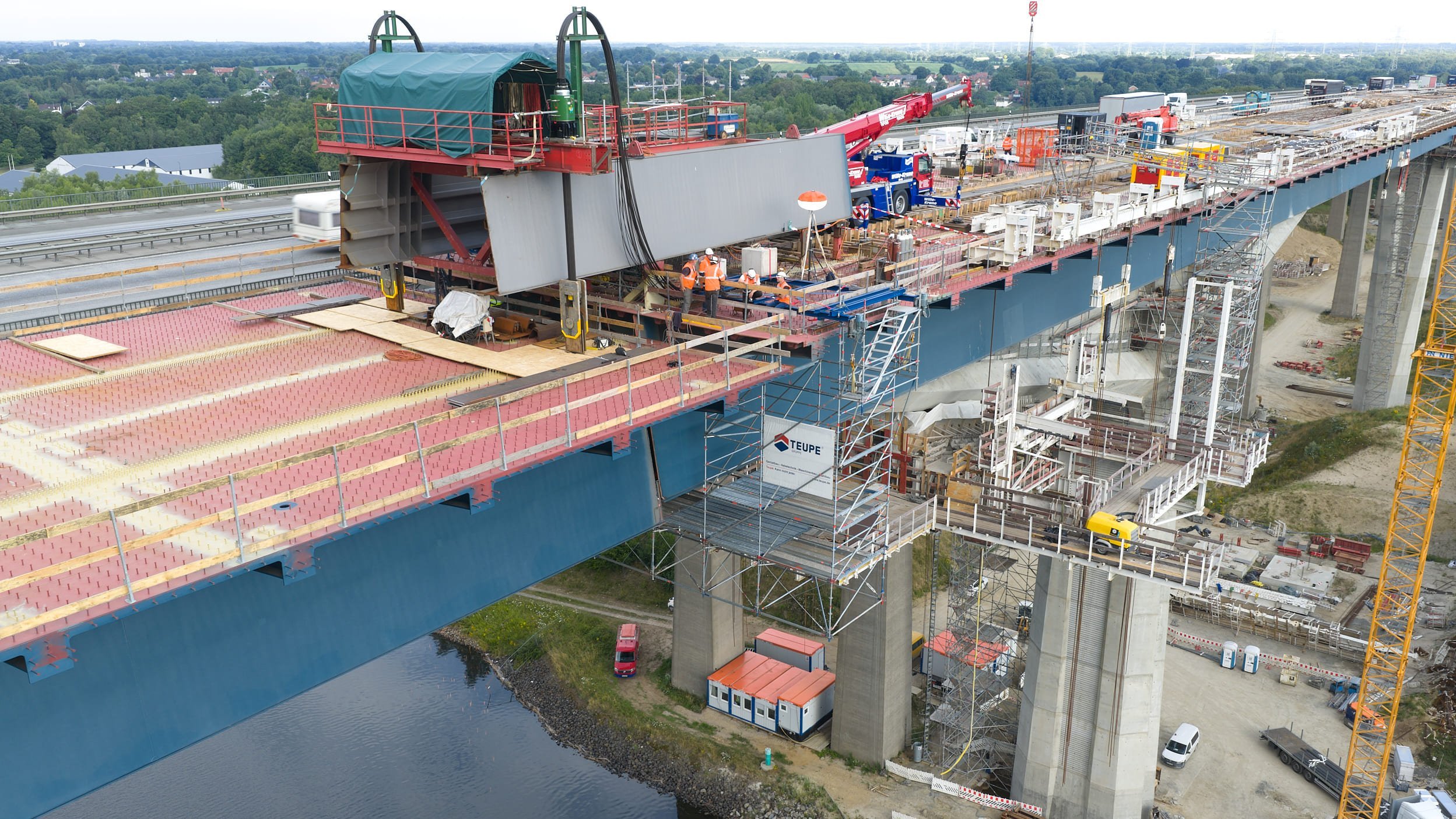
Glattpark (Opfikon), 16 July 2026 – A key construction phase in the replacement of the Rader High Bridge has been successfully completed: the centre section of the new bridge has been transported via the Kiel Canal, lifted into place between the two cantilever arms and secured in its final position. The installation of the steel segment closes the gap across the canal – a technically demanding and highly visible milestone in this complex infrastructure project.
The centre section is 118 m long, 18.5 m wide and 6.5 m high, and weighs around 1,300 tonnes. It was preassembled at the port of Rendsburg in Osterrönfeld. From there, it was driven onto a pontoon using an SPMT (Self-Propelled Modular Transporter). Two tugboats then transported the pontoon along the Kiel Canal to the installation site at the Rader High Bridge.
Bridge plays a key role for traffic to and from Denmark and Scandinavia
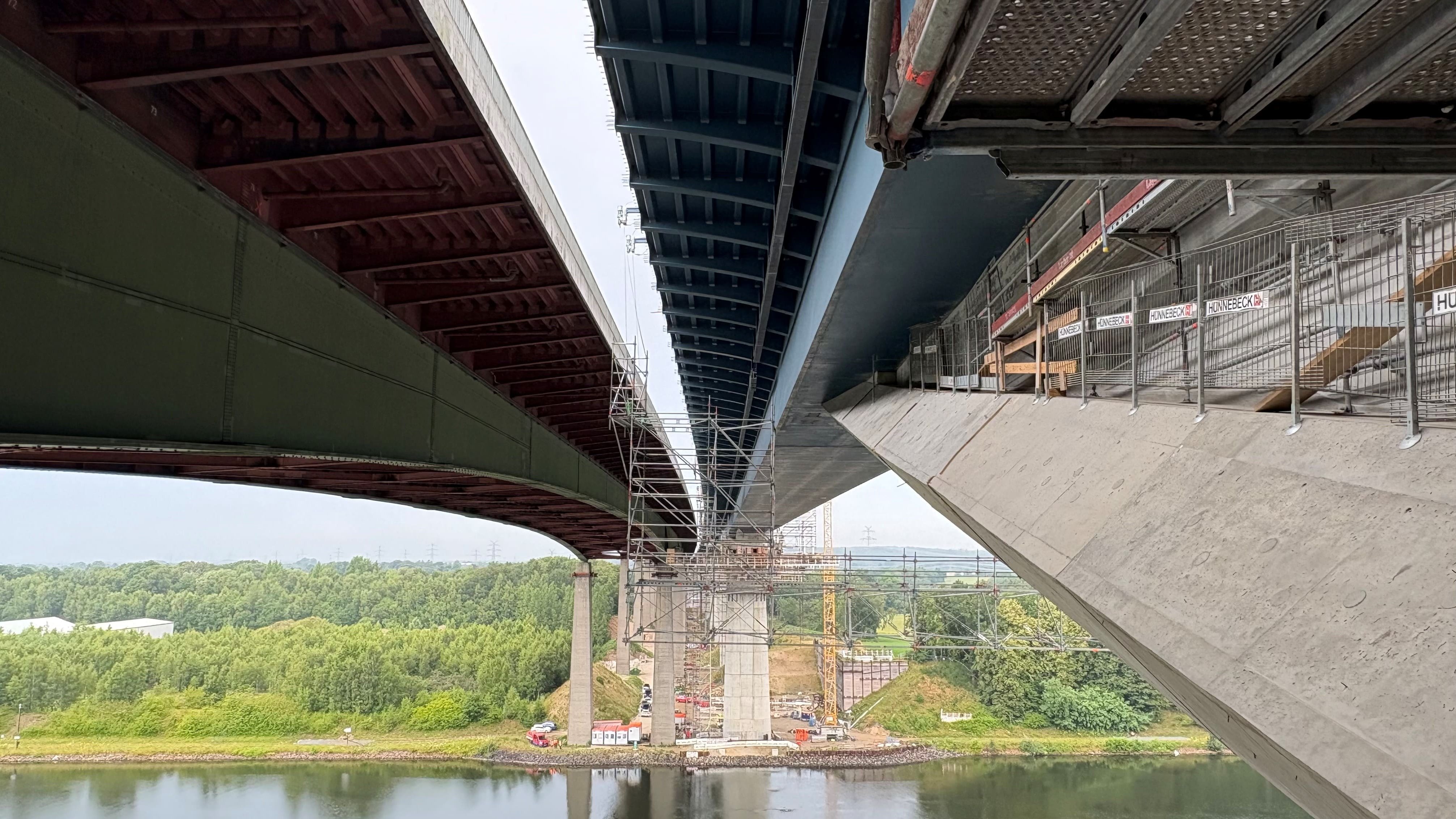
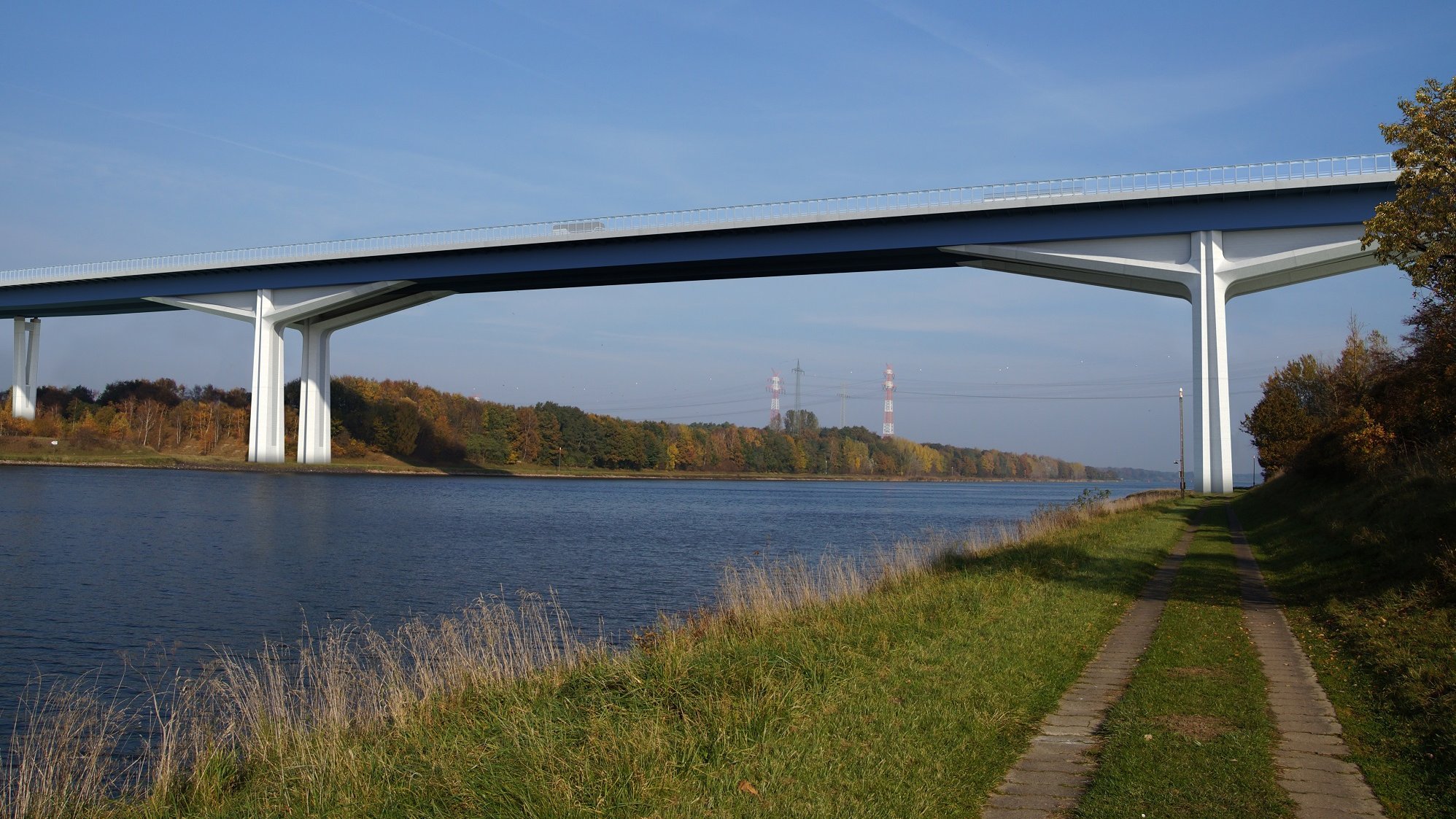
On behalf of DEGES (Deutsche Einheit Fernstrassenplanungs- und -bau GmbH), a joint venture (JV) consisting of Implenia (lead partner), Plauen Stahl Technologie and ZSB Zwickauer Sonderstahlbau is delivering the new motorway bridge, which is 1,500 metres long and 42 metres high. The bridge carries the A7 motorway east of Rendsburg, Schleswig-Holstein, across the Kiel Canal (Nord-Ostsee Canal) and the Borgstedter Enge. It plays an important role in traffic to and from Denmark and Scandinavia. The project commenced in 2023 and is expected to be completed by the end of 2026. Within the joint venture, Implenia is responsible for the design and execution of the civil engineering works. Its scope includes the construction of the bridge piers and foundations, including foundations in water, as well as the construction of the concrete bridge deck. The steel structure and the installation of the central bridge segment were carried out by the JV partners Plauen Stahl Technologie and ZSB Zwickauer Sonderstahlbau.
Two navigation closures on the Kiel Canal
Two temporary closures of the Kiel Canal were required for the transport and installation operations. During the first closure, the centre section was driven onto the pontoon at the port of Rendsburg on 14 July 2026. The works took place between 7:00 a.m. and 4:00 p.m. The second closure covered the transport of the pontoon to the installation site, the rotation of the component into lifting position, securing it with mooring lines, attaching the lifting cables and carrying out the actual lifting operation. This work began at 5:00 p.m. on 15 July 2026 and was completed at around 10:00 a.m. on 16 July 2026 following extensive overnight operations.
Technical details of the lifting procedure
The installation was carried out using hydraulic strand-jack technology. Special lifting devices equipped with two strand jacks each had been installed on both sides of the superstructure. Using bundles of steel strands, they lifted the 1,300-tonne centre section in increments of around 500 mm until it reached its final position.
“The replacement of the Rader High Bridge on the A7 is one of the most significant infrastructure projects currently under way in Germany. The successful installation of the centre section marks an important milestone and demonstrates the close interaction between the different trades and joint-venture partners involved in such a demanding infrastructure project,” says Jan Göttsche, Technical Director at Implenia Civil Engineering GmbH. “Implenia contributes comprehensive expertise in civil engineering – from planning and the construction of the massive concrete components to the continued execution of the bridge superstructure works.”