
"We're currently going through a steep learning curve"
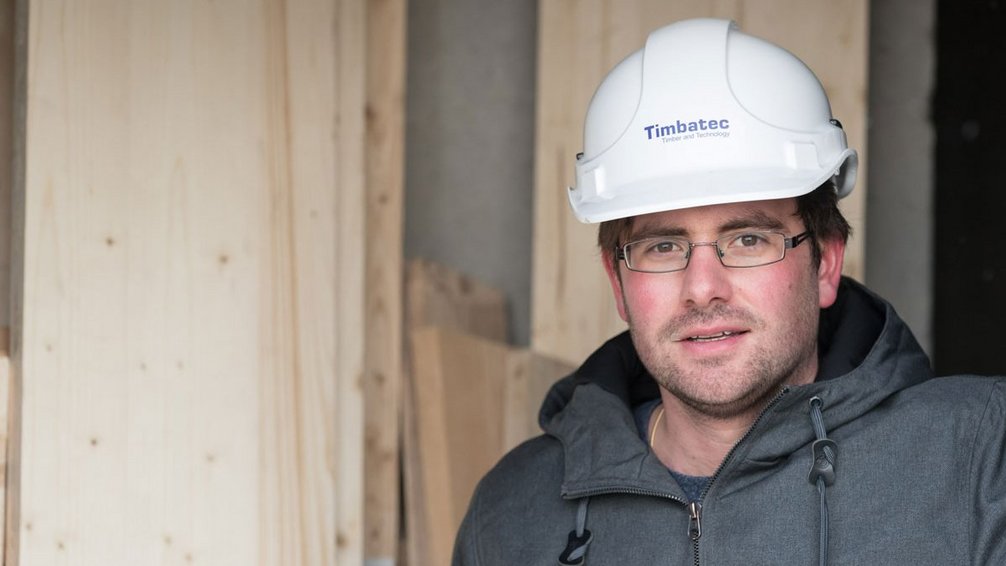
Mr. Rüegg, where does timber construction stand today in terms of digitalization?
Timber construction plays a clear pioneering role in the industry. Digital models are indispensable for the modular and prefabricated construction methods that wood as a material enables, and as a result, they have been firmly established for nearly two decades. Now the focus is on taking this digitalization in planning to the next level using BIM.
What experience have you already gained in this regard?
Over the past year and a half, we’ve carried out several exciting and forward-looking timber construction projects in collaboration with Implenia, in which BIM played a central role. For example, at the “Krokodil” in Winterthur’s new Lokstadt district, a building information model was created on which all discipline-specific planners worked together for the first time. In the sue&til development as well, a digital model was used in parallel with conventional planning for purposes including cost planning and site setup.
Why is BIM usually used only in specific areas and not across entire projects?
BIM is just gaining momentum, and we’re currently navigating a steep learning curve. At the moment, the primary focus is on gaining experience, defining processes, and identifying opportunities for improvement. By using both conventional and digital planning methods simultaneously, we can highlight the advantages of this new way of working and thereby lay the foundation for future projects.
What do you see as the biggest hurdles in implementing BIM?
Today,BIM organization generally falls to the architects. From our perspective, however, there needs to be an overarching, specialized unit for BIM planning and project organization. On the one hand, it should not pursue its own interests; on the other hand, it should have a thorough understanding of all interfaces and bring together all disciplines.
How can Implenia drive digitalization in wood construction?
Implenia is one of the few players in the industry with a clear commitment to BIM and, by extension, to digitalization in construction. In doing so, Implenia also brings individual specialist planners—such as us—on board by requiring them to use BIM while also supporting them in the process. Combined with the training of relevant experts, Implenia can clearly advance digitalization in the Swiss construction industry—and is already doing so today.
How do you see the future of BIM in timber construction?
I am convinced that BIM will continue to gain traction. Ultimately, the method benefits all stakeholders—clients, designers, and all trades. Among other things, it enables efficient coordination of all interfaces and ensures easy data exchange. In addition, problems that could arise during construction become apparent in the model at a very early stage. The bottom line is that quality can be improved while simultaneously saving time and costs.
