


Imst-Haiming Inner Stage
Short description
The Imst-Haiming section of the Inn River is a TIWAG hydropower project that makes a significant contribution to Tyrol’s sustainable energy supply through the dual use of run-of-river water.
The project
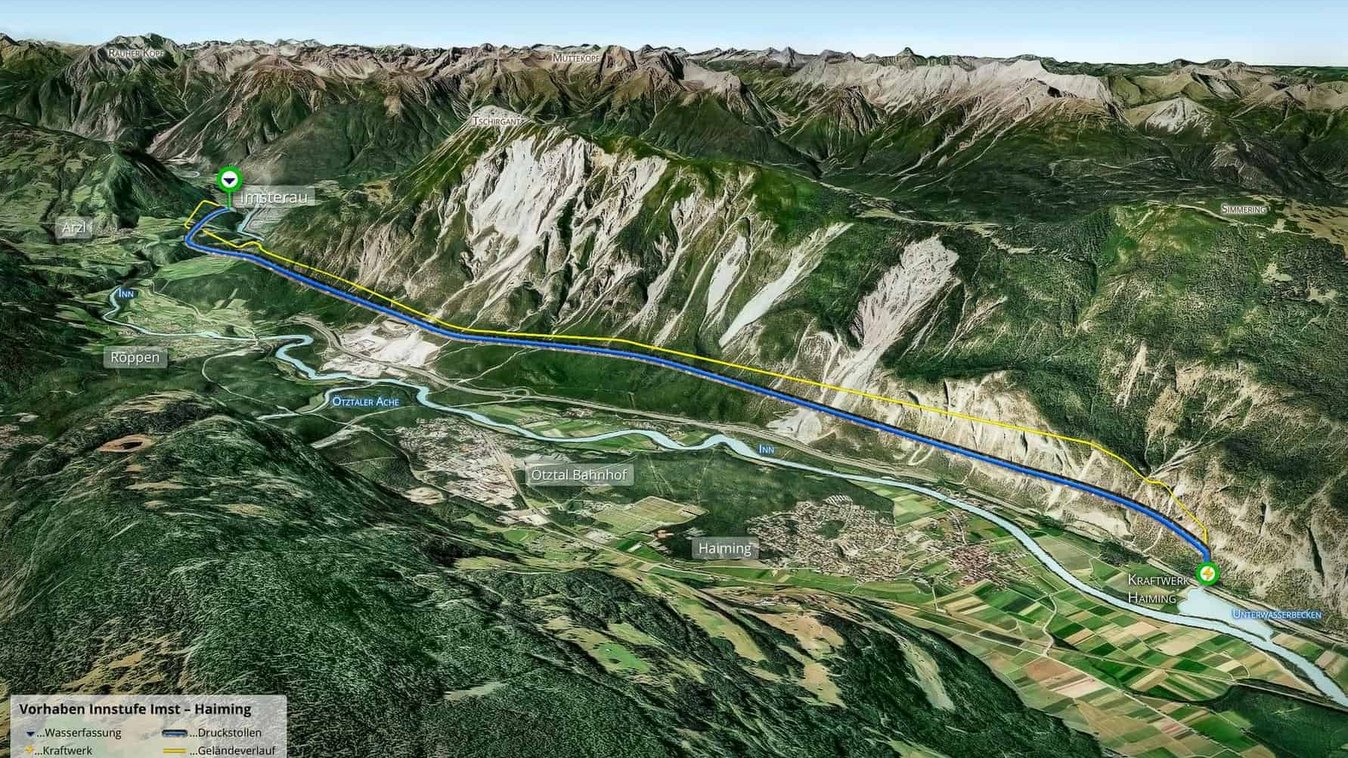
The Imst-Haiming stage of the Inn River project is creating a high-performance hydroelectric power plant that reuses water that has already been used to drive turbines to generate electricity a second time. At the heart of the project is an underground water conveyance system approximately 14 kilometers long, featuring tunnels, caverns, and specialized civil engineering work. Its implementation requires precise coordination of conventional tunnel construction, mechanized tunneling, and complex underground construction site logistics. The project makes a significant contribution to the energy transition in Tyrol and enables a climate-friendly electricity supply for tens of thousands of households.
Services in detail
- Conventional tunneling: Excavation and blasting from Imsterberg toward Haiming.
- TBM tunneling: Mechanized tunneling from Haiming toward the Inn River crossing; diameter of the pressure tunnel: 8.2 m.
- Loose rock tunneling: Loose rock tunneling in the area of the Haiming window tunnel, the access tunnel to the power plant cavern, the cable tunnel, and the underwater tunnel.
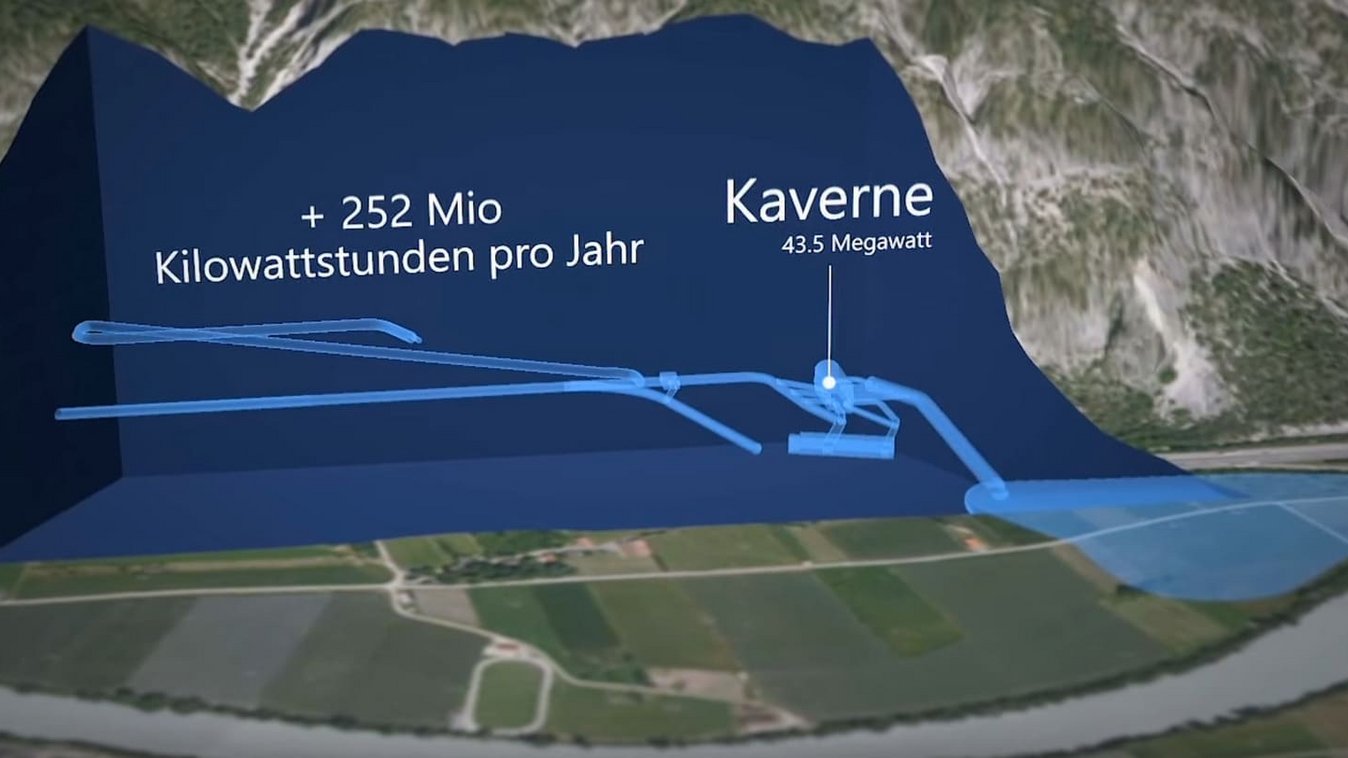
- Cavern and Tunnel Construction: Construction of the power plant cavern, TBM assembly cavern, gate chamber, power descent shaft, and several window, access, cable, and water conveyance tunnels.
- Specialized civil engineering: Bored pile work in the area of the intake structure and jet grouting work in the area of the underwater tunnel.
- Consortium: Swietelsky Tunnelbau GmbH (TGF), Ing. Hans Bodner BauGmbH (KGF), Implenia Österreich GmbH (Co-TGF)
- Headwater channel: approx. 14 km
- Design flow rate: 85 m³/s
- Rated capacity: 43.5 MW
- Average head: 64.5 m
- Annual energy output: 252 GWh/year
- Pressure tunnel diameter: 8.2 m
- Turbines: two Francis turbines
- Geology Major rock formations:
- Alpine Muschelkalk Group
- Partnach Formation
- Wetterstein Formation
- Northern Alpine Raibl Group
- Hauptdolomite Group
- Alpine Red Sandstone
- Reichenhall Layers
- Quaternary unconsolidated sediments
Challenges
- The main challenges lie in coordinating conventional and mechanized tunnel boring, the underground assembly and supply of the tunnel boring machine, and logistics within the tunnels and caverns.
- The tunnel route runs through a complex, folded, and tectonically sheared rock formation.
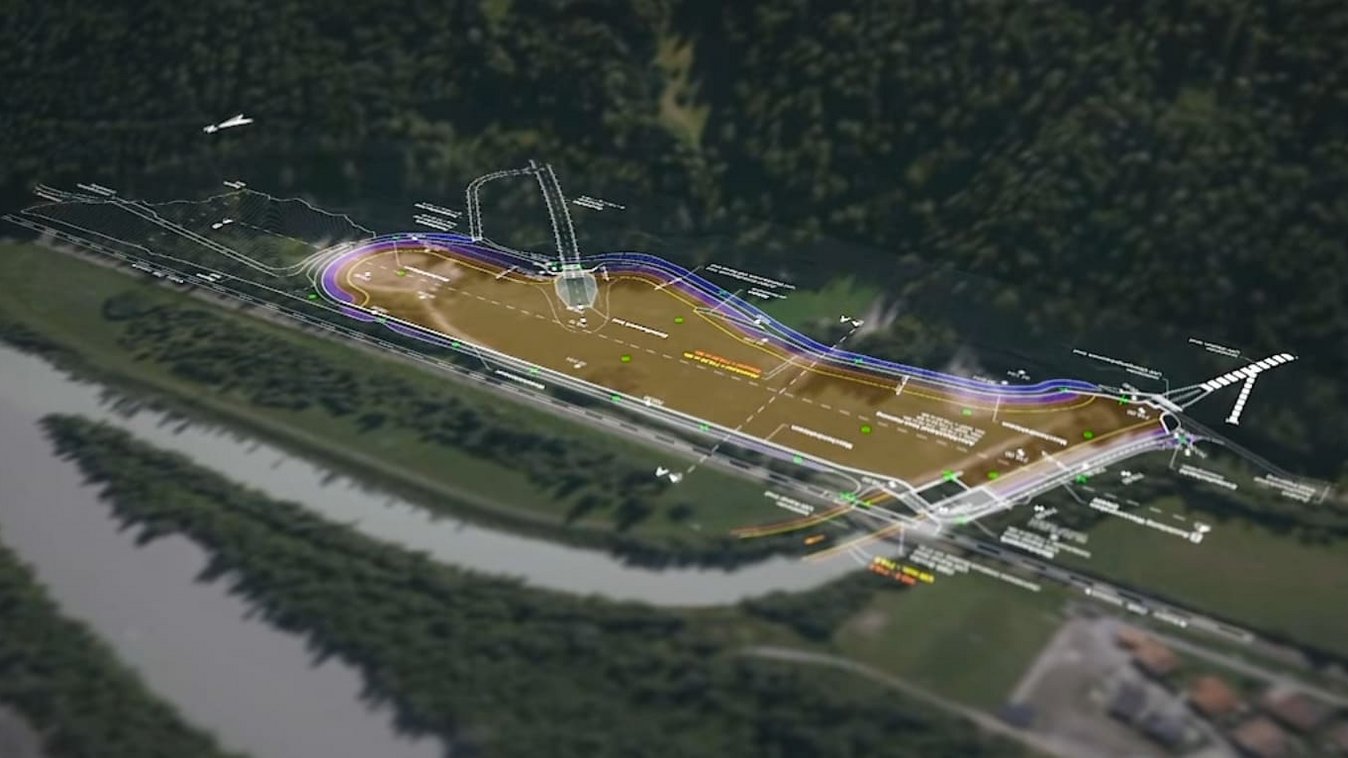
- Additional requirements arise from the construction of the power plant cavern, the crossing of the Inn River, dewatering, water protection, and landfill management.
Sustainability
- Project for Generating Renewable Energy (Hydropower)
- Use of electric heavy-duty vehicles.
- Strict requirements for water protection and landfill management