


Underground structures are the future
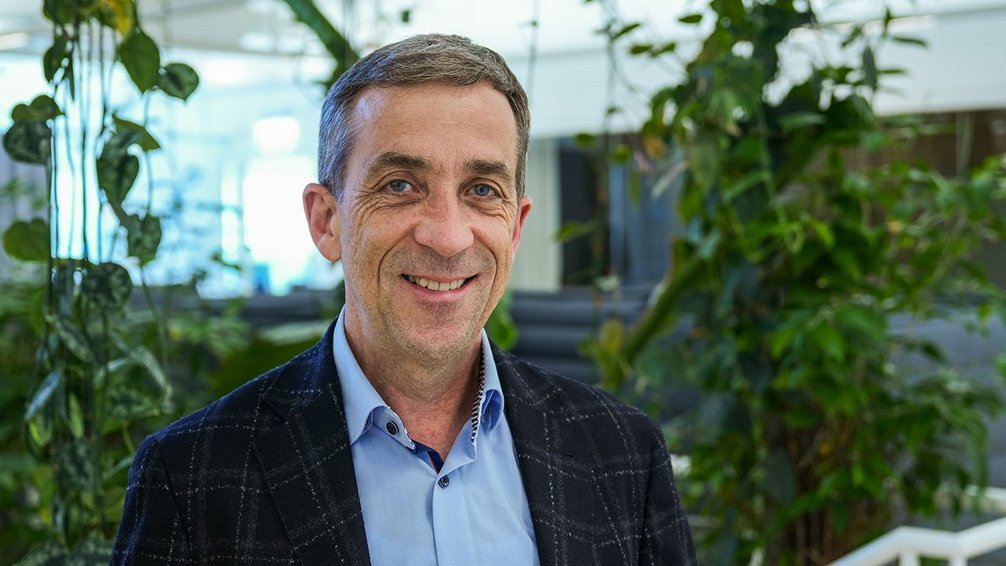

This interview is part of a series exploring the roots of Implenia and how Implenia has shaped—and continues to shape—the past, present, and future of Switzerland and many other countries.
Hanspeter, what fascinates you about tunnel construction?
I grew up in a carpenter’s shop and actually wanted to become a timber construction engineer. But then, as part of my civil engineering studies at ETH Zurich, I attended lectures by Prof. Robert Fechtig and Prof. Kalman Kovari on underground construction and rock mechanics. That’s when I was hooked. The different rock formations, the variety of construction methods, the massive machines—and then the constant uncertainty, the unpredictability, and the risks… I couldn’t get it out of my head. “It’s dark ahead of the pickaxe,” as they say in tunnel construction. And that’s exactly what I found exciting. In tunnel construction, you have to live with surprises, and that means you have to think in terms of alternatives. After graduating, I started working at Locher & Cie. in 1989, which was the leading tunnel construction firm in Switzerland at the time. I’ve been a tunnel builder ever since.
What was the most exciting tunnel project you’ve experienced in your long career?
As I mentioned above: Every tunnel project is different and exciting. But if I had to choose: First, my very first tunnel construction site, the Bözberg Road Tunnel. That was the first time a shield tunnel boring machine—which is actually designed for soft rock—was used in combination with a hard-rock drill head. But if there’s one tunnel I’d call “my” tunnel, it’s the Murgenthal Tunnel. That was my first time serving as site manager. We completed the tunneling using the tunnel boring machine from the Bözberg Tunnel in just under twelve months. The breakthrough took place in September 1998. At that time, the acquisition of the Locher construction company by Zschokke—which was also a partner in the Murgenthal consortium—was already in the works. A few months later, I became head of tunnel construction at Zschokke Locher.
With the merger of Zschokke and Batigroup in 2006, you once again found yourself with a new employer: Implenia. How did the “merger” of the two tunnel construction units go?
Implenia brought together the best of both worlds, thereby laying an important foundation for continued success in tunnel construction. We at Zschokke Locher undoubtedly had our strength in mechanized tunnel construction—that is, using tunnel boring machines. Batigroup, on the other hand, had strong expertise in modern blasting methods, which can still be the best choice in hard rock, as was the case back then in the Vereina Tunnel South. Thus, when Implenia was founded, the combined expertise of 750 tunnel engineers and workers came together. And later, through its acquisitions, Implenia expanded not only its market presence but also its technical know-how. Bilfinger Construction from Germany, which joined the company in 2015, was, for example, exceptionally well-positioned in shield tunneling through uniform layers of loose rock using so-called earth-pressure or hydro-shields, in which the excavated space at the face is kept under constant pressure; which prevents settlement or water ingress.
However, that much “manpower” can also become a burden when orders are scarce. After all, tunnel construction is a highly cyclical business. How did Implenia handle this challenge?
When Implenia was founded, the major projects under the NEAT program—Lötschberg, Gotthard, and Ceneri—were already underway. This meant Implenia still had a full order book. But yes: the end of this boom was foreseeable. That’s why Implenia decided to expand its tunnel-construction expertise and become active abroad, including through acquisitions: in Norway, we acquired Betonmast Anlegg in 2011; four years later, we acquired Bilfinger Construction in Germany; and we also established subsidiaries in Austria and France.
“Implenia is the only company that has helped build—or is currently helping to build—all four major Alpine crossings.”
Hans-Peter Stadelmann
Through the merger of Zschokke and Batigroup, Implenia built approximately two-thirds of the Gotthard Base Tunnel. How important was this project for Implenia?
The Gotthard Base Tunnel was a billion-scale project, the longest railway tunnel in the world, a Swiss engineering feat with global significance. We did an excellent job there, and that experience was invaluable for the future of Implenia’s tunnel construction. Not least because the Gotthard was, after all, only the first of the four major Alpine crossings. Next came the Semmering and Brenner Base Tunnels in Austria, on which we are currently working, and in France we are also continuing our work on the Mont-Cenis Tunnel as part of the Lyon-Turin project. Implenia is the only company that has helped build—or is currently helping to build—all four major Alpine crossings. That’s a remarkable achievement. The foundation for this was laid by the track record from the Gotthard project and Implenia’s international expansion.
What’s next for internationalization?
Tunnel construction is a niche business, but one that consists exclusively of major projects. We’ve now pooled so much expertise at Implenia—including in construction teams capable of working internationally—that we’re increasingly looking beyond the Alpine countries and Scandinavia. However, Europe remains our focus. This also opens the door to new types of partnerships, such as the early involvement of owners, designers, and contractors (Early Contractor Involvement, ECI) and integrated project delivery (IPD). Furthermore, tunnel construction is not limited to rail and road; energy production and distribution, as well as mining, are additional areas of application.
You currently serve on the Central Board of the Swiss Contractors’ Association (SBV), and for eleven years you chaired the underground construction conferences on the Infra Suisse board, where you championed the cause of sustainability. What does sustainability mean in tunnel construction?
At first, people laughed at me when I brought up this topic. But to this day, I remain firmly convinced: We have a duty to leave our descendants a planet worth living on. And the construction industry—and tunnel construction in particular—is resource-intensive. We need large quantities of concrete and cement. This makes it all the more important to invest in the environmental compatibility of construction materials and their production—and for this to be supported at the political level. Then there are the construction processes: In the past, excavated material was often hauled away using huge dump trucks. But as was the case, for example, with the Weinberg Tunnel in Zurich, we transported all the excavated material via conveyor belts to Oerlikon and from there by train to the landfill. It’s important that effective measures are increasingly integrated into the bidding process as well, rather than focusing solely on price. Since the new Federal Act on Public Procurement took effect in 2021, we’ve moved beyond price-based competition to include quality-based competition as well. And that’s a good thing.
What does the future of tunnel construction look like for Implenia?
There will be less work in the Alps. We will continue to acquire tunnel construction projects in our core markets. At the same time, we don’t just build tunnels—we do underground construction. And I see a bright future in underground structures. After all, land is generally becoming scarcer—not just in Switzerland. The subsurface offers alternatives ranging from underground freight transport and data centers to agriculture—the ““underground farming”.” Currently, for example, research is being conducted on the underground cultivation of lettuce at the Hagerbach experimental tunnel, where I have the privilege of representing Implenia on the board of directors. Added to this are energy-related topics such as storage, district heating, and power transmission, which will also increasingly be shifted underground in the future. Implenia is ideally positioned to capitalize on this underground megatrend.
