
The Digital Construction Site: Data Sets the Pace

In a nutshell
- Digital tools are replacing paper, Excel spreadsheets, and manual archives
- Data from sensors, machines, and reports becomes available in real time
- At TELT CO08, they improve time tracking, shift reports, and production overviews
- GTC and SCADA enhance safety, control, and technical transparency
- Networked systems facilitate analysis, reporting, and communication with customers
- Environmental data is centrally collected and more easily managed
- Clear processes, data quality, and interoperability remain crucial
In tunnel construction sites, digitalization now consistently ensures performance, safety, and efficiency. After all, where heavy machinery, challenging geology, high safety standards, and environmental requirements converge, the targeted use of data is increasingly decisive for success.
From Paper to Actionable Data
Every day, the construction site generates a large amount of data: machines, sensors, monitoring software, production reports… When this information is put to good use, it enables the transition from a reactive approach to one of anticipation and centralized real-time control.
For a long time, this information was recorded on paper, entered into various Excel spreadsheets, then scanned and archived. Although it was available, it was difficult to make full use of it. Digitization marks a profound transformation here: it turns this data into a concrete, structured, and real-time management tool.
The result:
- easier-to-create reports
- faster analyses
- more regular and reliable communication with the client
This is how the transition from a reactive approach to real-time management takes place. At Implenia France, this dynamic is being driven by Philippe Liotard, Director of Materials since 2019, who oversees the development and integration of digital solutions to support operational activities.
Specific Tools at the TELT CO08 Construction Site
The Lyon-Turin TELT CO08 tunnel construction site illustrates this approach very well. Due to the very high reporting standards required by the project owner, TELT, several tools were developed that are directly tailored to the needs of the on-site teams. All employees can suggest improvements; an external partner then develops the solution with support from Philippe Liotard.
For example, time-tracking software was introduced to make tracking working hours more reliable and easier. Another tool enables the creation of shift reports as well as real-time tracking of construction progress and equipment availability, thereby providing a clear and continuously updated overview of production.
The central building and facility management system (GTC) ensures overall monitoring of the construction site. It enables the control of systems and the monitoring of key parameters such as airflow in the tunnel—thereby ensuring both safety and performance. The concrete mixing plant is also monitored using digital tools that facilitate production monitoring and enable traceability and quality assurance.
A SCADA (Supervisory Control and Data Acquisition) system complements this infrastructure. It enables the monitoring of technical systems, the remote control of specific devices, and the collection and analysis of data in real time or at a later time.
All of these tools are interconnected: Data flows between the various systems via appropriate interfaces (API, middleware). This interoperability not only ensures greater operational efficiency but also a level of cybersecurity appropriate to the construction site context.
Data at the Heart of Control
An underground construction site generates a large amount of information: sensors, equipment, production monitoring, safety, and environmental data. Without clear organization, this data can become a burden for the teams—particularly due to time-consuming data collection and entry tasks. With a data management strategy, however, it becomes a tool for anticipation and decision support.
The role of the data manager thus becomes central:
- He or she ensures the quality and reliability of the data,
- ensures its traceability,
- and makes it understandable and usable for all project stakeholders.
Digitalization thus promotes better coordination between on-site teams, support functions, and decision-makers.
A Catalyst for the Environment
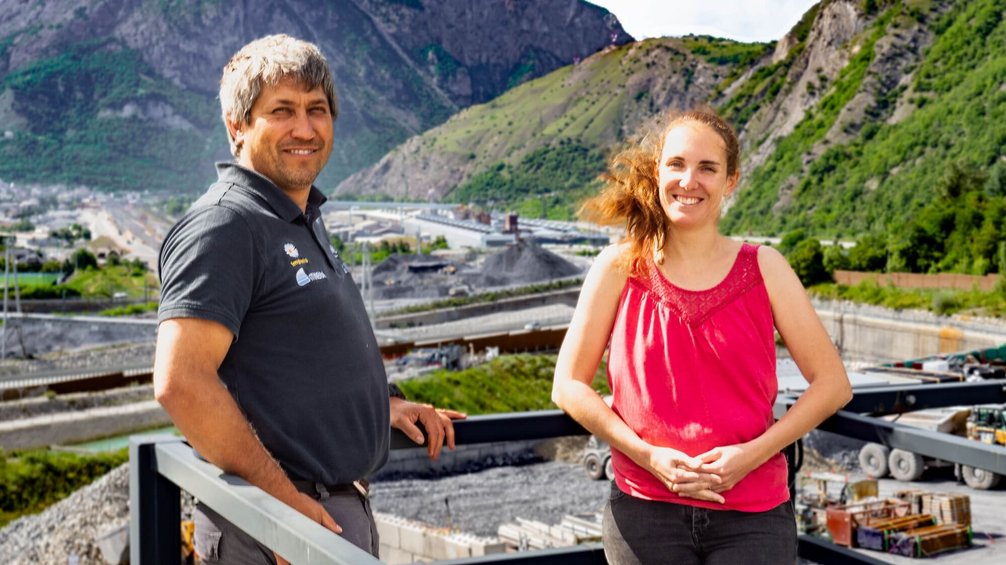
Digitalization doesn’t just benefit production. From an environmental perspective, it also significantly simplifies the collection and consolidation of data. Maud Le Fol, QSE Manager, emphasizes that these tools centralize environmental metrics and facilitate their analysis.
This not only saves a considerable amount of time but also allows for better management of environmental obligations on the construction site.
A Transformation That Must Be Managed Today
Thanks to well-managed digitalization, the underground construction sites of tomorrow will be safer, more responsive, and more sustainable.
But this transformation isn’t based solely on technology; it requires a clear understanding of technical requirements; close collaboration between the construction site and external partners; and a strategy focused on interoperability and creating value from data.
Or, as Philippe Liotard puts it: “In the digital tunnel, the light lies in well-utilized data.”

The TELT Project
The Turin–Lyon railway project is a high-speed rail line currently under construction. At the heart of this project is the 57.5-km-long Mont-Cenis Base Tunnel, which forms a new rail corridor between Lyon and Turin. The entire new line spans approximately 270.8 km, of which 140 km are in France and 46.7 km in Italy. The project is a key component of European rail infrastructure planning and is supported by the EU. It is intended to accelerate east-west rail transit traffic between France and Italy and is part of the TEN-T Rail Axis No. 6 between Lyon and Budapest.
Implenia is part of the TELT project, which includes the construction of the Mont-Cenis Base Tunnel. In 2021, Implenia was awarded the contract to build Lot 3 of the tunnel, together with its joint venture partners NGE, Rizzani De Eccher, and Itinera Spa1. The project involves the construction of two 2,839-meter-long tubes toward Italy, including 11 safety crosscuts and 140 meters of open-cut tunnel.
Key Figures
| 5.6 km | of tunnel to be excavated |
| 1,018 m | in umbrella vaults |
| 1,078 | arches to be installed |
| 11 | safety tunnels |
| 600,000m³ | Earthwork |
| 2,700m² | Acoustic hangar |
| Over 127,000m² | Construction site facilities |
| 5 years | Construction period |
| EUR 228 million | Contract value |
| Over 300 people | on site during peak periods |