


Grande Dixence
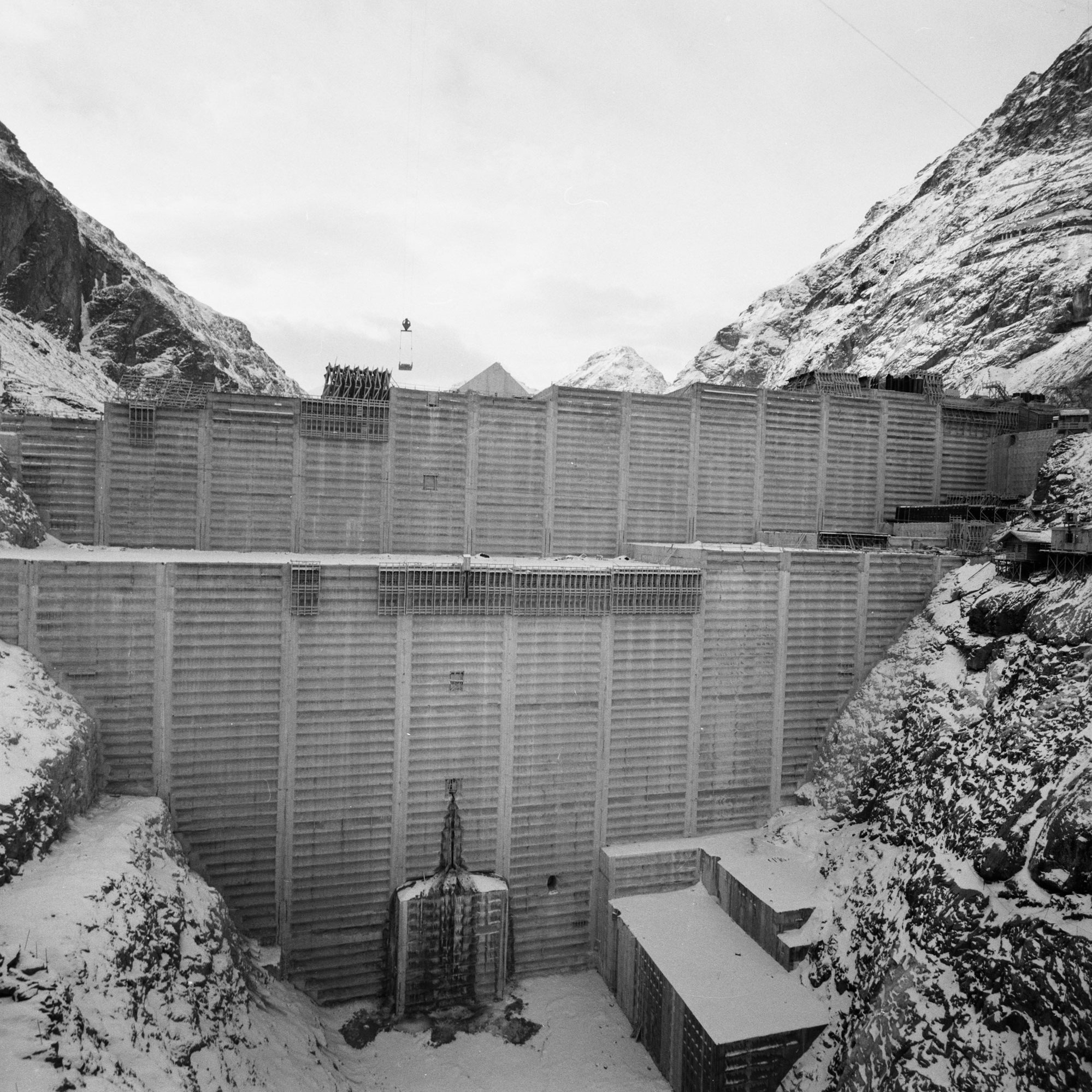
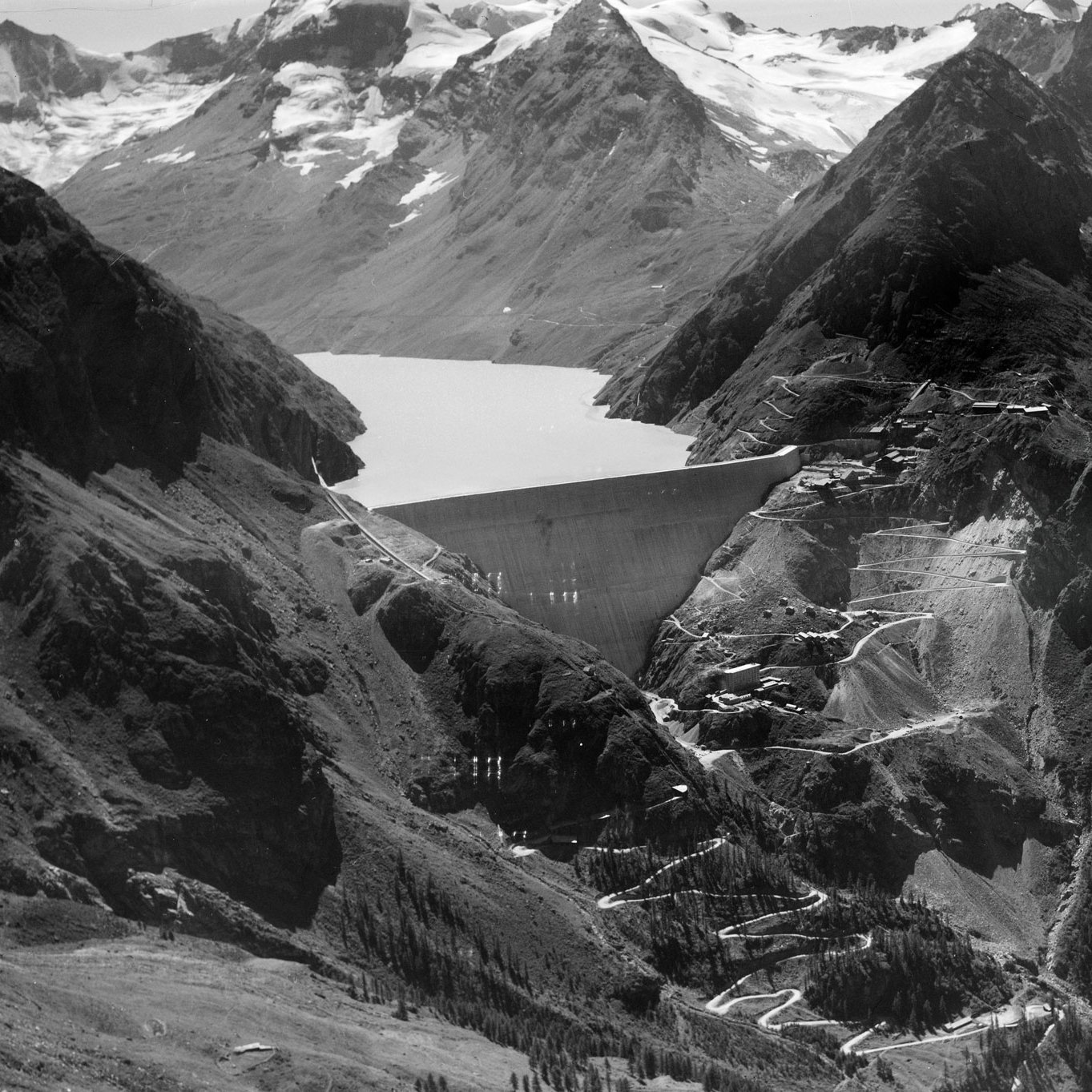
Grande Dixence dam (Valais), still the highest dam in Europe today
20 years of Implenia, 160 years of creating the future
Implenia's roots - shaped by innovation and expertise
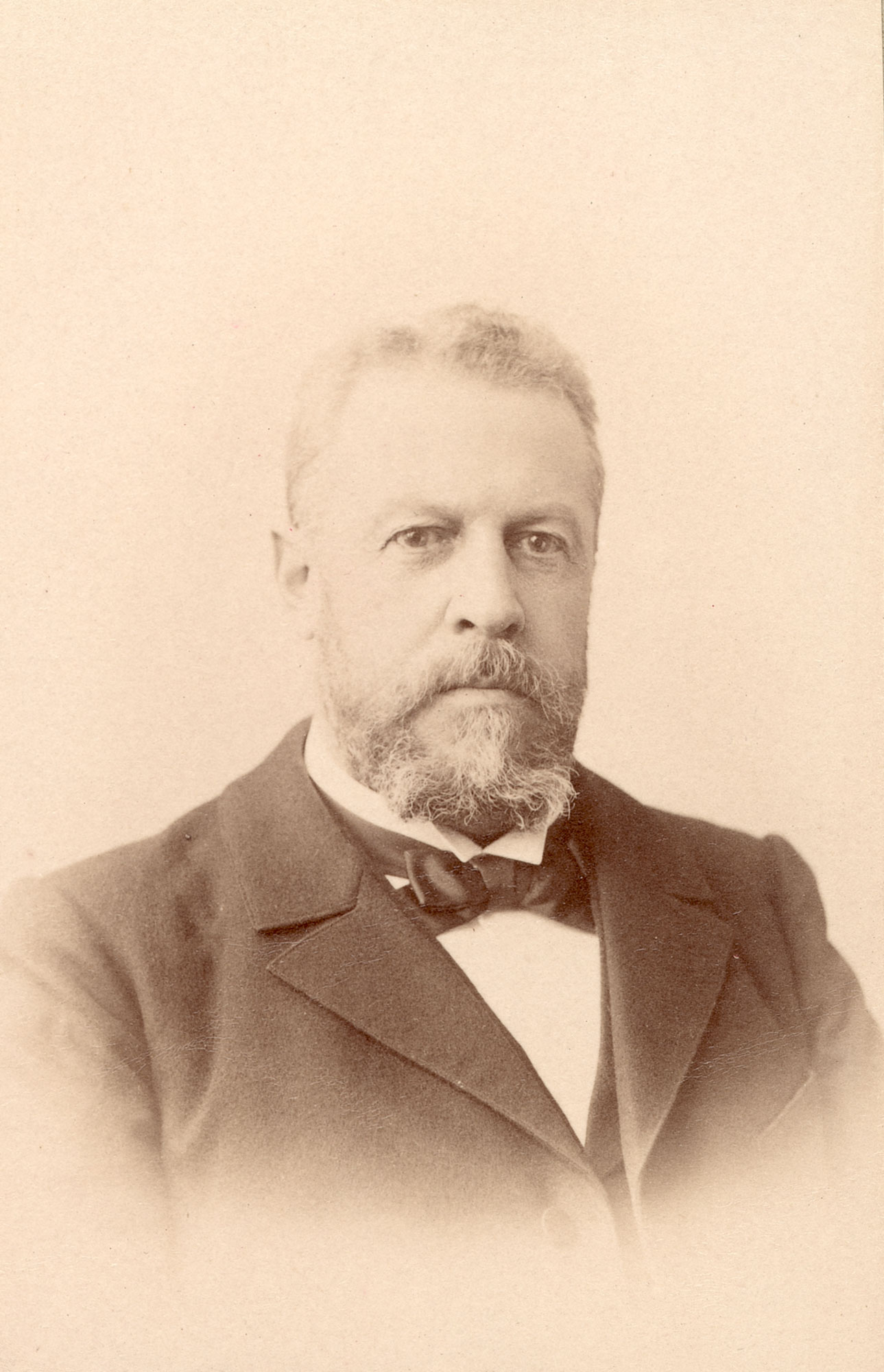
Zschokke, Preiswerk, Locher, Hatt-Haller, Batigroup - these are illustrious names in Swiss construction history, visionary engineers, master builders and workers who have shaped Switzerland forever with their architecture in steel, stone and concrete. And these are Implenia's ancestors, the forefathers. They are the foundation on which Implenia has stood securely for 20 years now. 160 years of pioneering history in fast-forward.
A vision called Implenia
Crossing borders, following visions, breaking records - the founding of Implenia is an act of superlatives. The merger of the construction companies Zschokke and Batigroup in 2006 creates by far the largest construction and real estate company in Switzerland in one fell swoop. "Zschokke and Batigroup form new construction leader Implenia" is one of the many headlines about the merger. And that is exactly what Implenia wants to be from the outset: "construction leader". Not only because of its size, but above all through "technology and market leadership", as it says in the 2006 information brochure for shareholders.
More than four grandparents
This will to assume leadership was not only born with the merger in 2006; rather, the creation of Implenia was an expression of this will, which the "ancestors" have exemplified over generations. Implenia is a child with two parents, Zschokke and Batigroup, but far more than four grandparents. Before becoming Implenia in 2006, Zschokke Holding SA took over a number of traditional Swiss companies (selection):
- Ad. Schäfer (founded in 1870, sold to Zschokke in 1978)
- Heinr. Hatt-Haller (founded in 1920, sold to Zschokke in 1982)
- Locher (founded in 1830, sold to Zschokke in 1998)
The same applies to the "junior partner" of the Implenia merger, Batigroup, which emerged from the merger of the following companies in 1997:
- Preiswerk (founded in 1862)
- Stuag (founded in 1912)
- Schmalz (founded in 1948)
Implenia has broken records...
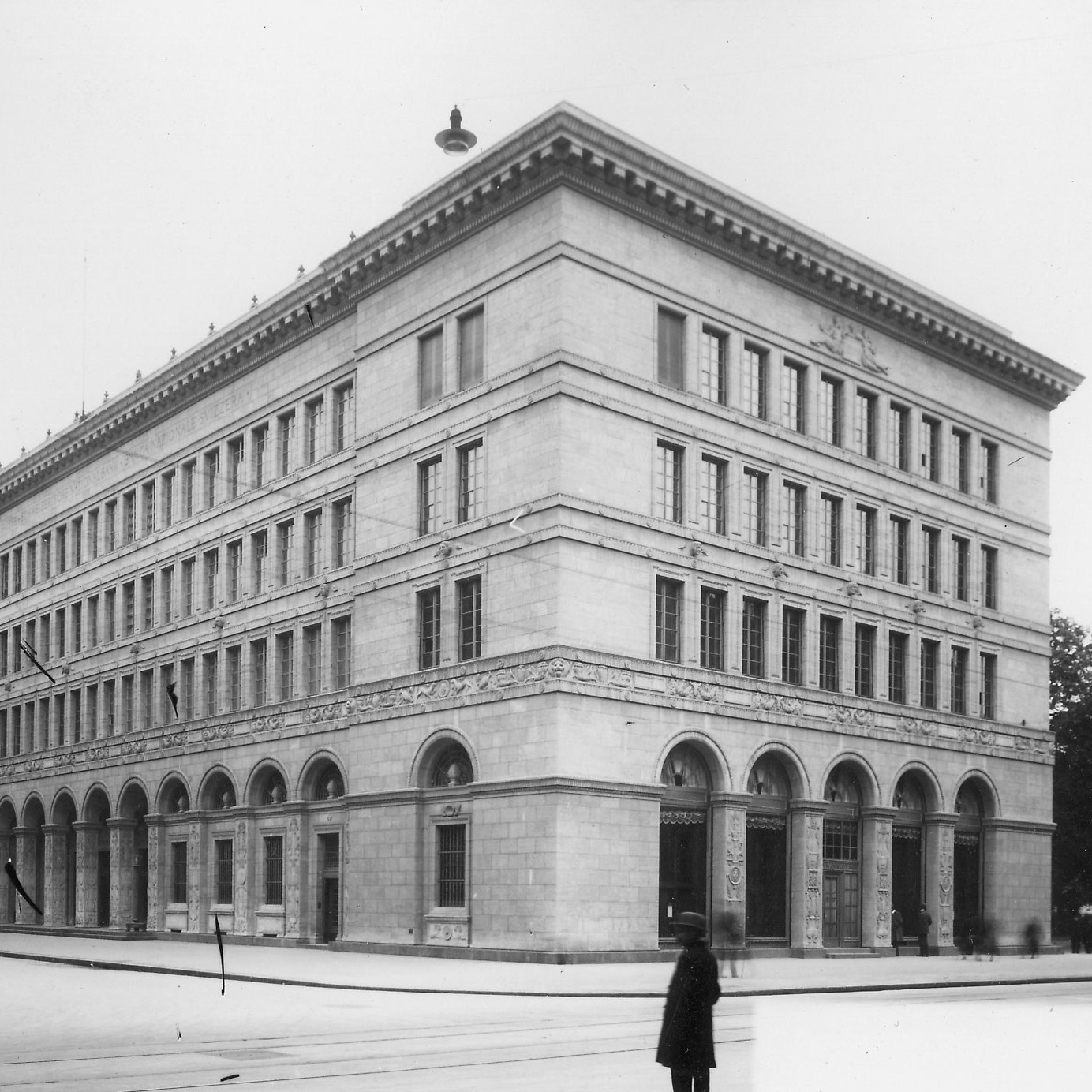
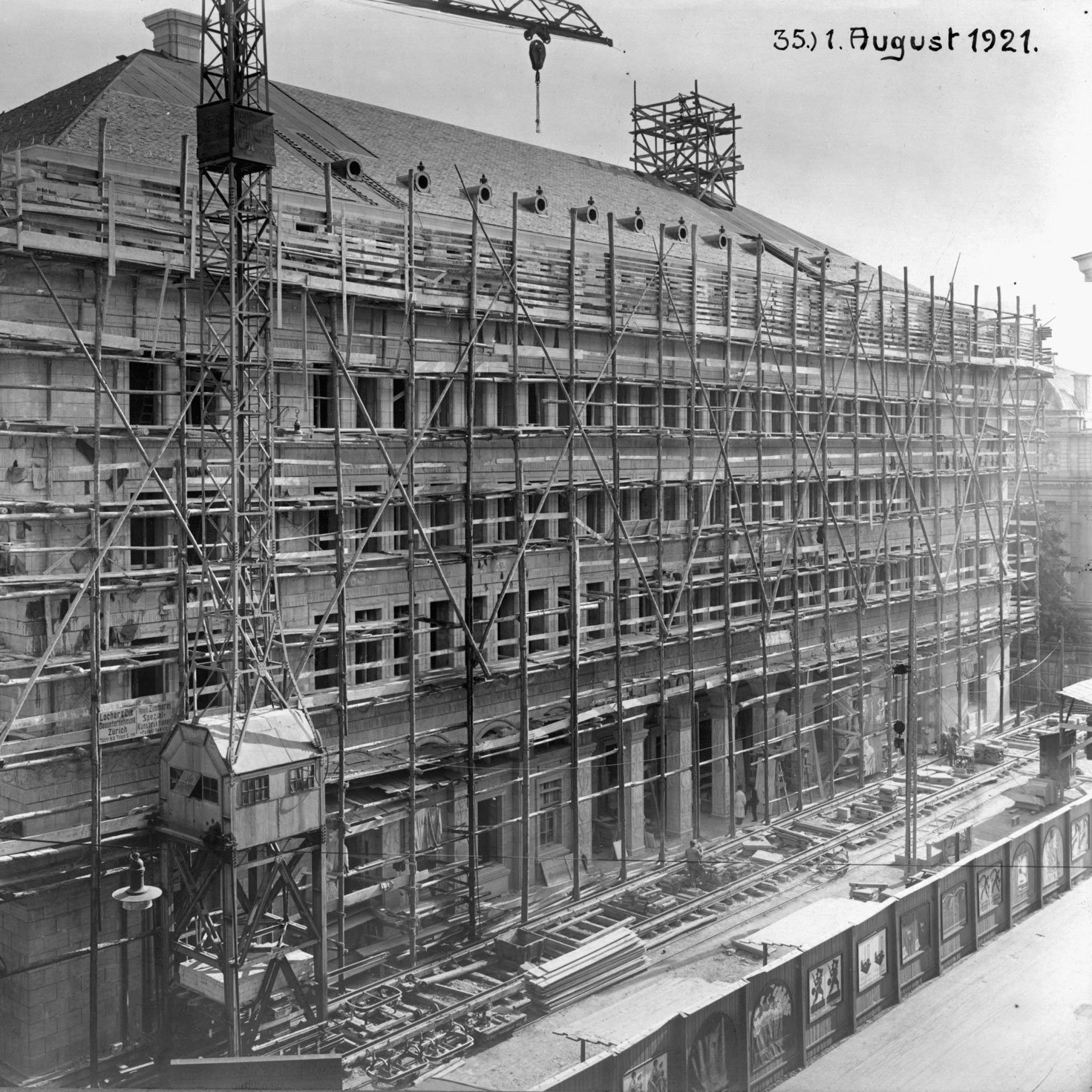
That's why it's fair to say that Implenia has been pushing boundaries, pursuing visions and breaking records for 160 years. In 1921, Heinrich Hatt-Haller builds the home for what is probably still the richest customer in Implenia's history: the Swiss National Bank in Zurich (total assets in 2025: CHF 1.3 trillion). In 1935, the Zschokke company builds the highest dam wall in the Alps at the time(Sautet) in France, only to bring this record back to Switzerland 22 years later with the 285-metre-high dam wall in Grande Dixence (VS) - which is still the highest dam wall in Europe today.
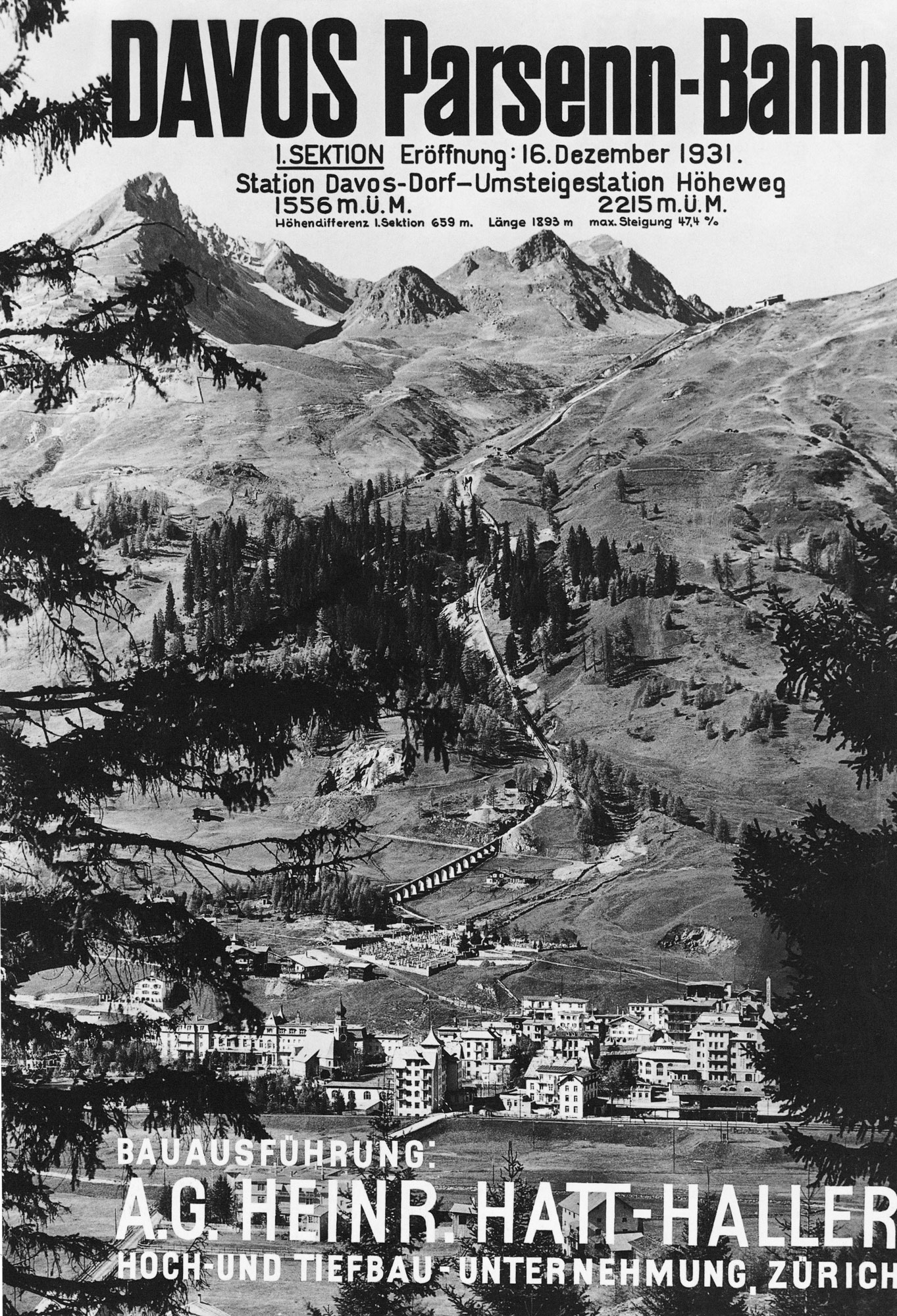
The altitude, the Alps - they have always attracted Implenia. Not only to harness hydropower, but also in terms of tourism. Heinrich Hatt-Haller became a true mountain railroad pioneer, building the famous Parsennbahn in Davos in 1931 and the first cable car in the Alpstein, the Säntis suspension railroad at 2504 meters above sea level, in 1934.
... and continues to break them
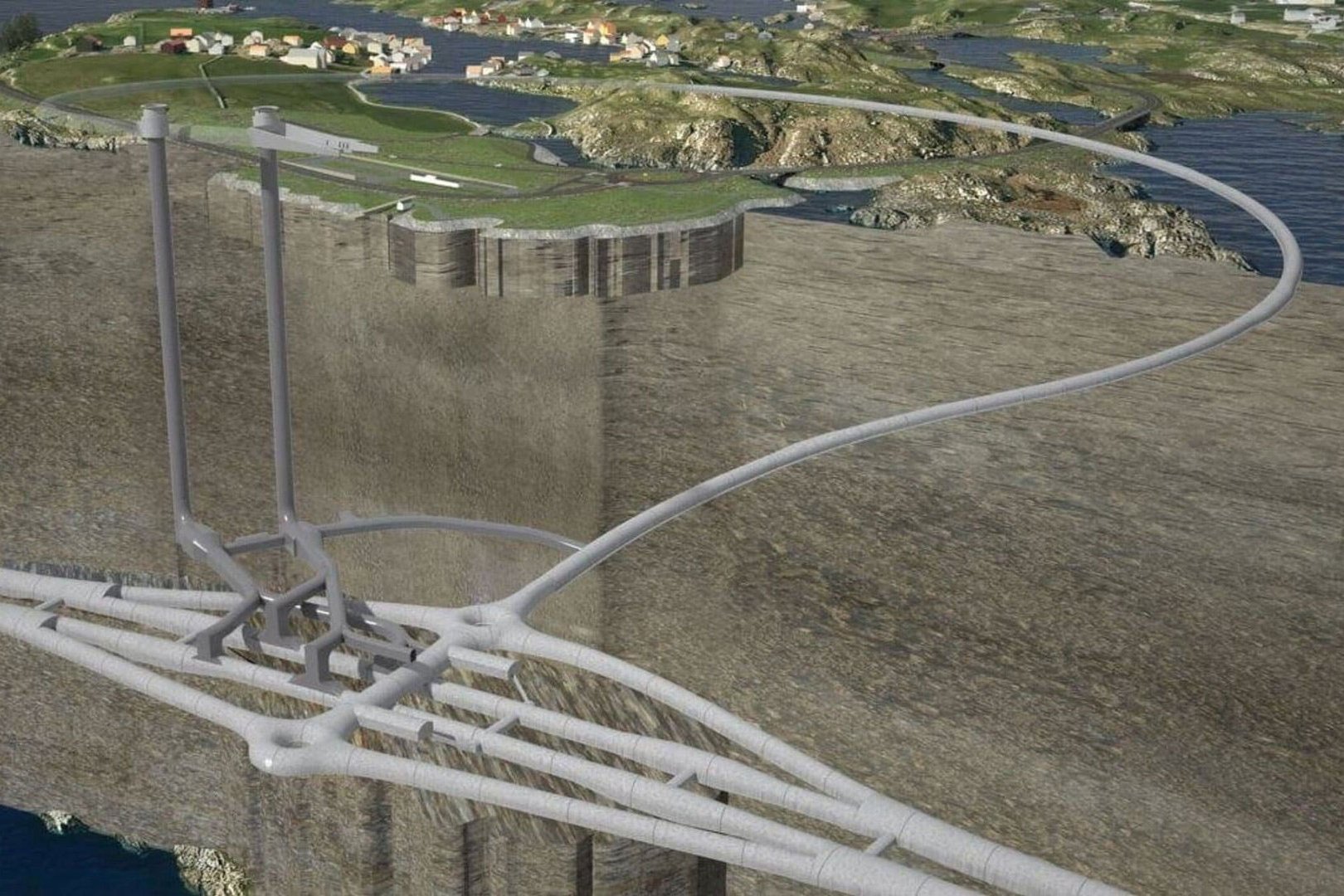
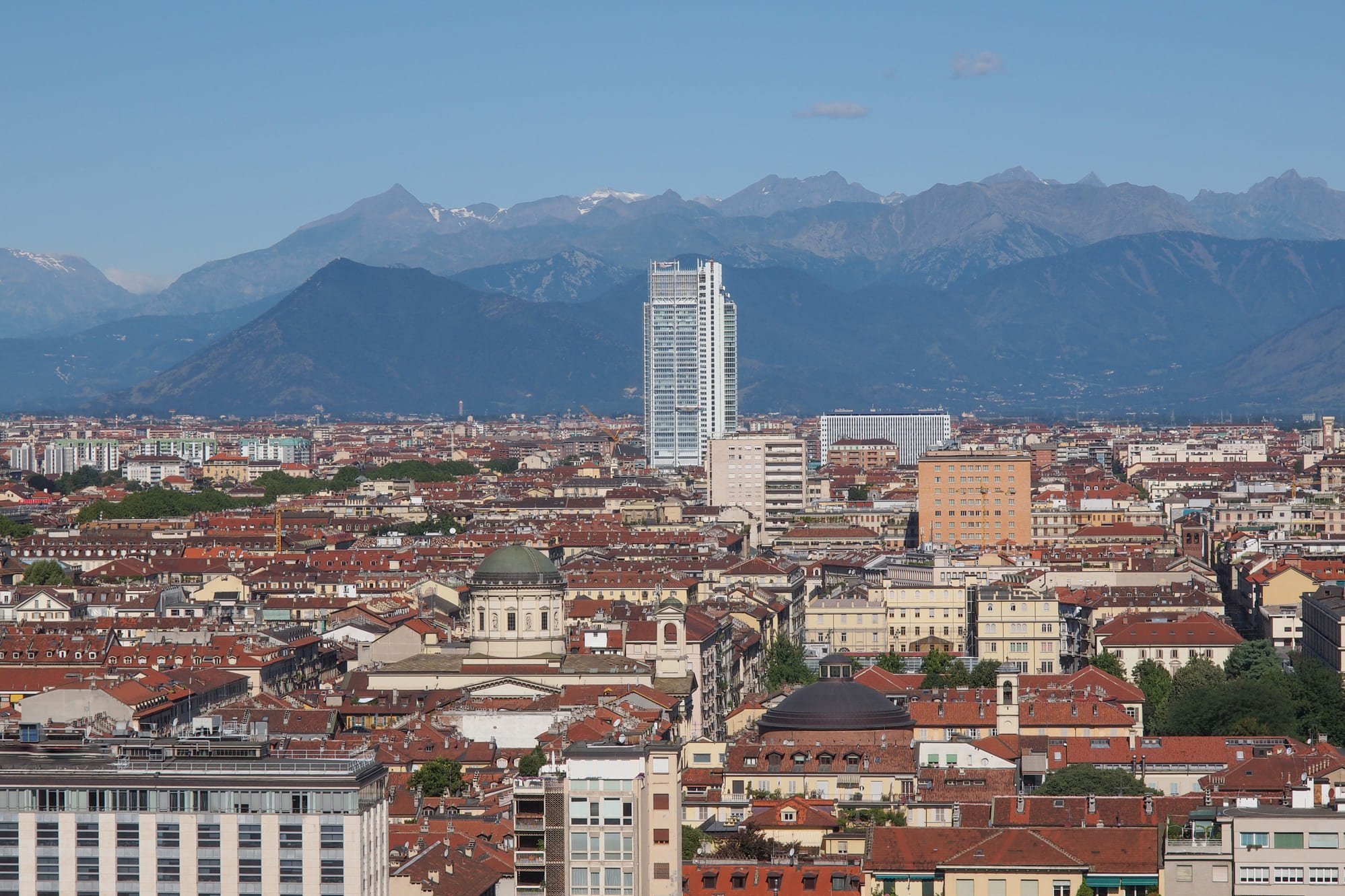
Pushing boundaries, making the impossible possible. Implenia continues to build on these visions to this day. Like in 2016, when Implenia was commissioned to build the Torre Intesa San Paolo in Turin, designed by Renzo Piano, a "bioclimatic skyscraper" with LEED Platinum certification. Or, more recently, Implenia is working in a consortium to build the majority of the Rogfast project, the world's longest and deepest underwater road tunnel, which is up to 392 meters below sea level - a pioneering feat that would have been unthinkable just a few decades ago. And, of course, Implenia is once again playing a key role in the construction of one of the biggest domestic infrastructure projects: the second tube of the road tunnel in the most Swiss of all Swiss mountain ranges, the Gotthard.
Always international
Implenia also crossed national borders early on. Conrad Zschokke, who can be described as Implenia's "founding father", earned his spurs in hydraulic engineering not in Switzerland, but in the major ports of Europe: in Genoa (1886-1893), La Rochelle (1888), Venice (1909) and Marseille (1911), for example. So when Implenia boasts of major international projects today, it is important to remember these historical roots.
Big even on a small scale
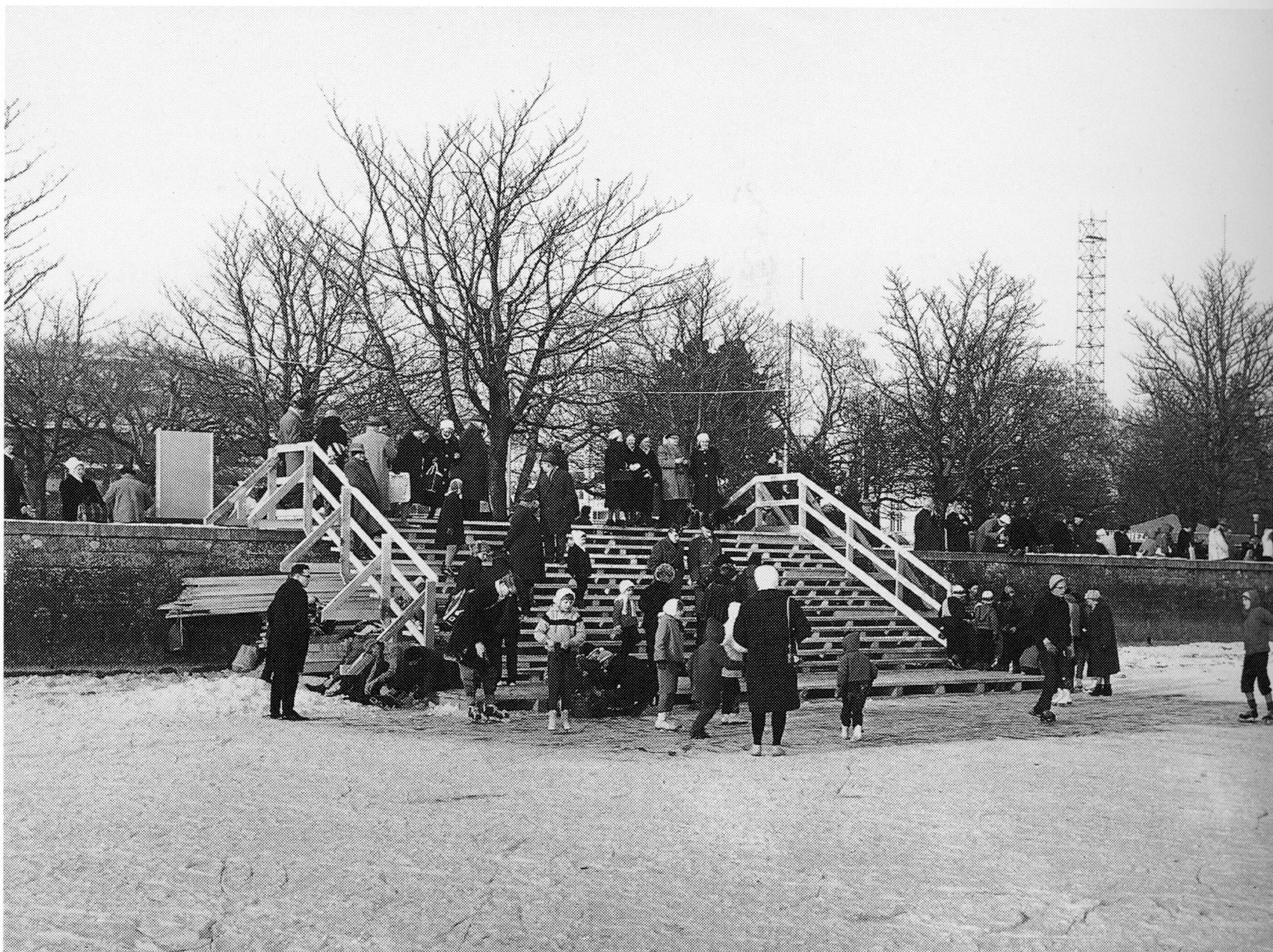
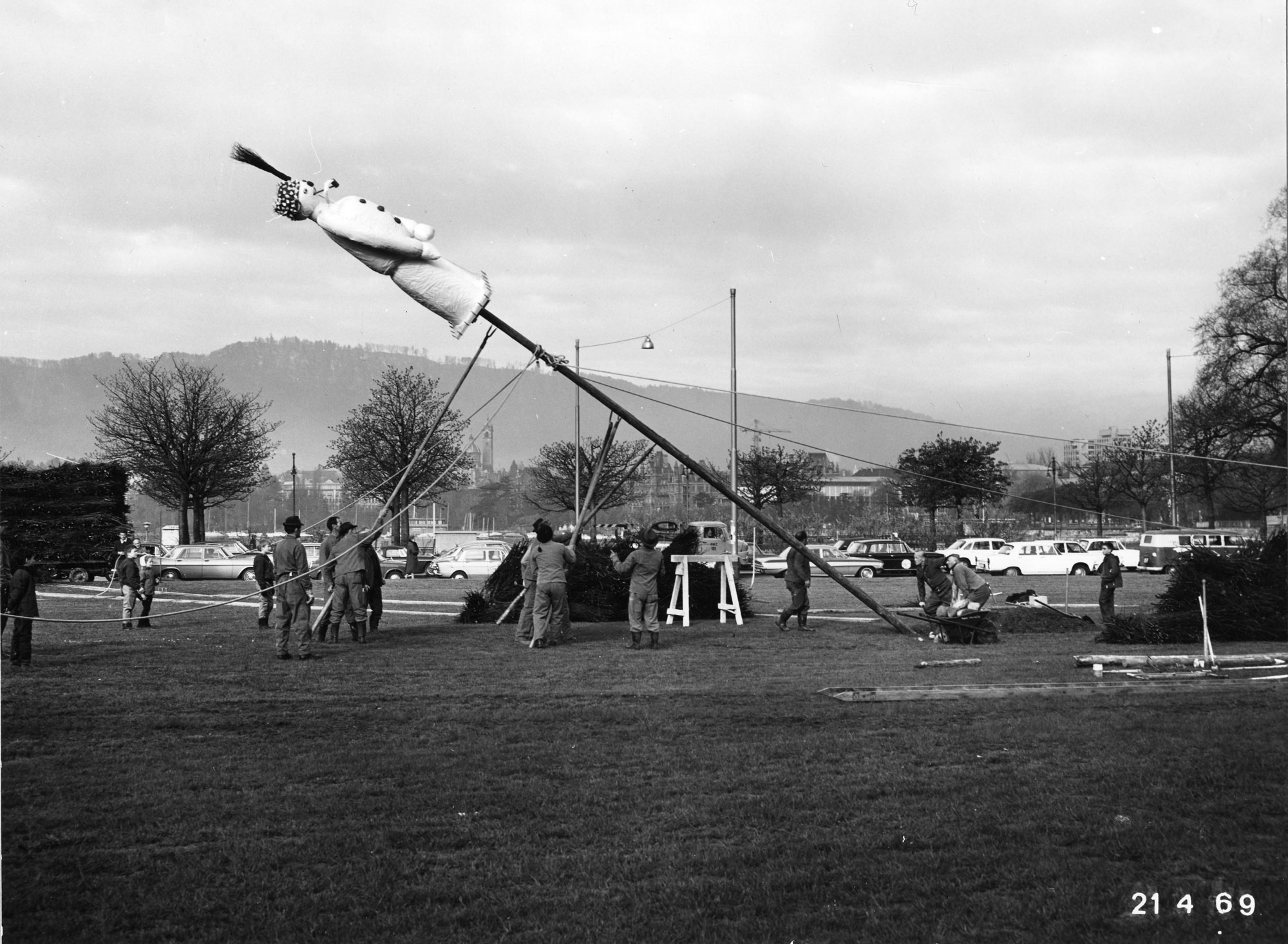
However, greatness does not only manifest itself in superlatives. Sometimes greatness can also be found on a small scale, close up. When the mythical "Seegfrörni" took place in Zurich in 1963, it was the construction company Heinrich Hatt-Haller that spontaneously built wooden steps to access the ice rink - to the delight of the public. Since the 1960s, Hatt-Haller has also been responsible for erecting the "Böögg" on Sechseläutenplatz - a tradition that Implenia continues to this day.

Building history archive/ Wolf-Bender's heirs
Implenia's ancestors were pioneers
The ancestors of Implenia are called Zschokke, Schäfer, Hatt-Haller, Göhner, were pioneers, national councillors, inventors, professors and some were also millionaires. But their ancestors were also called Rossi, Egli, Pereira, Müller and Petrovic and were skilled workers, draughtsmen, carpenters and metalworkers. Some dreamed bigger, others smaller. But they definitely had one thing in common: they were men.
Implenia has remained visionary and ambitious - but less male. Today, almost a quarter of the workforce is made up of women, a fifth at management level and 43 percent of the Board of Directors. In this respect, gender diversity, Implenia is miles ahead of its predecessors, but would like to achieve even more diversity at all levels in the future.
History and future. That is Implenia.
Main photo: © Sacha Ristic