"For everyone who loves action: Off to the building site!"
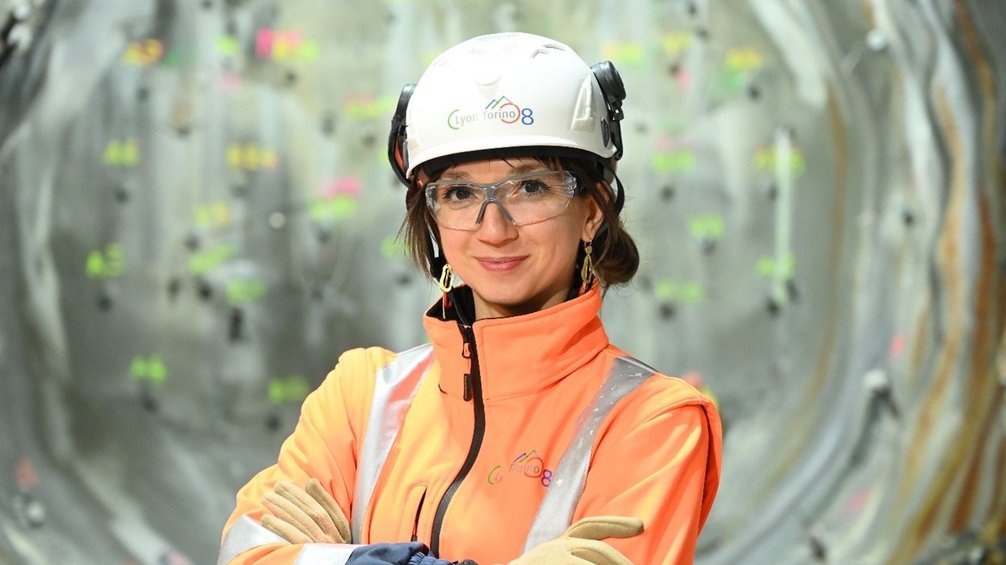
Georgiana Noureanu Bucur joined Implenia in 2024 as the Design & BIM Manager for the TELT Mont-Cenis Base Tunnel CO08 project, making her part of a new generation of female engineers in tunnel construction. Originally from Romania, she decided to study in France in 2016. After completing her bachelor's degree in civil engineering at the Technical University of Civil Engineering Bucharest, she continued her studies at the École des Ponts et Chaussées in Paris with a double-degree master's degree. Her graduating class of 2019 was heavily male-dominated, with only around 30% women out of around 225 engineers. Her degree also included a practical year and a thesis on the Grand Paris Express - an exceptional infrastructure project and the starting point of her career in civil engineering and tunnel construction.
Can you tell us about your career? Where are you from and when did you say to yourself: I want to work in tunnel construction?
Originally, I dreamed of studying architecture and was very design-oriented. However, as I found mathematics easy, I decided to go into engineering. I gained my first construction site experience as a site manager on the EOLE project in La Défense, on an engineering structure directly after the new underground train station. I loved this experience: in the middle of the action, visibly fast results, and direct contact with the construction site. I then worked on the tunnel construction methods for the T3C lot of Line 15 South - from TBM instructions to phase planning and work sequences.
After graduating, I joined an engineering company specializing in tunnel construction and worked on the detailed design of the Tunnel-Rameaux connections of the T3C project. I encountered many technical challenges: Structural analysis, sensitivity studies and new technical solution for the Tunnel Rameaux connections.
This last experience at the end of my studies strengthened my decision to continue my career in an engineering office in Paris - as a project engineer in the field of complex building structures. The topics were exciting, but I felt the desire to be closer to the practical construction site. The generalist engineering training at the École des Ponts ParisTech enabled me to discover many different specialist areas. These opportunities eventually led me to civil engineering and tunnel work, which combines the particular challenge of building engineering structures deep inside mountains.
Was that the moment you left for London?
Yes, I joined the Thames Tideway Tunnel construction site in London. I had several roles inside there: Tunnelling Engineer for the tunnel boring machine, Civil Engineer and Design and Build Coordinator. It was a very intense experience. My office was literally on top of the tunnel boring machine, right next to the control cabin. I even ordered an Uber in the tunnel once ... the pizza was delivered directly to the segments! With the geolocalized delivery, on the other hand, it was a bit more complicated, because I was often 100 m underground ...
The shift rotations were demanding: days, nights, weekends, sometimes 10 to 12-hour shifts. It was very dynamic, very intense, and it allowed me to be very close to the action and work with the teams to move the machine forward. I learned an incredible amount during this experience.
What did you like and what gave you the desire to develop further?
There are two sides to this job. I really liked the practical aspect: being responsible for activities on a daily basis, organizing work preparation, safety, internal quality controls, coordinating your own or subcontractor teams - in short, taking responsibility. Being in the action motivates me a lot. At the same time, in day-to-day management you sometimes lose sight of the big picture and the necessary distance. I also wanted to have time for reflection, to understand the issues in advance and to have an overview of the entire project. That's what led me to switch to the technical area.
Why did you choose Implenia and the Mont Cenis Base Tunnel project?
The Tideway project came to an end in 2024. Looking for new challenges, I took the opportunity to join the technical teams on the Lyon-Turin CO08 project. The construction site of the new railroad line, which had just started, offered me the opportunity to continue my international career and work on one of the deepest tunnels in the world - up to 2000 m below the surface! The technical and geological challenges posed by high rock pressures, as well as the studies and methods for excavation in an area with numerous constraints, motivated me to apply for the role of execution studies manager at Implenia.
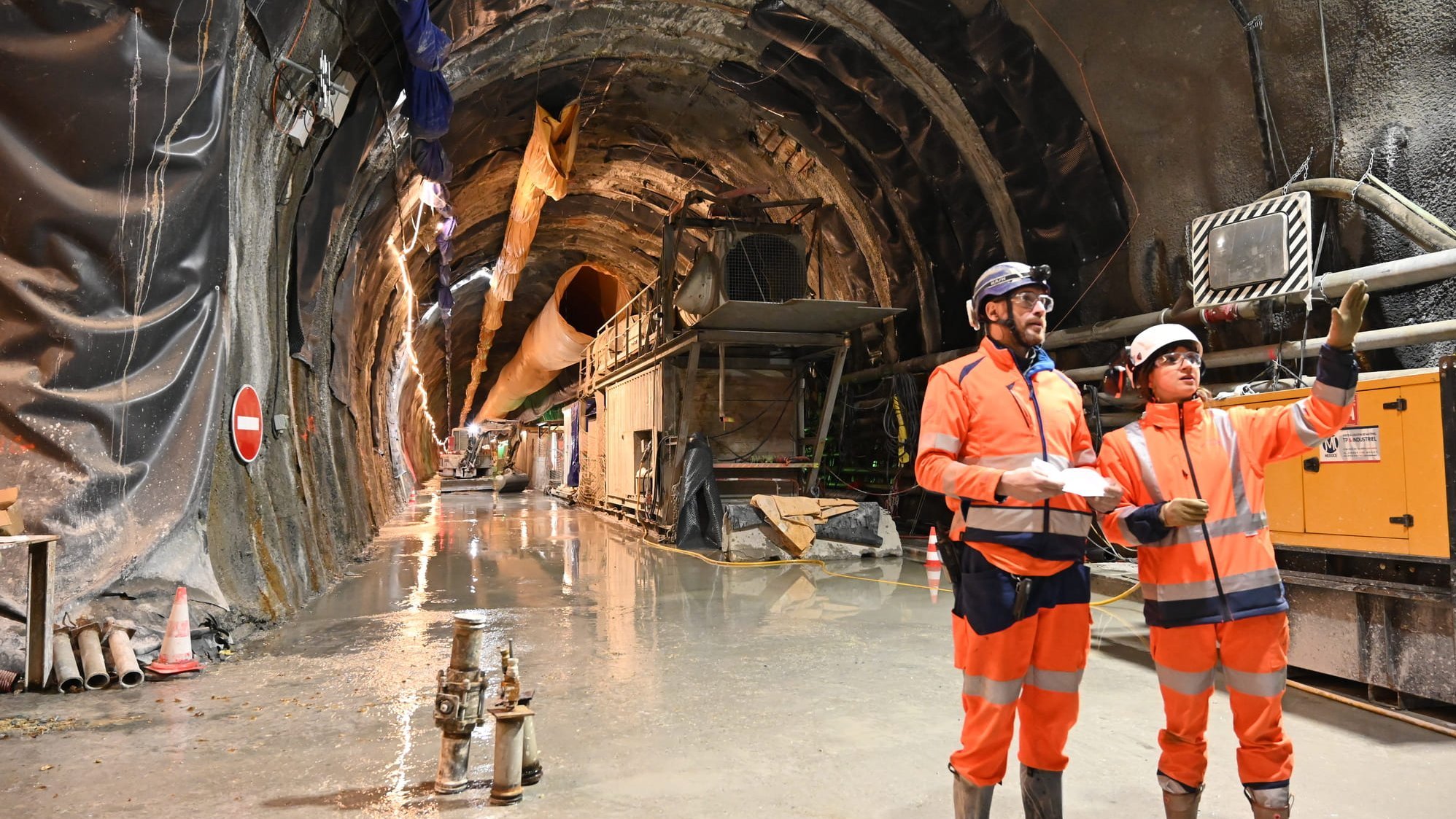
On the CO08 construction site, I am responsible for all execution studies - with a very comprehensive view: traditional tunnelling, civil engineering, interior construction, conveyor belt, plans, structural analysis ... all trades are represented. It's also a construction site of a manageable size, which is a welcome change compared to very large projects. I learn something new every day. No two days are the same - it's incredibly rewarding.
Is there a side to your work that nobody can imagine?
The level of technical knowledge required, the amount of information you have to master and the level of expertise required. You have to be very analytical and at the same time have an overall view and a precise understanding, as well as real skills of synthesis, coordination and memorization to ensure the coherence of all the structures and trades (securing, cladding...).
My aim is to ensure that the execution studies meet both the client's requirements and can be implemented in production - and that the structures are designed by the engineering offices and independent inspection bodies in accordance with the applicable standards for a service life of 120 years! The profession requires a high degree of versatility.
